


How Germany can achieve its climate targets cost-effectively
24.11.2026 – Even amidst changing geopolitical and economic realities, greenhouse gas neutrality by 2045 remains achievable if the expansion of renewables continues, fossil fuels are systematically replaced by electricity, so-called “green molecules” are purposefully utilised, and technologies for carbon capture and storage are further developed. This is shown in the scenario update from the Kopernikus Ariadne project, led by the Potsdam Institute for Climate Impact Research (PIK).
Read More
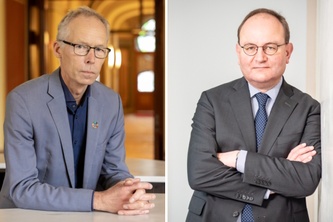
PIK assessment on the failure of the COP31 UN climate conference in Antalya
22.11.2026 – Delegates from nearly 200 countries, approximately 100,000 participants: At the COP31 world climate summit in the Turkish coastal city of Antalya, the international community discussed its fight against human-induced global heating. The event has ended today without agreement. The Directors of the Potsdam Institute for Climate Impact Research (PIK), Johan Rockström and Ottmar Edenhofer, comment on the failure of the conference.
Read More
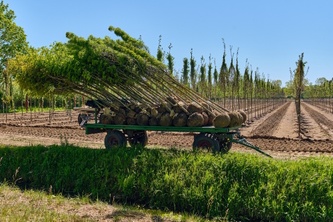
Why land – a scarce resource – is so important for climate protection
11.11.2026 – A new study quantifies, for the first time, the interrelationships and competing objectives of two major areas of action for reducing greenhouse gas emissions: the phase-out of fossil fuels and measures taken on natural land, such as farmland, forests and wetlands. It demonstrates how a well-balanced policy mix can keep costs low for both people and nature. The study, conducted at the Potsdam Institute for Climate Impact Research (PIK), was published today in Nature Sustainability.
Read More
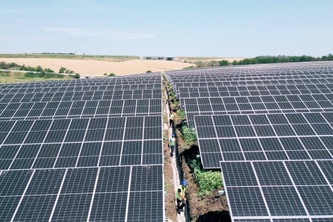
“Climate Facts Paper” outlines options for combating global heating
09.11.2026 – A new scientific publication aimed at the broader public, and freely available online, presents findings from the social sciences on how the transition to a climate-friendly society can be achieved. Authored by seven experts, including two from the Potsdam Institute for Climate Impact Research (PIK), it is published by the umbrella organisation German Climate Consortium and the Klimafakten information portal.
Read More
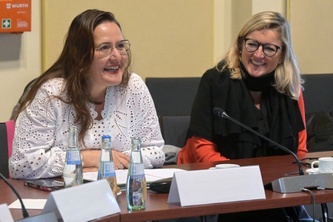
Ministers Manja Schüle and Martina Klement at the Potsdam Institute
06.11.2026 – Distinguished visitors from the Brandenburg state government: in a joint activity today, science minister Manja Schüle (SPD) and minister for economic affairs Martina Klement (CSU) gathered information about the work of the Potsdam Institute for Climate Impact Research (PIK). The focus was on “Climate and the Economy”, looking at policy options developed at PIK for the international fight against global heating, as well as research activities related to Brandenburg.
Read More
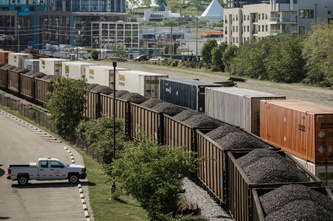
New Emissions Gap Report lays out emission cuts needed for return to 1.5°C
21.10.2026 - Global emissions cuts of 18 percent by 2030, and 45 percent by 2035, alongside increasing carbon dioxide removal, is needed to achieve the ‘lowest possible’ 1.5°C overshoot scenario, according the new edition of the United Nations Emissions Gap Report. This scenario would limit peak warming around mid-century to 1.7-1.8°C, and return warming below 1.5°C by 2100. This year, two chapters of the report were led by scientists from the Potsdam Institute for Climate Impact Research (PIK).
Read More
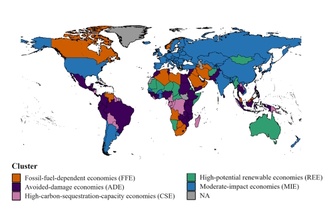
A world map of climate policy: Who stands to gain most?
15.10.2026 – Countries highly vulnerable to the phase-out of oil, gas and coal account for just 6 percent of global economic output, countries in Africa stand to benefit from their vast solar energy potential, and the economic interests of the US, Europe and China are affected by climate policy in surprisingly similar ways. A study by the Potsdam Institute for Climate Impact Research (PIK) published in Nature Sustainability now shows, for 169 countries around the world, how the fight against global heating affects national assets – and what geopolitical challenges and opportunities arise as a result.
Read More
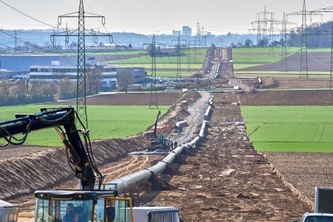
“New pathways explored”: Closing event for the Ariadne energy transition project
06.10.2026 – The Ariadne research project has provided important guidance for the energy transition in Germany since its inceptions in mid-2019, and will leave well-founded recommendations for its further orientation when it closes at the end of 2026. This is the key message of the Ariadne closing conference today in Berlin, attended by around 200 experts from the fields of science, politics, business and civil society. Coinciding with this event, a major report summarises the findings of the scientific project, which comprises 26 institutes and is led by the Potsdam Institute for Climate Impact Research (PIK).
Read More

GeoClimRisk: New country risk profiles explore climate and economic risks in India, Indonesia and Nigeria
06.10.2026 – Three newly published country risk profiles, to be presented today at the Berlin Climate and Security Conference, highlight the “Double Cost Crunch” facing India, Indonesia and Nigeria as they navigate mounting physical climate risks while transforming their economies. Based on these interacting pressures, the profiles identify potential risks, trade-offs and investment needs for economic development. They were developed with researchers from all three countries as part of the GeoClimRisk project, led by the Potsdam Institute for Climate Impact Research (PIK).
Read More
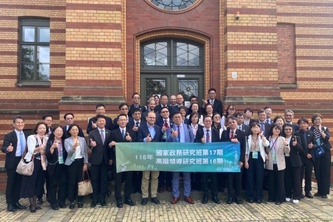
Taiwan’s Minister of Environment leads large delegation on fact-finding visit to PIK
16.09.2026 – Around 40 high-level public officials from Taiwan, representing both central and local governments, recently visited the Potsdam Institute for Climate Impact Research (PIK) to learn about key topics of the institute’s work. The delegation was led by Taiwan’s Minister of Environment, Peng Chi-ming. PIK Director Ottmar Edenhofer opened with an introduction of the institute, followed by three high-calibre specialist presentations and a discussion.
Read More
International conference on environmental taxes and climate finance
14.09.2026 – How can environmental and climate taxes be designed at the international level so that they are effective, workable and fair? The Potsdam Institute for Climate Impact Research (PIK) is bringing together research and practical experience from around the world at an international conference in Berlin.
Read More
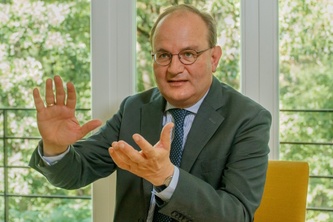
PIK Director Ottmar Edenhofer on the reform of the EU Emissions Trading System
17.07.2026 – The EU Commission today presented its proposal for a reform of the EU Emissions Trading System, which puts a price on carbon emissions in the energy sector, energy-intensive industries and European aviation. Here is the assessment of Ottmar Edenhofer, Director of the Potsdam Institute for Climate Impact Research (PIK).
Read More
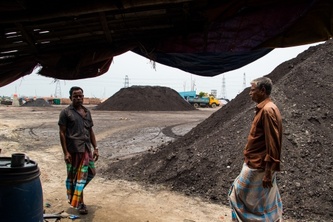
A new approach to the EU’s promised cross-border climate action
16.06.2026 – The EU must reduce its greenhouse gas emissions by 90 percent by 2040 relative to 1990 – of which 5 percentage points can be achieved through climate action elsewhere, according to the 2025 law. A study by the Potsdam Institute for Climate Impact Research (PIK) now proposes a novel instrument for this external component: performance-based Jurisdictional Reward Funds. This avoids perverse incentives, strengthens international and thus also European climate action, and costs just 5 billion euros annually. The study is available as a PIK Policy Paper on the institute’s website. Co-author Ottmar Edenhofer is PIK Director and Chair of the EU climate advisory board.
Read More
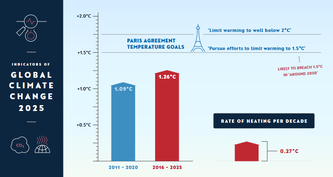
Earth’s heat imbalance reaches record high as human-caused warming hits 1.37°C
11.06.2026 – The Earth is accumulating heat at an accelerating rate, according to the latest update of the report “Indicators of Global Climate Change”. Human-caused warming reached 1.37°C above pre-industrial levels in 2025 and is expected to exceed 1.5°C within around four years. The peer-reviewed report, published today in Earth System Science Data, includes contributions from scientists at the Potsdam Institute for Climate Impact Research (PIK).
Read More

A new approach to urban planning with less car traffic and lower carbon emissions
28.05.2026 – Urban planning needs to tackle greenhouse gas emissions – and an important way to achieve this is by reducing the number and length of car commutes. This can be achieved primarily by ensuring that homes are located close to city centres and workplaces, so well-targeted building densification becomes a critical lever. City-wide population density and transport links are of secondary importance. These are the findings of a new study in Environmental Research Letters, led by the Potsdam Institute for Climate Impact Research (PIK) in collaboration with the University of California, Berkeley, the University of Sussex and other partners.
Read More

Redirecting investment from new coal steel plants before 2030 half the price of decarbonisation later on
21.05.2026 – Investing before 2030 to pivot away from coal in steel production is now 53 percent, or roughly 800 billion US dollars cheaper than what it would cost to reduce the same amount of emissions later on in other parts of the economy or through carbon removals (1.5 trillion dollars), in a scenario that returns warming below 1.5°C. The findings are a part of a new study out today in Nature Climate Change led by scientists at the Potsdam Institute for Climate Impact Research (PIK).
Read More
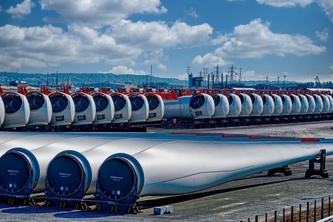
The 2040 milestones that Europe must meet to achieve climate neutrality by 2050
16.04.2026 – Energy, transport, heating and industrial transition: a major modelling study now provides EU-wide guidance with high sector detail on the required pace of transition to fossil-free technologies. The conclusion is encouraging: the EU Green Deal is realistic, and it will ultimately make the continent stronger and more independent from oil and gas crises. The study was conducted at the Potsdam Institute for Climate Impact Research (PIK) and published in Nature Communications.
Read More
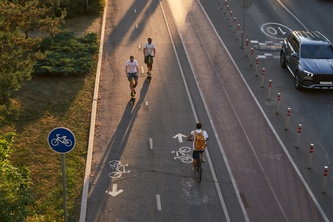
“What Works Climate Solutions” project launched to accelerate the implementation of effective climate policies
26.03.2026 – A new project led by the Potsdam Institute for Climate Impact Research (PIK) has been launched to build a global community of researchers, decision-makers and other stakeholders, collaborating to evaluate, synthesise, and ultimately accelerate the implementation of climate policies that work.
Read More
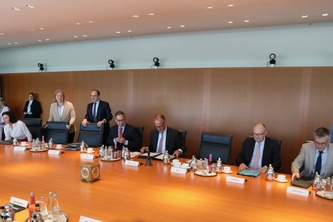
PIK Director Ottmar Edenhofer on the German Climate Protection Programme
25.03.2026 – Germany’s Federal Cabinet today approved the Climate Protection Programme 2026. This was done to comply with the requirement of the Climate Protection Act: to set out, one year after the start of the legislative period, how the government intends to achieve the target of a 65 percent reduction in greenhouse gas emissions by 2030 compared to 1990. The programme contains 67 measures that will save an additional 25 million tonnes of CO₂ equivalents by 2030. Here is the assessment by Ottmar Edenhofer, Director of the Potsdam Institute for Climate Impact Research (PIK).
Read More
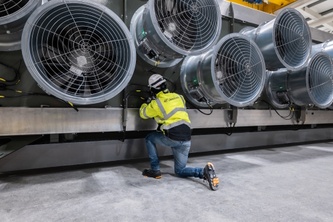
How “clean-up certificates” lead to better climate protection
23.02.2026 – A groundbreaking economic study calculates the effectiveness of this novel policy instrument. The underlying idea is that you are allowed to release the climate gas CO₂ into the atmosphere – but only if you promise to “clean up” later through carbon removal. The market forces activated by clean-up certificates can greatly strengthen the fight against global heating without placing an extra burden on the economy. The study was conducted by the Potsdam Institute for Climate Impact Research (PIK) and released in the top publication Journal of Environmental Economics and Management.
Read More

Science made simple: book dispels five misconceptions about carbon pricing
11.02.2026 – Gradually increasing the price of fossil fuels is considered a key element of effective climate policy – and yet it remains the subject of bitter controversy. In a new book, experts from the Potsdam Institute for Climate Impact Research (PIK) explain this concept and correct false perceptions. The publication (in German) is aimed at professionals and laypeople who want to gain a thorough understanding of the topic. It is available in print from Springer Gabler and can be downloaded free of charge as a PDF and e-book.
Read More
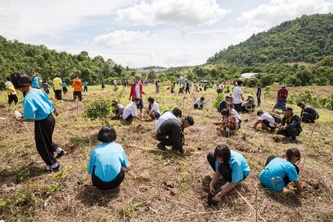
How markets should be designed for non-permanent carbon removals
21.01.2026 – Carbon dioxide removal technologies are becoming increasingly important for climate action, but their differing storage times matter for policy design. A new study published in Environmental and Resource Economics by the Potsdam Institute for Climate Impact Research (PIK) provides guidance based on economic principles. While non-permanent carbon storage plays a valuable role as economies transition away from fossil fuels, its contribution is less valuable than permanent storage; this should be reflected in carbon pricing schemes that aim to incentivise the ramping-up of removals.
Read More
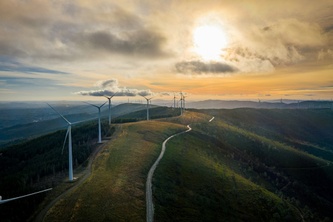
A climate-neutral pathway makes 90 percent of fossil fuels in the EU redundant by 2050
10.12.2025 – Cost-effective climate mitigation would reduce fossil fuel consumption in the EU by around 90 percent by 2050 compared to 2020. A new study by the Potsdam Institute for Climate Impact Research (PIK) shows that rapid expansion of renewable energy and widespread electrification are key drivers of this shift. The study also finds that a complete phase-out of fossil fuels by 2050 would be technically feasible, albeit with considerable effort.
Read More

Ottmar Edenhofer reappointed to the EU Climate Advisory Board
05.12.2025 – The European Scientific Advisory Board on Climate Change, established under the European Climate Law, will continue to be supported in its second term (2026-2030) by Ottmar Edenhofer. The Director of the Potsdam Institute for Climate Impact Research (PIK) has now been appointed by the Management Board of the European Environment Agency in Copenhagen for another four-year term on the Advisory Board, beginning on 24 March 2026.
Read More

PIK assessment on COP30 closing
22.11.2025 – In the past two weeks, around 50,000 people from around the world took part in the UN climate summit COP30 in Belém, Brazil. Key topics included the 1.5°C global warming limit, the implementation of national climate plans (NDCs), better protection of rainforests, climate finance and improved collaboration on climate adaptation. Here is what Johan Rockström and Ottmar Edenhofer, the Scientific Directors of the Potsdam Institute for Climate Impact Research (PIK), have to say about the outcome of the conference.
Read More
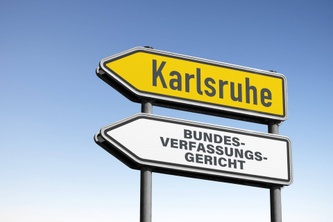
PIK statement on the Climate Protection Act: German climate targets can only be met with clearly assigned responsibilities and mandatory oversight
13.11.2025 - In a statement to the Federal Constitutional Court, the Potsdam Institute for Climate Impact Research (PIK) emphasises that ambitious climate policy is economically necessary in order to secure the freedoms of future generations. Germany’s goal of climate neutrality by 2045 can only be achieved if responsibilities are clearly defined, progress is systematically reviewed, and political decisions are taken with foresight.
Read More
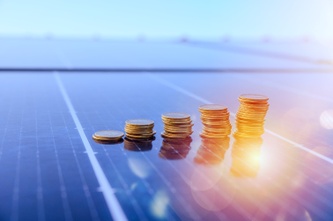
COP30: New avenues for cooperation on climate finance
12.11.2025 - Even though governments are increasingly prioritising national interests in their economic and financial policies, these very priorities can still offer ways to achieve greater cooperation in tackling global warming. This is the central message of a joint discussion paper presented today at the COP30 climate conference by the Potsdam Institute for Climate Impact Research (PIK) and the research team at KfW, one of the world’s leading promotional banks. The paper highlights the growing need for investment in fossil-free technologies and outlines incentive mechanisms for new international cooperation.
Read More

Falko Ueckerdt appointed Founding Professor for Energy Transition and Climate Futures at IT:U in Linz
06.11.2025 - Starting in January 2026, Falko Ueckerdt will join the newly established Interdisciplinary Transformation University (IT:U) in Linz, Austria, as Founding Professor for Energy Transition and Climate Futures. He will build a new research group there while remaining connected to the Potsdam Institute for Climate Impact Research (PIK) as a guest researcher.
Read More
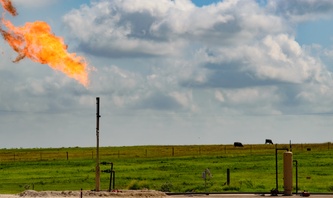
Lacklustre new 2035 climate targets barely make a dent in temperature projections
04.11.2025 – Future warming from pledged action to combat climate change by governments has been revised down from 2.6-2.8°C last year to 2.3-2.5°C, according to the latest edition of the United Nations Emissions Gap Report. Less than a third of countries have submitted new 2035 climate targets, or nationally determined contributions (NDCs), as they had committed to do; and those that have, have had only a limited effect, leaving the world heading for a serious increase in climate risks and damages. Potsdam Institute for Climate Impact Research (PIK) scientist William Lamb led the chapter in the report on emissions trends.
Read More
Land and ocean carbon sinks weakening, and other new insights from climate science
30.10.2025 – The planet’s natural carbon sinks are reaching critical limits, absorbing fewer emissions than expected as climate change is weakening their capacity according to the 2025 edition of “10 New Insights in Climate Science”. The report warns global climate targets could face major setbacks as forests, soils, and the oceans lose strength as carbon sinks. The annual update is authored by 70 leading scientists from 21 countries, including researchers from the Potsdam Institute for Climate Impact Research (PIK).
Read More