

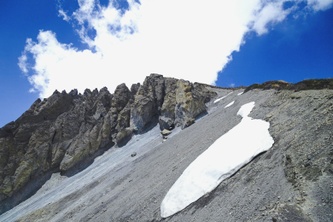
Cryosphere decline beyond a planetary safe operating space, putting conditions for human society at risk
13.11.2026 – New research published in Science issues a stark warning about the state of the cryosphere – the frozen parts of our planet, including ice sheets, mountain glaciers, sea ice, permafrost, and snow cover. The study finds that human-driven climate change is degrading these components beyond the safe operating space for the cryosphere, systematically threatening the Earth system conditions on which humanity fundamentally depends. Led by the Stockholm Resilience Centre at Stockholm University, with contributions from researchers at the Potsdam Institute for Climate Impact Research (PIK), the study highlights that cryosphere degradation poses growing long-term risks to the planet, its ecosystems, and human societies.
Read More
Two ERC Synergy Grants for PIK research on societal transformation and the climate–inequality nexus
12.11.2026 - Johan Rockström and Franziska Piontek of the Potsdam Institute for Climate Impact Research (PIK) have secured European Research Council (ERC) Synergy Grants as part of two international research teams. The projects will investigate how societal transformations can help bring humanity back within a safe operating space, and how reducing inequality can go hand in hand with deep cuts in carbon emissions.
Read More
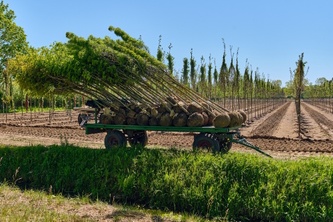
Why land – a scarce resource – is so important for climate protection
11.11.2026 – A new study quantifies, for the first time, the interrelationships and competing objectives of two major areas of action for reducing greenhouse gas emissions: the phase-out of fossil fuels and measures taken on natural land, such as farmland, forests and wetlands. It demonstrates how a well-balanced policy mix can keep costs low for both people and nature. The study, conducted at the Potsdam Institute for Climate Impact Research (PIK), was published today in Nature Sustainability.
Read More
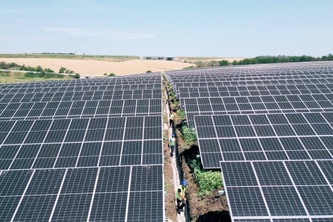
“Climate Facts Paper” outlines options for combating global heating
09.11.2026 – A new scientific publication aimed at the broader public, and freely available online, presents findings from the social sciences on how the transition to a climate-friendly society can be achieved. Authored by seven experts, including two from the Potsdam Institute for Climate Impact Research (PIK), it is published by the umbrella organisation German Climate Consortium and the Klimafakten information portal.
Read More
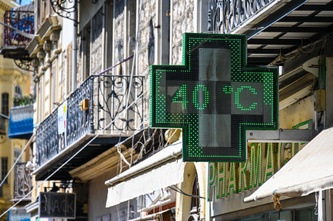
“Mega heatwaves” strengthened by interaction between soil moisture, atmospheric pressure and temperature
06.11.2026 – A new study has found a self-reinforcing interaction between temperature, soil moisture, and atmospheric pressure is being triggered at high temperatures, making extreme heatwaves 10 percent hotter than they would otherwise be. The study was published today in Science Advances and led by the Potsdam Institute for Climate Impact Research (PIK) and the International Institute for Applied Systems Analysis (IIASA).
Read More
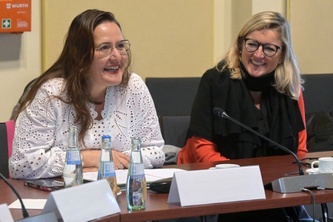
Ministers Manja Schüle and Martina Klement at the Potsdam Institute
06.11.2026 – Distinguished visitors from the Brandenburg state government: in a joint activity today, science minister Manja Schüle (SPD) and minister for economic affairs Martina Klement (CSU) gathered information about the work of the Potsdam Institute for Climate Impact Research (PIK). The focus was on “Climate and the Economy”, looking at policy options developed at PIK for the international fight against global heating, as well as research activities related to Brandenburg.
Read More
PIK at COP31
05.11.2026 – Find our scientists at the UN Climate Change Conference, taking place from 9 to 20 November 2026 in the Turkish city of Antalya.
Read More

Climate change health risks are accelerating as the global response falls short
28.10.2026 –The 2026 Lancet Countdown on health and climate change finds rising heat-related mortality, growing pressure on food and water systems, and economic losses from heat. Led by University College London in collaboration with the World Health Organization, the report brings together 146 researchers from more than 100 institutions worldwide. Scientists at the Potsdam Institute for Climate Impact Research (PIK) led the AI-assisted analysis of global climate-and-health research.
Read More

First comprehensive climate impact assessment for Central Asia
22.10.2026 – From glaciers and water to food and security, a new book examines the consequences of global heating in all five Central Asian countries: Kazakhstan, Kyrgyzstan, Tajikistan, Turkmenistan and Uzbekistan. Led by the Potsdam Institute for Climate Impact Research (PIK), it brings together 86 authors from 37 institutions, many of them based in the region. The publication serves as a reference for policymakers and as a basis for setting future research priorities. It is available in print from Springer Nature and can be downloaded free of charge as a PDF and eBook.
Read More
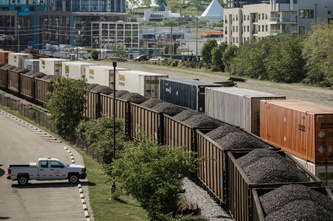
New Emissions Gap Report lays out emission cuts needed for return to 1.5°C
21.10.2026 - Global emissions cuts of 18 percent by 2030, and 45 percent by 2035, alongside increasing carbon dioxide removal, is needed to achieve the ‘lowest possible’ 1.5°C overshoot scenario, according the new edition of the United Nations Emissions Gap Report. This scenario would limit peak warming around mid-century to 1.7-1.8°C, and return warming below 1.5°C by 2100. This year, two chapters of the report were led by scientists from the Potsdam Institute for Climate Impact Research (PIK).
Read More
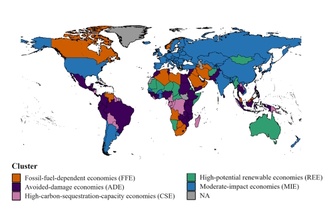
A world map of climate policy: Who stands to gain most?
15.10.2026 – Countries highly vulnerable to the phase-out of oil, gas and coal account for just 6 percent of global economic output, countries in Africa stand to benefit from their vast solar energy potential, and the economic interests of the US, Europe and China are affected by climate policy in surprisingly similar ways. A study by the Potsdam Institute for Climate Impact Research (PIK) published in Nature Sustainability now shows, for 169 countries around the world, how the fight against global heating affects national assets – and what geopolitical challenges and opportunities arise as a result.
Read More
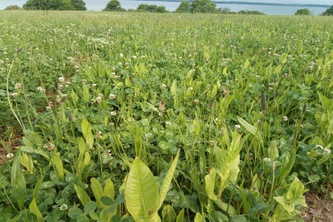
Plant diversity as insurance against climate change: Loss of diversity in grasslands could lead to 15 percent less CO₂ uptake in 2050
8.10.2026 - A substantial loss of plant diversity could mean that grasslands worldwide, including meadows and pastures, would absorb around 15 percent less CO₂ through photosynthesis by mid-century compared to a scenario in which diversity is maintained. In some of the most affected regions, CO₂ uptake through photosynthesis could decline by 50 percent, even in a scenario in which global warming remains below 2°C. The findings were published today in a new peer-reviewed study from the Potsdam Institute for Climate Impact Research (PIK) and Kiel University (CAU) in PNAS.
Read More
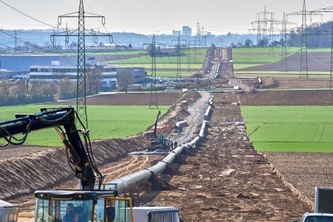
“New pathways explored”: Closing event for the Ariadne energy transition project
06.10.2026 – The Ariadne research project has provided important guidance for the energy transition in Germany since its inceptions in mid-2019, and will leave well-founded recommendations for its further orientation when it closes at the end of 2026. This is the key message of the Ariadne closing conference today in Berlin, attended by around 200 experts from the fields of science, politics, business and civil society. Coinciding with this event, a major report summarises the findings of the scientific project, which comprises 26 institutes and is led by the Potsdam Institute for Climate Impact Research (PIK).
Read More

GeoClimRisk: New country risk profiles explore climate and economic risks in India, Indonesia and Nigeria
06.10.2026 – Three newly published country risk profiles, to be presented today at the Berlin Climate and Security Conference, highlight the “Double Cost Crunch” facing India, Indonesia and Nigeria as they navigate mounting physical climate risks while transforming their economies. Based on these interacting pressures, the profiles identify potential risks, trade-offs and investment needs for economic development. They were developed with researchers from all three countries as part of the GeoClimRisk project, led by the Potsdam Institute for Climate Impact Research (PIK).
Read More
Rising emissions have locked-in future climate impacts, scale of damage depends on action now – 10 new insights
06.10.2026 – Past emissions have already committed the planet to higher temperatures, sea levels and other long-term impacts, with new research showing that the resulting economic and social costs are greater than previously understood. At the same time, rapid emissions cuts can still limit the damage, while advances in climate science are making it increasingly possible to trace responsibility for climate-related harm. These findings are among the 10 major developments highlighted in the 2026/2027 “10 New Insights in Climate Science” report, produced by more than 70 scientists from nearly 30 countries, including researchers from the Potsdam Institute for Climate Impact Research (PIK).
Read More
Strong interest in the PIK open day
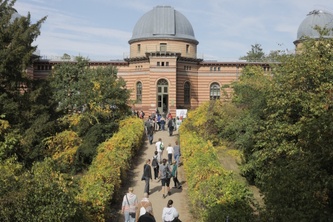
28.09.2026 – Fascinating talks, inspiring hands-on activities, entertaining educational games and an impressive exhibition – with a wide range of activities for young and old alike, the Potsdam Institute for Climate Impact Research (PIK) invited the public to visit its main building on Potsdam’s Telegrafenberg hill last Saturday (26 September). This was part of an event jointly organised with the three neighbouring institutes – GFZ, AIP and AWI – comprising a total of around 70 programme items.
Read More
Planetary Health Check 2026 finds mounting pressures across Earth’s life support systems
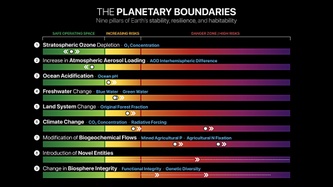
21.09.2026 – Seven breached Planetary Boundaries continue to worsen as record ocean heat, droughts, floods, wildfires and extreme heat reveal an Earth system under strain, according to the latest Planetary Health Check. The annual update is authored by more than 60 scientists and produced by the Planetary Boundaries Science Lab at the Potsdam Institute for Climate Impact Research (PIK).
Read More
Taiwan’s Minister of Environment leads large delegation on fact-finding visit to PIK
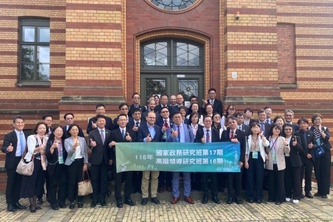
16.09.2026 – Around 40 high-level public officials from Taiwan, representing both central and local governments, recently visited the Potsdam Institute for Climate Impact Research (PIK) to learn about key topics of the institute’s work. The delegation was led by Taiwan’s Minister of Environment, Peng Chi-ming. PIK Director Ottmar Edenhofer opened with an introduction of the institute, followed by three high-calibre specialist presentations and a discussion.
Read More
International conference on environmental taxes and climate finance
14.09.2026 – How can environmental and climate taxes be designed at the international level so that they are effective, workable and fair? The Potsdam Institute for Climate Impact Research (PIK) is bringing together research and practical experience from around the world at an international conference in Berlin.
Read More
PIK researcher Felicitas Beier receives EHS doctoral award from the Berlin Scientific Society
07.09.2026 - Felicitas Beier, a researcher at the Potsdam Institute for Climate Impact Research (PIK), has been awarded the EHS Doctoral Award by the Berlin Scientific Society. The award, presented by the Erhard Höpfner Foundation (EHS), recognizes outstanding doctoral work by young scientists.
Read More

Area affected by wildfires in Europe could almost triple due to climate change
20.08.2026 – Increasingly hot, dry and windy conditions could substantially extend the area affected by wildfires across Europe, according to a new study led by the Potsdam Institute for Climate Impact Research (PIK) with contributions from the Senckenberg Society for Nature Research. In a low emissions scenario (SSP1-2.6), the researchers calculate roughly 39 percent more land would be burnt per year by the end of the century compared to today’s average. In a high emissions scenario (SSP3-7.0), it would be around 192 percent. While emissions reductions are crucial to reducing the impacts of fires, the results also show that improvements in prevention, early detection and firefighting have a key role to help to reduce the scope of area affected.
Read More

European cities plan to compensate for a fifth of their emissions through carbon removal, few have thought through how
14.08.2026 – An analysis of 103 European cities’ 2030 climate neutral plans (including 22 capital cities) shows that municipalities are planning to rely on carbon removal to compensate for about a fifth of their emissions. This would mean removing roughly 61 million tonnes of emissions from the atmosphere – close to Austria’s annual emissions.
Read More

Global crop models underestimate how rice responds to extreme heat
29.07.2026 – A new study on how rising temperatures will affect rice production in Science Advances compares 214 observations from field-warming experiments with seven crop models, revealing modelled estimates for yield reductions from 1°C of global warming were roughly half those of the real-world observed experiments (3.8 percent instead of 8.1 percent). The study was led by the Helmholtz Centre for Environmental Research with contributions from the Potsdam Institute for Climate Impact Research (PIK).
Read More

PIK supporting the next generation of scientists
20.07.2026 - Supporting the next generation of climate scientists is a key priority at the Potsdam Institute for Climate Impact Research (PIK). At the end of 2025, the institute hosted 106 doctoral candidates. Its doctoral supervision has now received external recognition: the University of Potsdam Graduate School awarded Norbert Marwan, deputy head of PIK's Complexity Science department, its SUPERvisor Award for Daily Supervision.
Read More

PIK Director Ottmar Edenhofer on the reform of the EU Emissions Trading System
17.07.2026 – The EU Commission today presented its proposal for a reform of the EU Emissions Trading System, which puts a price on carbon emissions in the energy sector, energy-intensive industries and European aviation. Here is the assessment of Ottmar Edenhofer, Director of the Potsdam Institute for Climate Impact Research (PIK).
Read More

Healthier, more sustainable diets would reshape global agriculture; a new study shows by how much
15.07.2026 – Transitioning to healthier, more sustainable global food systems by 2050 would substantially reshape agriculture by reducing livestock numbers and decreasing land use, according to a new study published in Nature. Led by Cornell University, with contributions from the Potsdam Institute for Climate Impact Research (PIK) and the Agricultural Model Intercomparison and Improvement Project (AgMIP), the research highlights both the possibilities and challenges of a global food system transformation. It also underscores the urgent need for proactive agriculture and food policies to drive this transformation and manage its socioeconomic impacts.
Read More

Mobility transition for Berlin, cooling strategies for Tirana: new study identifies suitable climate actions for European cities
15.07.2026 - A new study involving the Potsdam Institute for Climate Impact Research (PIK) examines which climate mitigation and adaptation priorities cities should set depending on their city type.
Read More

Climate Impact Attribution: Professorship for Sabine Undorf
01.07.2026 – Since July 2026, Sabine Undorf of the Potsdam Institute for Climate Impact Research (PIK) has been teaching and conducting research as Professor of Meteorology and Climatology at the University of Trier. There, she will further develop her research on the attribution of climate impacts and teach in the university's environmental and spatial sciences programmes. Attribution research investigates drivers of observed historical and future climate change and their impacts, both globally and on regional scales, including long-term changes and extreme events.
Read More

New UN brief highlights governance challenge of Earth system tipping points
24.06.2026 – A new science brief by the UN Secretary-General’s Scientific Advisory Board highlights Earth system tipping points as a unique global governance challenge. The brief, produced in partnership with the Potsdam Institute for Climate Impact Research (PIK), argues that the risks of crossing tipping points require decision-making under deep uncertainty, long time horizons and potentially hard-to-reverse change.
Read More

This is how fair climate action works: Findings for 88 countries with 5 billion people
24.06.2026 – A study by the Potsdam Institute for Climate Impact Research (PIK) now sheds light, for the first time, on the carbon intensity of household consumption across much of the world – and thus on the distributional impact of climate policy, which, after all, makes carbon more expensive. The greatest differences are not between rich and poor, but within income groups: key factors include car ownership, place of residence and energy use. The study provides guidance on how to socially balance the fight against global heating. Published in the Journal of Environmental Economics and Management (JEEM), it is supplemented by an interactive online carbon price calculator.
Read More