

“Uncertainty around the social impacts of climate policy is a problem for many governments worldwide,” says Leonard Missbach, PIK researcher and lead author of the study. “They don’t know how the costs of the measures will be distributed across their populations, nor how they can compensate for these burdens in a way that ensures political acceptance. That’s why we took a closer look at this using a novel, large-scale dataset and applying machine learning.”
The dataset is based, on the one hand, on national surveys in which a total of 1.7 million representatively selected private households anonymously list their expenditure. They mirror the reality of life in 88 countries with a total of 5 billion people. Secondly, the dataset contains information on how much CO₂ can be attributed to individual expenditure items – both directly, such as for petrol and heating oil, and indirectly for all other expenditure.
Using this hitherto unprecedented collection of individual “carbon footprints”, the PIK research team then analyses who exactly is affected by climate policy measures. It looks at differences in the additional burden imposed by climate policy relative to income. The greater the differences between households within a country, the more cases of hardship will result from the policy, and the more difficult it becomes to provide compensation.
Some well-intentioned compensation may actually exacerbate inequality
One key finding is that, for all 88 countries in the study, the impact gap between rich and poor – the traditional focus of social balancing efforts – is significantly smaller than the disparities within income groups. Compensation measures targeting the traditional gap, such as graduated transfers or tax rebates, therefore help many vulnerable households less than expected, and may even exacerbate the inequality of impacts.
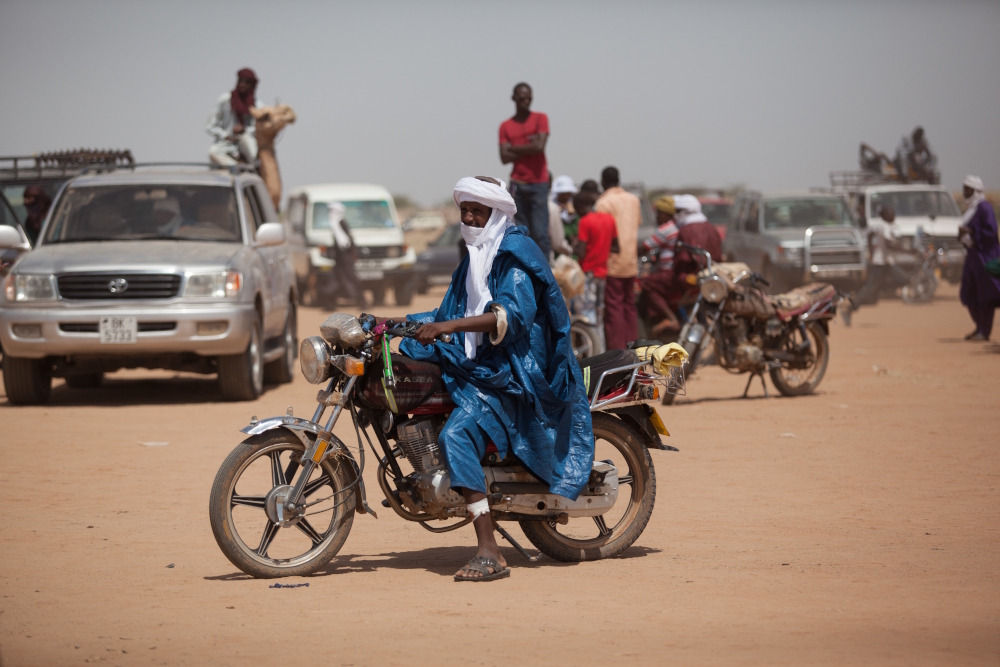
Using machine learning, the study disentangles the drivers of heterogeneity. Key factors identified are (1) ownership of cars and motorbikes, (2) geographical aspects such as urban versus rural areas, or specific regions, and (3) energy use, including the energy sources used for cooking, lighting and heating, connection to the electricity grid, and the use of larger household appliances. But not all factors are equally relevant in every country. For example, motorcycle ownership is an important household characteristic that helps explain the relatively greater burden imposed by climate policy in Niger, Burkina Faso and Togo, whereas differences between households in Latvia, Sweden and the Czech Republic are particularly well explained by the urban–rural divide.
The question of energy sources for cooking is particularly relevant in Nicaragua and India, while the use of household appliances is key in Switzerland and the Philippines. However, there are also many countries where differences in the burden cannot be explained by common characteristics, and further research is needed to identify options for targeted compensation.
Opportunities for cross-nation policy conversations
To make the diversity of findings more tangible, the research team formed ten clusters of countries with similar patterns for the distribution of household CO₂ intensity through consumption. This serves, not least, to highlight opportunities for cross-national policy conversations.
“We deliberately avoid recommending any specific policies in individual countries,” emphasises Jan Steckel, PIK researcher and co-author of the study. “That is, after all, a matter for the government to decide. Our work provides guidance to policymakers on social balancing and helps non-state actors understand how policy measures work. In principle, of course, the following applies: pricing CO₂ emissions or phasing out subsidies for fossil fuels generates additional government revenue – unlike, for example, regulations, bans or limits – and thus makes social equity easier to achieve.”
The publication also forms the basis of an English-language online tool developed by the research team in collaboration with the German Society for International Cooperation (https://cpic-global.net/). Using the “Carbon Pricing Incidence Calculator”, you can determine the distributional effects of climate policy and social compensation measures for all 88 countries, and calculate how you yourself would be affected. An explanatory video is also available (https://youtu.be/8MjQ8gyK-4Q).
Article:
Missbach, L., Steckel, J., (2026): The heterogeneous effects of climate policy on households: Evidence from 88 countries. – Journal of Environmental Economics and Management (JEEM). [DOI: 10.1016/j.jeem.2026.103382]
Contact:
PIK press office
Phone: +49 331 288 2507
E-Mail: press@pik-potsdam.de
Web: https://www.pik-potsdam.de/en
Social Media: https://www.pik-potsdam.de/socials