Home›News›Latest News›Climate research and the energy transition brought to life: PIK & Ariadne at Potsdam Science Day
Climate research and the energy transition brought to life: PIK & Ariadne at Potsdam Science Day
12.05.2026 - Planetary boundaries, climate-resilient coffee, future power grids and an ocean circulation experiment for children: The Potsdam Institute for Climate Impact Research (PIK) and the Kopernikus Project Ariadne presented research on climate change, the energy transition and societal transformation at Potsdam Science Day on the Golm campus. With interactive exhibits, discussions and virtual reality applications, visitors could experience science firsthand.
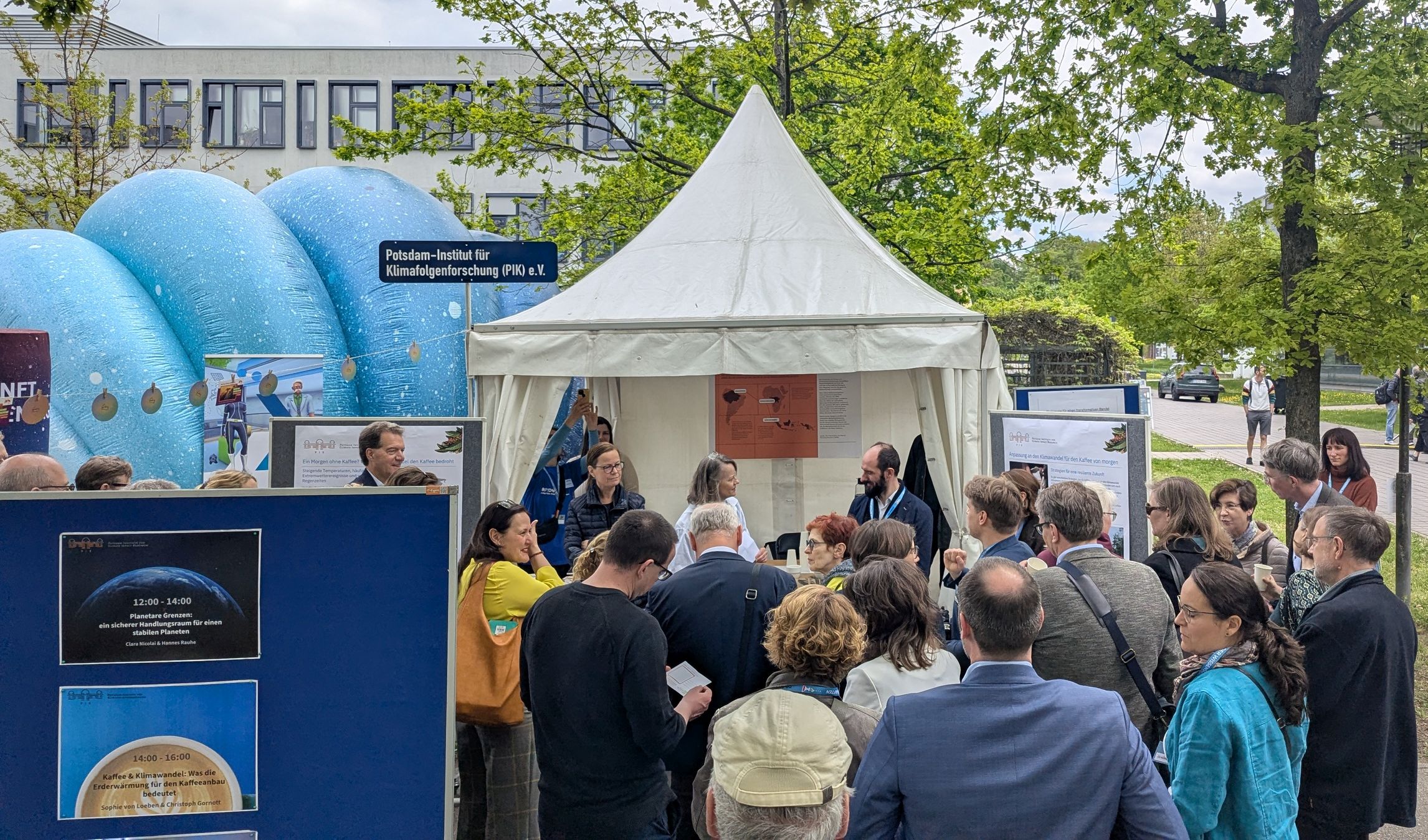
During a guided tour, Brandenburg’s Science Minister Manja Schüle, Oliver Günther, PIK Administrative Director Bettina Hörstrup and other representatives from academia and municipal companies stopped by the PIK stand. Photo: PIK
First up were the planetary boundaries: visitors learned from PIK researchers Hannes Rauhe and Clara Nicolai about the limits within which the Earth system can remain stable and why staying within them is crucial for a livable planet. Afterwards, the focus at the PIK booth shifted to coffee and climate change. Sophie von Loeben and Christoph Gornott explained how rising temperatures and changing rainfall patterns are putting coffee cultivation under pressure worldwide, and what adaptation strategies are available.
A guided tour for invited guests also stopped at the Potsdam Science Day venue. Among those taking part were Brandenburg’s Science Minister Manja Schüle, Oliver Günther and other heads of research institutions and municipal companies.
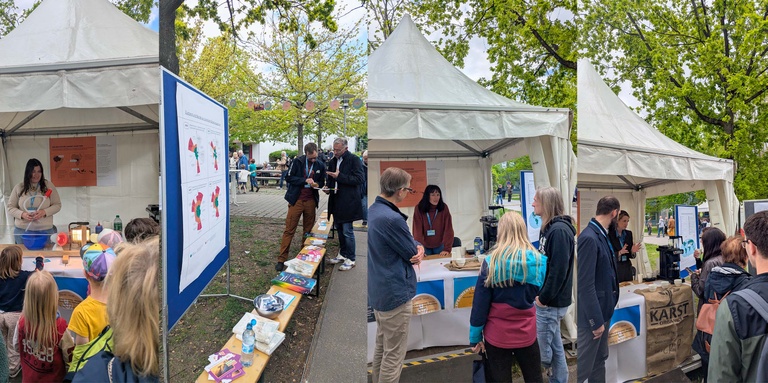
Coffee & climate change, planetary boundaries and ocean currents: visitors at the PIK and Ariadne stand at Potsdam Science Day. Photo: PIK
The PIK ocean circulation experiment proved especially popular with younger visitors. PIK staff member Anna-Maria Watzal demonstrated how ocean currents work and showed how temperature differences influence the movement of water. Children and adults alike could observe the processes themselves and discuss why changes in such currents can have far-reaching consequences.
The Kopernikus Project Ariadne presented a wide-ranging programme on the energy transition and climate policy. Topics included socially just heating transitions, hydrogen in a climate-neutral future and the role of flexible power grids. A virtual reality application also allowed visitors of all ages to immerse themselves in possible climate-neutral energy systems.
This year marked the 13th Potsdam Science Day, bringing together more than 40 universities, schools and research institutions from Brandenburg. With hands-on activities, talks and experiments, the event aimed to make current research accessible to all age groups. Around 7,800 visitors attended the event on the Golm campus.
Programme at the PIK and Ariadne stand at Potsdam Science Day 2026:
PIK
Planetary boundaries: a safe operating space for a stable planet
Coffee & climate change: what global warming means for coffee cultivation
Ocean circulation experiment (especially for children)
Ariadne
How can the heating transition be financed fairly?
EU climate policy — but socially just?
What role does hydrogen play in a climate-neutral future?
How power grids are changing in the energy transition
Power-to-X: using virtual reality to explore a climate-neutral future