

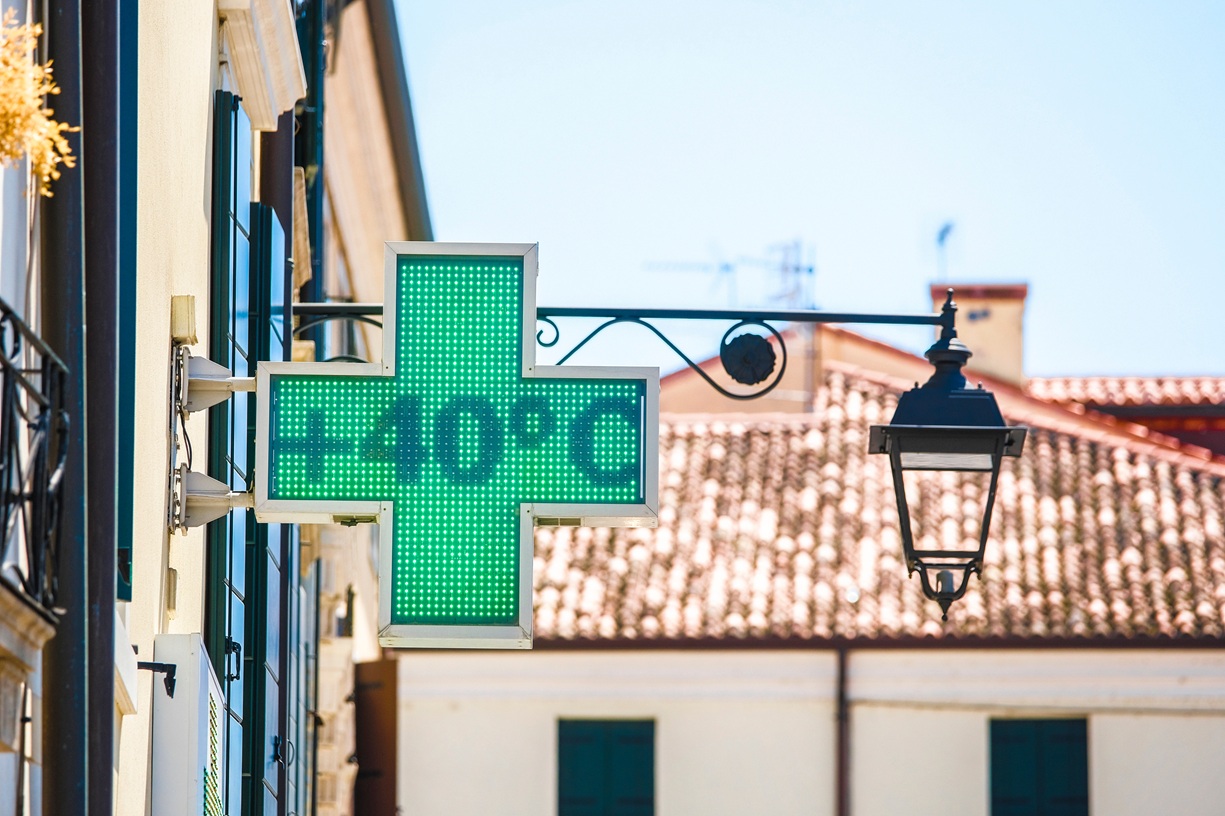
Nearly every monitored European region (99.6 percent) has seen an increase in heat‑attributable deaths over the past decade according to the report, to which researchers from the Potsdam Institute for Climate Impact Research (PIK) contributed. Extreme heat warnings have increased by 318 percent, from one annual daily extreme warning in 1991-2000 to 4.3 in 2015-2024.
In 2023 food insecurity linked to heatwaves and drought affected more than one million additional people compared with previous decades. This dire situation is affecting the most vulnerable the hardest: infants, older adults, and outdoor workers are among those most affected by extreme heat.
Despite ongoing efforts to decarbonise, the report shows that Europe’s reliance on fossil fuels continues to expose people to health‑harming pollution and volatile energy markets. Fossil fuel subsidies reached €444 billion in 2023 – 3.3 times higher than in 2016 – as governments were forced to step in to protect households from soaring energy prices following Russia’s invasion of Ukraine.
However, there are signs of progress. Air pollution related deaths from the power sector in the EU27 have fallen by 84 percent since 2000, and by 58 percent in the transport sector.
PIK’s Hannah Heiliger (née Klauber) co-led the economics and finance working group for the report, assessing the financial and economic dimensions of climate change impacts and their solutions, and Max Callaghan, Jan Minx and Tim Repke calculated the indicators that track engagement from the scientific community on health and climate change.
The report was authored by 65 researchers into total, from 46 academic and UN institutions, tracking trends in climate change and health with 43 indicators across five domains.
Contact:
PIK press office
Phone: +49 331 288 2507
E-Mail: press@pik-potsdam.de
Web: https://www.pik-potsdam.de/en
Social Media: https://www.pik-potsdam.de/socials