

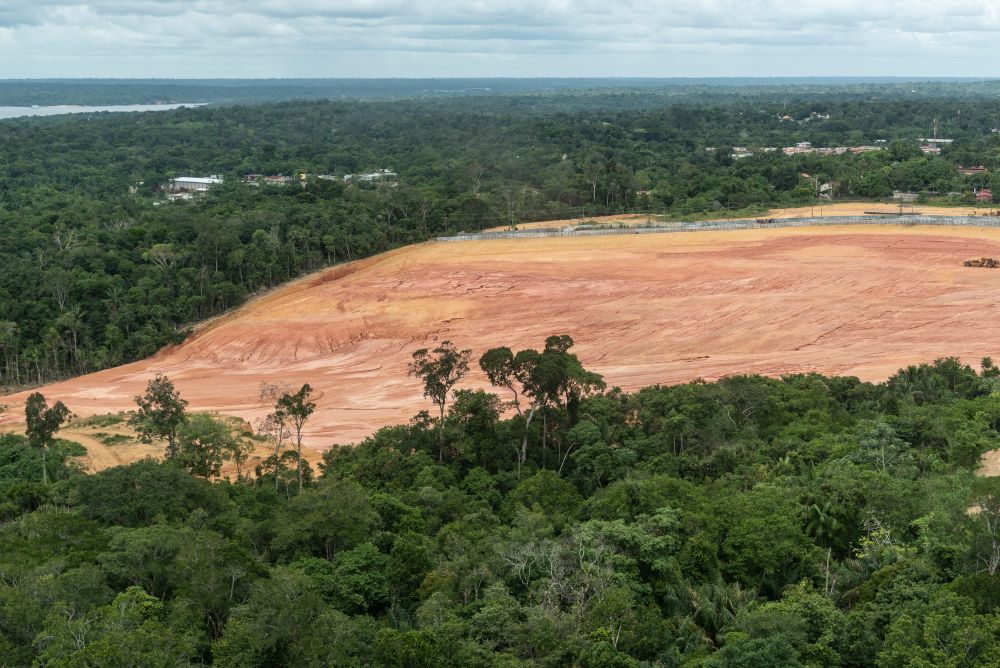
“Deforestation makes the Amazon far less resilient than we previously anticipated. It dries out the atmosphere and weakens the forest’s own rainfall generation,” said Nico Wunderling, PIK scientist and lead author of the study. “Even moderate additional warming could then trigger cascading impacts across large parts of the forest.”
Around 17-18 percent of the Amazon forest has already been lost, placing the system close to the critical range identified in the study.
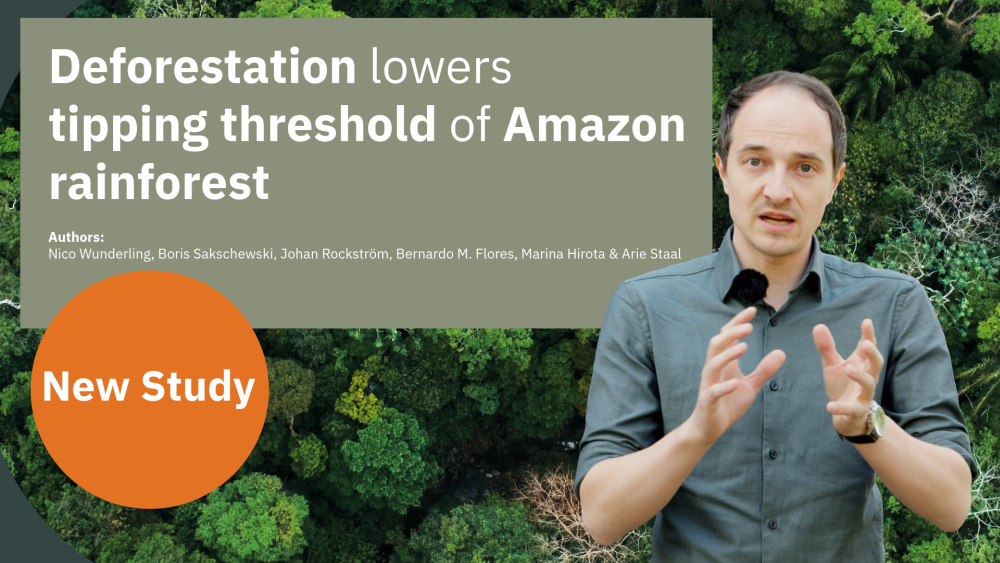
Climate change and deforestation interact to cascade impacts across the Amazon
The study provides the most detailed quantification yet of how warming and deforestation simultaneously impact the stability of the Amazon. It combines climate projections, hydrological modelling and a network approach of atmospheric moisture transport.
“Global warming and deforestation affect rainfall feedbacks across the Amazon system,” explained Arie Staal, Assistant Professor at Utrecht University in the Netherlands and co-author of the study. “When deforestation interrupts moisture transport in one area of the Amazon, entire regions hundreds or even thousands of kilometres away can also lose resilience through cascading drought effects.”
A key reason for forest degradation is that the Amazon is able to generate part of its own rainfall: up to half of its precipitation comes from water recycled by the trees themselves. Trees in the Amazon release water vapour into the atmosphere that later falls again as rain across the basin. When rainforest is lost, this moisture recycling weakens, drought stress increases and other forest regions become more vulnerable to degradation.
The scientists emphasised that halting deforestation and restoring forest cover could substantially strengthen the Amazon’s resilience to unavoidable warming.
“Until now, the Amazon rainforest has played a vital role in stabilising the Earth system as a carbon sink, regulator of moisture recycling and host of Earth's richest biodiversity on land. Continued deforestation is undermining this stability, pushing the forest closer to a tipping point. This would not only be devastating for the region, but could have far-reaching consequences for the entire planet,” said Johan Rockström, PIK Director and co-author of the study.
“However, these changes are not inevitable. Stopping deforestation, together with ecologically restoring degraded forests and rapid emission cuts can still reduce the risks,” Rockström concluded.
Article:
Wunderling, N., Sakschewski, B., Rockström, J., Flores, B. M., Hirota, M., Staal, A. (2026): Deforestation-induced drying lowers Amazon climate threshold. Nature. DOI:10.1038/s41586-026-10456-0
Link to the article:
Contact:
PIK press office
Phone: +49 331 288 2507
E-Mail: press@pik-potsdam.de
Web: www.pik-potsdam.de/en
Social Media: www.pik-potsdam.de/socials