

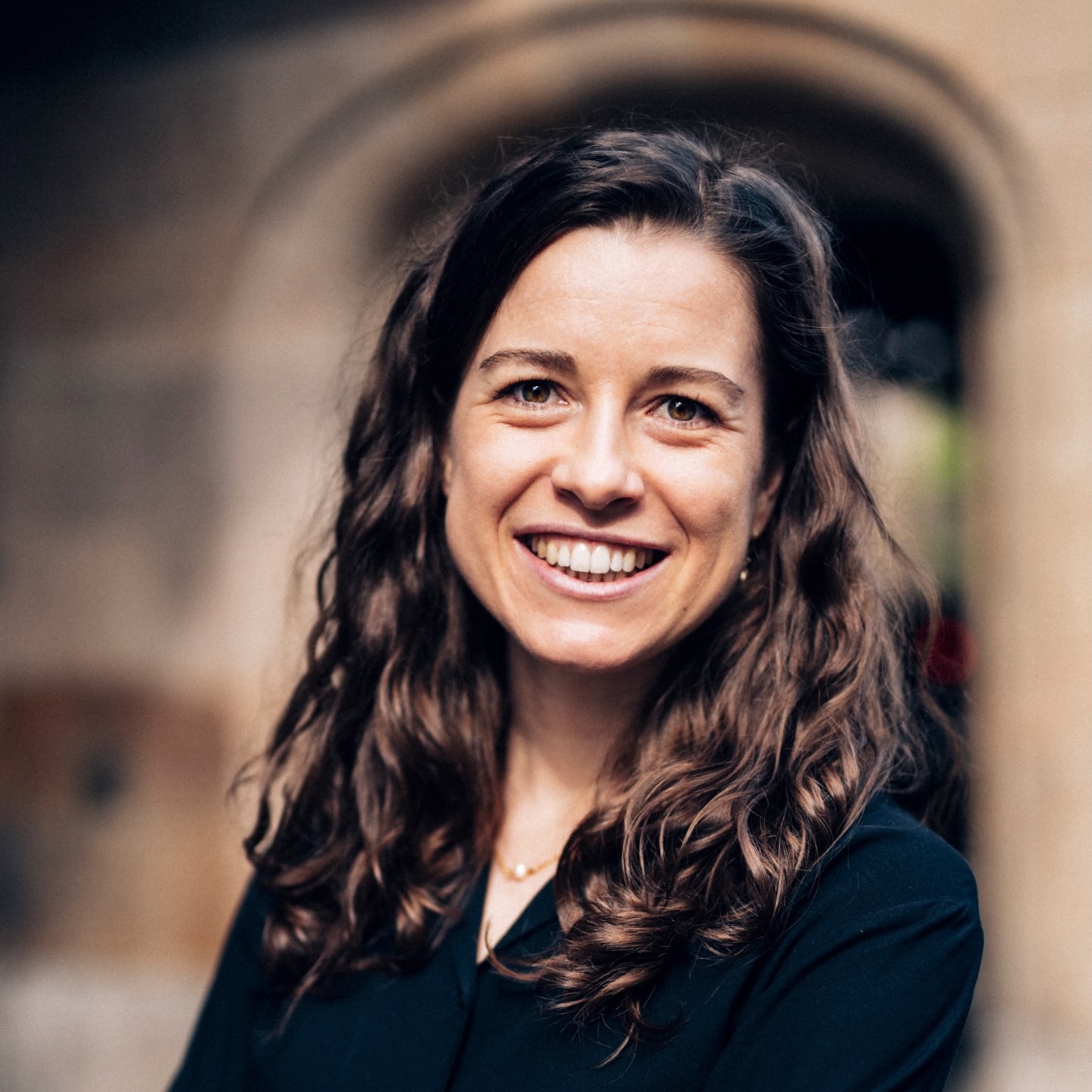
Alina Bill-Weilandt is a climate risk management specialist with ten years of experience at the intersection of climate risk analytics, ecosystem service assessments, and welfare economics. She develops models and frameworks to evaluate the effectiveness of climate risk management policies, including nature-based solutions and climate risk financing & transfer instruments.
Contact
14412 Potsdam
ORCID
Before joining PIK, Alina worked for four years at the Earth Observatory of Singapore and the Asian School of the Environment at Nanyang Technological University in Singapore. During that time, she conducted climate risk assessments and ecosystem service valuations in Southeast Asia and completed a four-year PhD Program in Environmental Science.
Previously, Alina worked at the World Bank, the German Federal Ministry for Economic Cooperation and Development, the German development agency GIZ, and multiple NGOs. As Disaster Risk Management Specialist at the World Bank, she supported countries in reducing, managing, and financing climate risks as well as in designing and implementing green infrastructure projects.
Alina completed a Master’s degree in Environmental Policy at Sciences Po Paris, a Master’s degree in Political Science at Freie Universität Berlin, and a Bachelor’s degree in Political Science at Bremen University. She spent the final year of her Bachelor’s degree at Dickinson College in the United States.
Alina is passionate about bridging science and policy to inform evidence-based policies and investments that strengthen climate resilience, ecosystem conservation, and financial protection. She is a co-author of the Global Tipping Points Reports 2023 and 2025.
Her research focuses on developing models and frameworks to evaluate the effectiveness of climate risk management policies. Her multidisciplinary work involves ecosystem services assessments, probabilistic climate risk assessment, welfare economics, and household surveys. Thematic areas of interest include:
- Nature-positive climate risk financing and insurance
- Nature-based solutions for disaster risk reduction
- Evaluation of climate risk management measures
- Household resilience and equity-focused climate risk modeling
In her dissertation, she developed models for nature-positive and equitable climate risk management. Among others, she created a typology of 33 nature-positive climate risk financing and risk transfer instruments, as well as a database of such instruments with over 300 entries. She also developed flood damage models for rice using machine learning and performance assessments in spatial transfers. A key contribution of the dissertation is an equity-oriented probabilistic risk modeling framework that assesses the extent to which climate risk management measures - such as nature-based solutions and nature-positive social protection systems and insurance - contribute to the preservation of social welfare. The approach explicitly accounts for uncertainties related to climate scenarios and models.
By integrating probabilistic analysis, uncertainty treatment, and welfare risk assessment, her research provides frameworks to inform policy and financing for nature-positive, climate-resilient, and equitable development.
Peer-reviewed publications:
Bill-Weilandt, A. et al. (2026). Nature-positive climate risk transfer and financing instruments: A systematic review. Communications Earth and Environment, http://doi.org/10.1038/s43247-026-03388-0 (in press)
Bill-Weilandt, A. et al (2026). Flood damage functions for rice: Synthesizing evidence and building data-driven models. Natural Hazards and Earth System Sciences. https://doi.org/10.5194/nhess-26-925-2026
Kasmalkar, I. et al. Flow-tub model: A modified bathtub flood model with hydraulic connectivity and path-based attenuation. MethodsX 12, 102524 (2024)
Bill-Weilandt, A. (2020). Klimarisikomanagement in Mosambik. Internationale Politik. Special Edition
Policy reports & other:
Pearce-Kelly, P. et al. (2025). Warm water coral reefs. In: Lenton, T. (2025), Global Tipping Points Report 2025. https://global-tipping-points.org/resources-gtp/report-2025/
Hamel, P. et. al (2024). Towards better information for climate resilience in Southeast Asian informal settlements. In: ASEAN Risk Monitor and Disaster Management Review (ARMOR)
McKay, D. et al. (2023). Tipping points in the biosphere. In: Lenton, T. (2023), Global Tipping Points Report 2023. https://report-2023.global-tipping-points.org
TRANSFORM: https://www.pik-potsdam.de/en/output/projects/all/1083
GSO Leadership Academy (2025)
S. R. Geoscience Scholars Fund Award (SGD 20,800) (2024)
Computational Hydraulics Int. Educational Grant (2024)
PhD Scholarship: Singapore International Graduate Award (2022 – ‘25)
Engagement Prize, German National Academic Foundation (2019)
Mercator Fellowship on International Affairs (2018 – ‘19)
Fulbright Scholarship for studying in the U.S. (2014 – ’15)
Scholarship Ev. Studienwerk Villigst (2013 – ‘18)
Mobility grant, German French University (2015 – ‘17)