
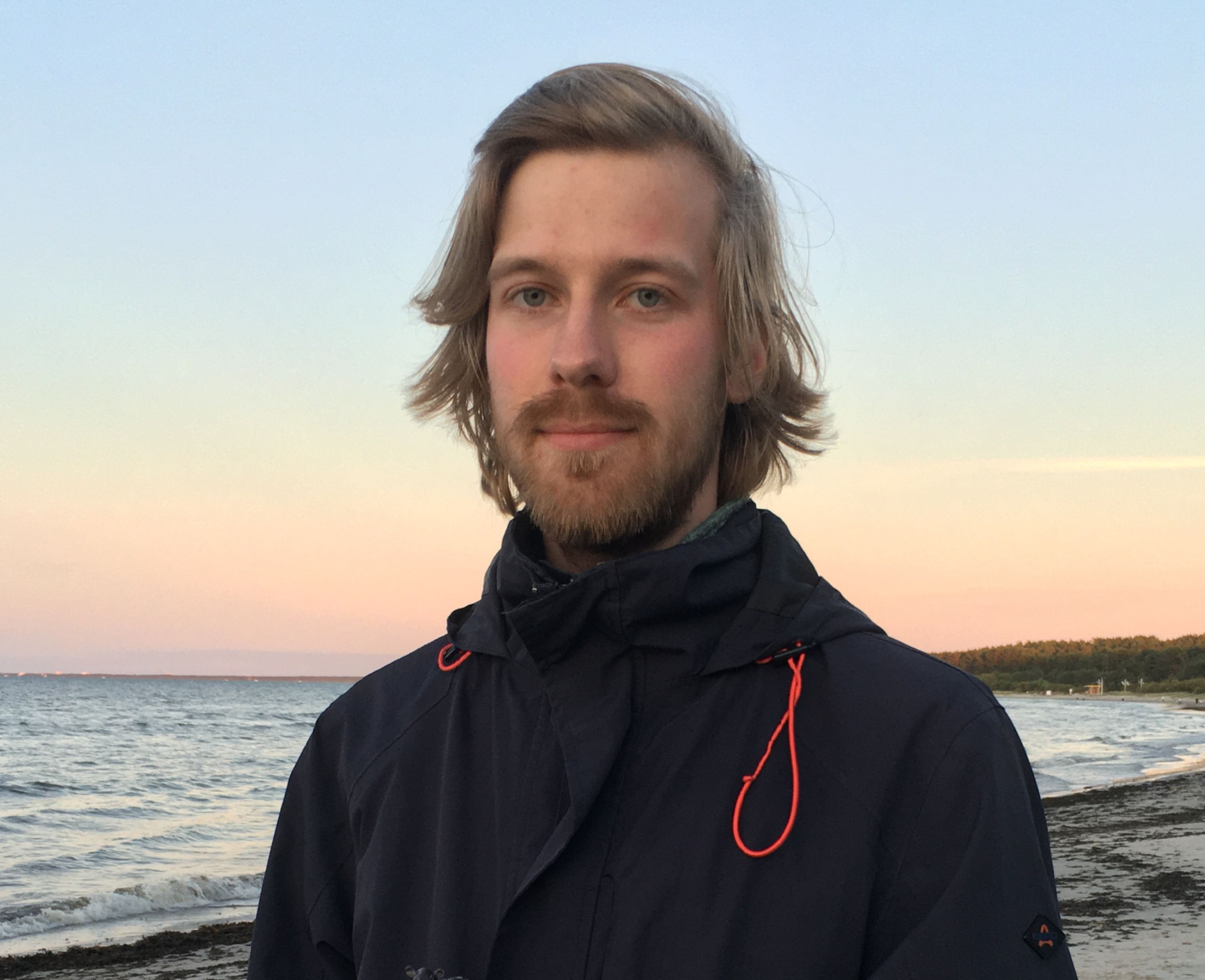
Kaspar is a doctoral researcher in the Past and Future Earth (PATH) group at PIK. Using the Earth system model Climber-X, he investigates the climate of the Permian period, which lasted from 299 to 252 million years ago.
During this time, Earth experienced a wide range of climate states – ranging from the cold conditions of the Late Paleozoic Ice Age to an extremely warm period, culminating in the largest known mass extinction event at the Permian-Triassic boundary. Kaspar's research focuses on the driving factors behind this deglaciation and the associated changes in global climate. Furthermore, he aims to provide the necessary context for proxy data obtained through the Deep Dust Drilling Project.
Kaspar is particularly interested in the geological carbon cycle, the influence of the ancient biosphere on Permian climate, and climate changes on orbital time scales – similar to the glacial cycles Earth has experienced over the past several million years.
For his Master's thesis in the PATH group, he explored interactions between climate and plate tectonics using a conceptual model, in collaboration with Julius Eberhard. Kaspar holds an MSc in Physics from Potsdam University.
Contact
14412 Potsdam
ORCID
Görg, K., L. Mathey, V.P. Singh (2025): Realizing an atomic quantum interference device in a rotating-box potential, Physical Review Research 7, 043340. DOI: 10.1103/xpxq-g8ds.