

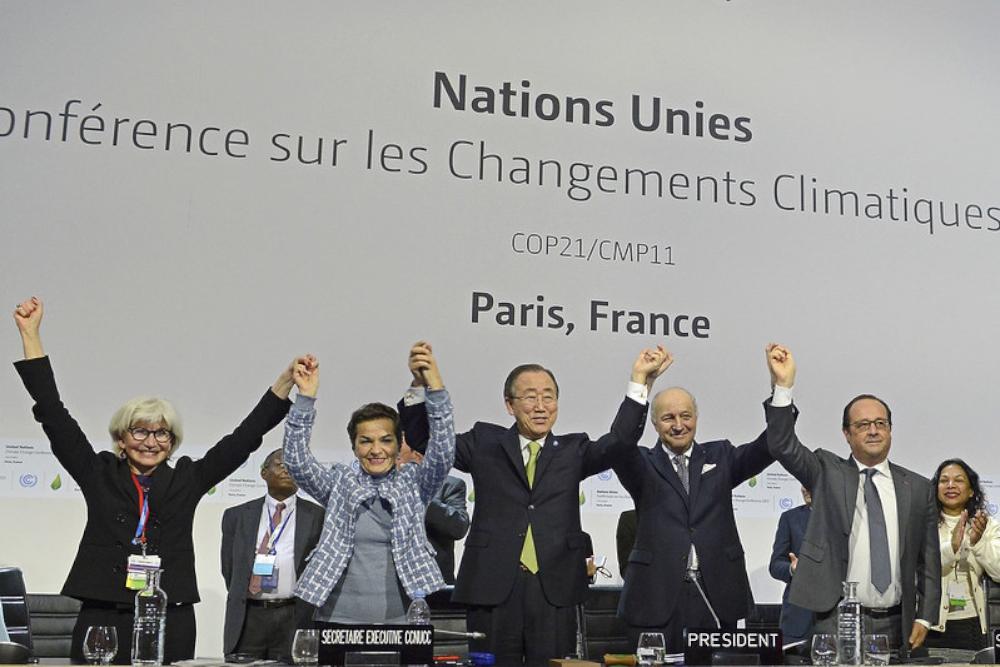
Johan Rockström, Earth System Scientist and PIK Director, remarks:
“Ten years ago, we left Paris with a sense of relief. At last, a legally binding framework broadly aligned with science. A decade later, we must, at least so far, admit failure. Despite the progress in expanding renewable energy, and breakthroughs in electrifying transport, global emissions continue to rise. The remaining carbon budget for an orderly phase-out of fossil-fuels is nearly exhausted. We experienced a 1.5°C warmer world for the first time in 2024, and warming is accelerating. Oceans are heating faster than expected, and key Earth systems, such as tropical coral reefs, are approaching critical thresholds. Overshoot is now unavoidable, placing the world in danger. Our only real hope now is that the world recognizes the failure and the danger, and acts accordingly.”
Ottmar Edenhofer, Climate Economist and PIK Director, adds:
“The Paris Agreement was an important milestone because it established a global legal framework. But after ten years, the key question remains delivery, especially as we are set to exceed 1.5°C. That does not mean the 1.5°C limit is abandoned; it means we must do everything possible to limit the overshoot. We need to radically reduce emissions and rapidly scale-up carbon dioxide removals for residual emissions that cannot be avoided. Alongside natural carbon sinks, technological solutions such as carbon capture and storage will be required. With its landmark decision on the 2040 climate target, the EU continues to decarbonise its economy towards carbon neutrality by 2050. It will amend the emissions trading system and scale up carbon removals. Carbon pricing will remain essential for driving down global fossil emissions. Only then will the Paris goals be within reach.”
Contact:
PIK press office
Phone: +49 331 288 2507
E-Mail: press@pik-potsdam.de
Web: https://www.pik-potsdam.de/en
Social Media: https://www.pik-potsdam.de/socials