

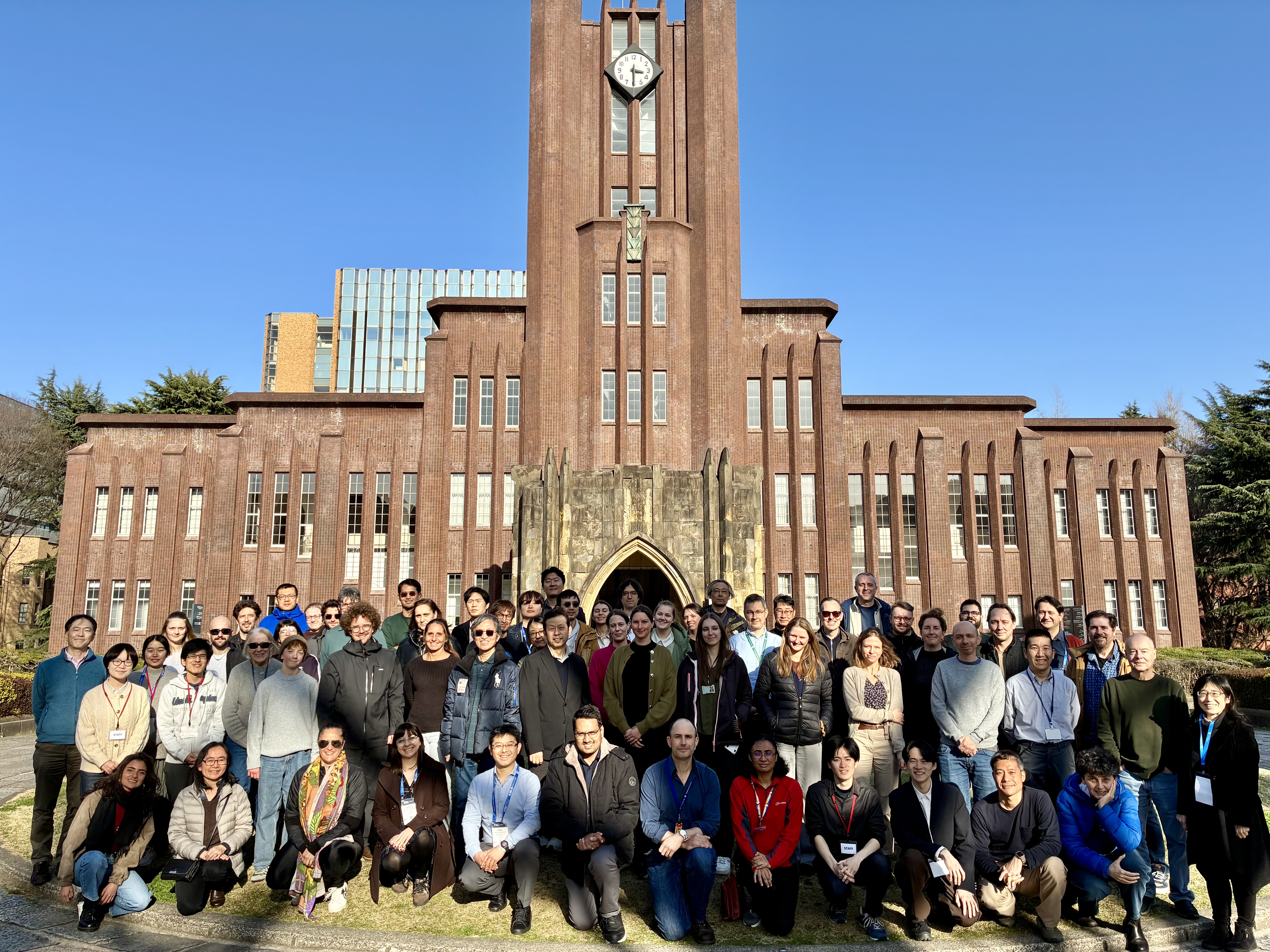
The General Assembly of the Tipping Points Modelling Intercomparison Project (TIPMIP) was held at Tokyo University and co-organized by our research partners in Tokyo and the TIPMIP team. Not only was it the next in the continental rotation (Asia after Europe and North America in 2023 and 2024), but notably it was the occasion for many groups to present the first results obtained with Earth System Models who have followed the TIPMIP simulation protocol. We were happy to not only see first in-depth studies of individual model results, but also early multi-model analyses.
Key topics that were discussed included the assessment of tipping behaviour likelihood in the atmosphere, ocean, cryosphere, permafrost and biosphere, as well as the interactions between potential tipping elements and the consequences of tipping on both policy-relevant and long-term commitment time scales. Breakout groups allowed in-depth exchanges on very practical topics, such as the formalization of the protocol for the standalone models (such as land and ice), using outputs from the Earth System models produced upstream. Plenary discussions were used to outline the research priorities of the community and prepare for the next important deadlines of the project, in particular in view of the next IPCC assessment cycle.
Right after the meeting, many participants moved to Kyoto to attend the CMIP Community Workshop 2026 – the key gathering of the global climate modelling community to discuss the next months and years of the Coupled Model Intercomparison Project (CMIP). CMIP is a major backbone of the IPCC assessment reports, as it coordinates modelling efforts across working groups, countries and biophysical systems. The fundamental principle of a MIP is the following: Each model (computer simulation) is different, and has its pros and cons in terms of resolution, the processes it captures and complexity. We learn a lot about the Earth system — and the models aiming to describe it — by comparing what different models do under the same scenario. The scenario is defined by the research question(s) under consideration, and comes with a set of instructions that each participating model needs to follow (think of a recipe). Most prominently, the projected global warming in the 21st century under different greenhouse gas emission scenarios is derived from CMIP simulations.
The topic of tipping points has been defined by the research community as a fundamental science question in the upcoming CMIP cycle, and TIPMIP is a central MIP addressing this. PB-Tip scientists have convened a plenary session on tipping points, where early-career and senior scientists presented the newest results on tipping points modelling, including a range of TIPMIP results. Ricarda Winkelmann and Donovan Dennis gave a keynote and flashtalk on the project, respectively.