

Contact
14412 Potsdam
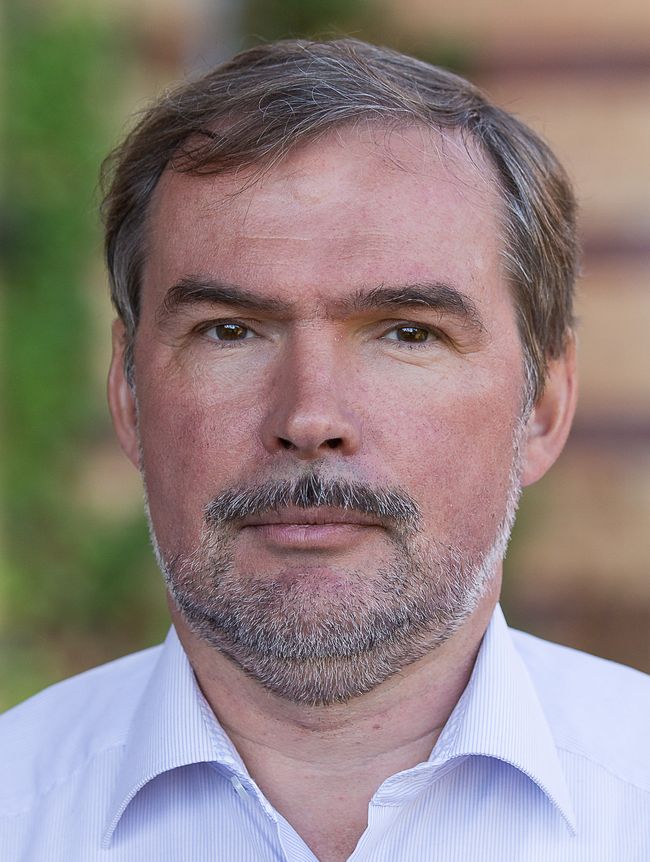
I was born in Russia in 1960, and received my graduate degree in physics from Moscow State University in 1983. I later earned a PhD in physical oceanography from the same institution in 1988. After completing my doctorate, I worked as a research scientist at the Computing Centre of the Russian Academy of Sciences, where I developed numerical climate models and studied the climatic consequences of nuclear war, commonly referred to as “nuclear winter.” In 1992, I moved to the International Institute for Applied Systems Analysis (IIASA) in Laxenburg (Austria), where I spent two years working on integrated assessment and global climate change. In 1994, I relocated to Germany and joined the Potsdam Institute for Climate Impact Research (PIK), where I have worked ever since.
Over the past 30 years, I have been involved in—and have led—the development of a family of Earth System Models of Intermediate Complexity (EMICs) known collectively as CLIMBER (Climate–Biosphere models). Three CLIMBER models have been developed, with the most recent and comprehensive version being CLIMBER-X. In addition to global Earth system models, I have led the development of regional models of the Greenland glacial system, as well as several other modeling tools, including conceptual models of Quaternary glacial cycles. Using the CLIMBER models together with my colleagues, we carried out the first simulations of the Last Glacial Maximum and the mid-Holocene climates. We also simulated abrupt glacial climate changes, such as Dansgaard–Oeschger cycles and Heinrich events, as well as full glacial cycles with interactive ice sheets and a global carbon cycle. In particular, we demonstrated that the slow geomorphological changes caused by glacial erosion in combination with CO2 lowering can largely explain the transition from a dominant 41,000-year climate cycle to a 100,000-year cycle about one million years ago, known as the mid-Pleistocene transition. We also performed the first simulations of the long-term (up to one million years) impacts of anthropogenic climate change. The results of these studies have been used to inform the selection of sites for permanent nuclear waste storage in several countries. In recent years, my research has also focused on the stability of the Atlantic Meridional Overturning Circulation and the response of the Greenland Ice Sheet to global warming.
As a lead author, I contributed to the Fifth Assessment Report of the IPCC. I have authored more than 150 scientific publications and recently published my first book, Quaternary Climate Dynamics, with Cambridge University Press.
Selected publications
Ganopolski, A. (2024) Toward generalized Milankovitch theory (GMT). Climate of the Past, 20, 151–185.
Willeit, M., Ganopolski, A., Edwards, N.R. and Rahmstorf, S. (2024). Surface buoyancy control of millennial-scale variations in the Atlantic meridional ocean circulation. Climate of the Past, 20(12), 2719-2739.
Timmermann, A., Yun, K.-S., Raia, P., Ruan, J., Mondanaro, A., Zeller, E., Zollikofer, C., Ponce de León, M., Lemmon, D., Willeit, M. and Ganopolski, A. (2022) Climate effects on archaic human habitats and species successions, Nature, 604, 495-501.
Willeit, M., Ganopolski, A., Calov, R., Brovkin, V. (2019). Mid-Pleistocene transition in glacial cycles explained by declining CO2 and regolith removal, Science Advances, 5: eaav7337.
Ganopolski, A., and Brovkin, V. (2017) Simulation of climate, ice sheets and CO2 evolution during the last four glacial cycles with an Earth system model of intermediate complexity. Climate of the Past, 13, 1695–1716.
Ganopolski, A., Winkelmann, R., Schellnhuber, H.J. (2016) Critical insolation-CO2 relation for diagnosing past and future glacial inception. Nature, 529, 200-203.
Willeit, M., Ganopolski, A., Calov, R., Robinson, A., Maslin, M. (2015) The role of CO2 decline for the onset of Northern Hemisphere glaciation. Quaternary Science Reviews, 119, 22-34.
Robinson, A., Calov, R. and Ganopolski, A. (2012) Multistability and critical thresholds of the Greenland ice sheet, Nature Climate Change, 2, 429-432
Ganopolski, A. and Calov R. (2011) The role of orbital forcing, carbon dioxide and regolith in 100 kyr cycles. Climate of the Past, 7, 1415–1425
Ganopolski, A., R. Calov, and M. Claussen (2010) Simulation of the last glacial cycle with a coupled climate ice-sheet model of intermediate complexity. Climate of the Past, 6, 229-244.
Ganopolski, A. and Roche, D. (2009) On the nature of lead-lag relationships during glacial-interglacial climate transitions, Quaternary Science Reviews, 37/38, 3361-3378.
Archer, D., and A. Ganopolski (2005) A movable trigger: Fossil fuel CO2 and the onset of the next glaciation, Geochem. Geophys. Geosyst., 6, Q05003, doi:10.1029/2004GC000891.
Calov, R., and A. Ganopolski (2005) Multistability and hysteresis in the climate-cryosphere system under orbital forcing, Geophys. Res. Lett., 32, L21717.
Haug G.H., A. Ganopolski, D.M. Sigman, A. Rosell-Mele, G.E.A. Swann, R. Tiedemann, S.L. Jaccard, J. Bollmann, M.A. Maslin, M.J. Leng, and G. Eglinton (2005) North Pacific seasonality and the glaciation of North America 2.7 million years ago. Nature, 433, 821-825.
Calov, R., A. Ganopolski, V. Petoukhov, M. Claussen, and R. Greve (2002) Large-scale instabilities of the Laurentide ice sheet simulated in a fully coupled climate-system model. Geophys. Rev. Lett., 29, 2216.
Ganopolski, A., and Rahmstorf, S. (2001) Simulation of rapid glacial climate changes in a coupled climate model. Nature, 409, 153-158
Claussen M., C. Kubatzki, V. Brovkin, A. Ganopolski, P. Hoelzmann, and H.J. Pachur (1999) Simulation of an abrupt change in Saharan vegetation in the mid-Holocene. Geophys. Res. Lett., 26, 2037-2040.
Rahmstorf, S., and A. Ganopolski (1999) Long-term global warming scenarios computed with an efficient coupled climate model. Climatic Change 43, 353-367.
Ganopolski, A., C. Kubatzki, M. Claussen, V. Brovkin, and V. Petoukhov (1998) The influence of vegetation-atmosphere-ocean interaction on climate during the mid-Holocene, Science, 280, 1916-1919.
Ganopolski, A., S. Rahmstorf, V. Petoukhov, and Claussen, M. (1998) Simulation of modern and glacial climates with a coupled global climate model. Nature, 391, 351-356