

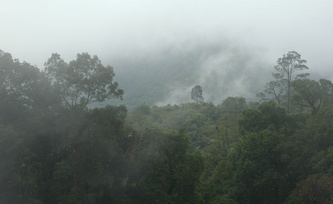
Giant see-saw of monsoon rains detected
26/09/2016 - When the summer rains in China are weak, they are strong in Australia, and vice versa – scientists have discovered a previously unknown see-saw relationship between these two monsoon regions. This effect does not occur from one year to another, but on decadal and centennial time scales. To detect the pattern, the team developed a novel mathematical method to analyze traces of climatic events of the past 9000 years archived in ancient dripstones from caves. The regional monsoon has huge effects on agriculture and hence on the livelihoods of half of the world’s population, including India and Indonesia. Understanding how seasonal periods of rainfall in the Northern and Southern Hemispheres of our planet are linked is important for assessing possible long-distance effects of climate change.
Read More
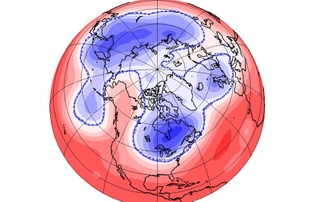
Extreme events and planetary waves: new index approach
09/22/2016 - Both heat waves like 2010 in Russia or cold spells like 2014 in the US have a common feature – they appeared together with certain patterns of gigantic airstreams in the atmosphere. This so called jetstream circles around the globe in waves swinging up and down between the Tropics and the Arctic. These large meandering planetary waves can have huge impacts – the economic damages of the 2014 cold spell at the US east coast with record-breaking cold temperatures for instance were estimated up to 5 billion Dollars.
Read More
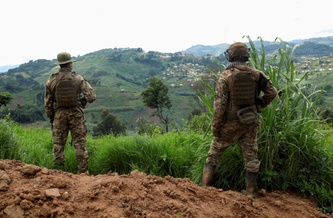
Climate disasters increase risk of armed conflict in multi-ethnic countries
07/26/2016 - Climate disasters like heat-waves or droughts enhance the risk of armed conflicts in countries with high ethnic diversity, scientists found. They used a novel statistical approach to analyze data from the past three decades. While each conflict is certainly the result of a complex and specific mix of factors, it turns out that the outbreak of violence in ethnically fractionalized countries is often linked to natural disasters that may fuel smoldering social tensions. This finding, to be published in the Proceedings of the US National Academy of Sciences, can help in the design of security policies – even more so since future global warming from human-made greenhouse-gas emissions will increase natural disasters and therefore likely also risks of conflicts and migration.
Read More
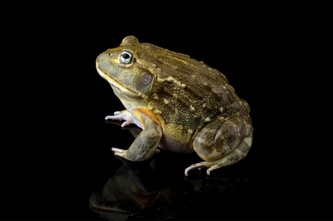
Climate impacts on amphibians and reptiles
09/07/2016 - How does climate change affect amphibians and reptiles – animals whose body temperature depends directly on ambient temperature? A team of international scientists, involving the Potsdam Institute for Climate Impact Research (PIK) and WWF Germany, analyzed the peer reviewed literature on the subject of the past ten years – their findings were now published in Royal Society Open Science.
Read More
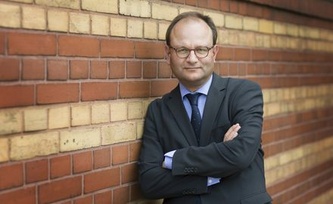
Edenhofer ranked amongst Germany’s top economists
09/06/2016 - In a ranking of Germany’s “most influential economists”, Ottmar Edenhofer, chief economist of the Potsdam Institute for Climate Impact Research, was placed amongst the top researchers in the field. The grouping published by the renowned daily ‘Frankfurter Allgemeine Zeitung’ (FAZ) is based on data on the scientific, political and media impact of the individual researchers. Edenhofer, who also directs the Mercator Research Institute on Global Commons and Climate Change and is a Professor at Technische Universität Berlin, is the only economist with a focus on climate who scored this high in the ranking.
Read More
German industry and climate experts: G20 should push CO2 pricing
09/02/2016 - An unusual alliance of business, science and an environmental organization is urging the major economies meeting as G20 this weekend in Hanghzou, China, to push CO2 pricing. The Federation of German Industries (BDI), Germanwatch and the Mercator Research Institute on Global Commons and Climate Change (MCC) led by Ottmar Edenhofer - chief economist of the Potsdam Institute for Climate Impact Research - published a joint proposal in the german weekly ‘Die Zeit’. Pricing greenhouse-gas emissions from fossil fuels is key to achieve the climate stabilization goals set forth in the Paris Agreement, the authors argue. It should both set incentives for CO2 reductions and create more predictability for planning, the authors argue. In the same time, the instrument could raise much-needed revenues for infrastructure investments. The initiative comes ahead of the announcement of the agenda of Germany’s G20 Presidency to commence in December.
Read More
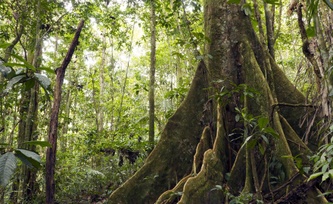
Amazon forests: Biodiversity can help mitigate climate risks
29/08/2016 - A forest with greater diversity of plants can better adjust to climatic stress. Now for the first time, a team of scientists can show this in computer simulations of the Amazon region by accounting for its amazing diversity of trees. Biodiversity can hence be an effective means to mitigate climate risks and should not only be seen in the context of nature conservation.
Read More
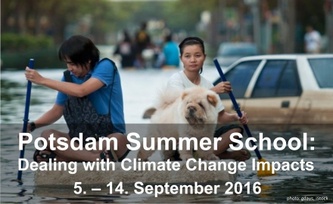
Dealing with Climate Change Impacts – the Potsdam Summer School starts with young talents from all over the world
From global sea level rise to extreme events like floods or droughts – even with ambitious climate mitigation, some impacts of climate change will be felt within this century. How to avoid the unmanageable and manage the unavoidable will be the focus of the Potsdam Summer School from September 5-14, bringing together more than 40 early-career scientists and young professionals from all around the globe.
Read More
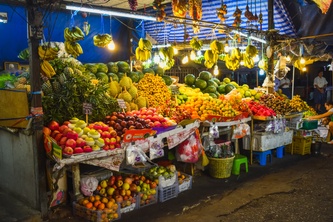
Climate change: Trade liberalization could buffer economic losses in agriculture
08/25/2016 - Global warming could create substantial economic damage in agriculture, a new study conducted by a team of scientists of the Potsdam Institute for Climate Impact Research (PIK) finds. Around the globe, climate change threatens agricultural productivity, forcing up food prices. While financial gains and losses differ between consumers and producers across the regions, bottom line is that consumers in general will likely have to pay more for the same basket of food. As the additional expenditure for consumers outweighs producers’ gains, increasing net economic losses will occur in the agriculture and food sector towards the end of the century. However, economic losses could be limited to 0.3 percent of global GDP – depending on agricultural trade policies.
Read More
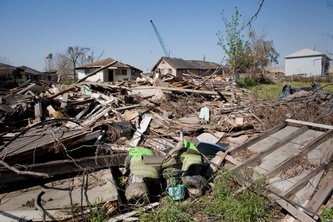
Can we economically outgrow climate change damages? Not for hurricanes we can't
08/16/2016 - When hurricanes like Katrina in 2005 or Sandy in 2012 impact on highly populated regions they bring about tremendous damages. More than 50 percent of all weather-related economic losses on the globe are caused by damages due to tropical cyclones. Researchers from the Potsdam Institute for Climate Impact Research (PIK) now analyzed the magnitude of future hurricane losses in relation to economic growth. Showcasing the United States they found that financial losses per hurricane could triple by the end of the century in unmitigated climate change, while annual losses could on average rise by a factor of eight. Most importantly and contrary to prevalent opinion, they conclude that economic growth will not be able to counterbalance the increase in damage.
Read More
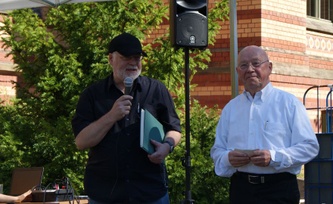
Friends of PIK: Simonis honoured, Stock nominated
28/07/2016 - The Society of Friends and Promoters of the Potsdam Institute for Climate Impact Research has honoured its longstanding president Udo Simonis for his tremendous efforts and made him honorary chairman. Manfred Stock took over the lead of the society. The tribute took place during festive symposium on biodiversity, and the institute´s scientists applauded their old and new supporters of their work. The symposium was organized by the research domain Transdisciplinary Concepts & Methods.
Read More
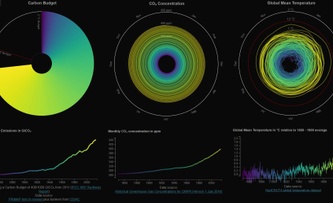
New interactive climate spirals online
07/27/2016 - Global-mean temperatures are breaking one record after the other since instrumental observations began. Driven by burning of fossil fuels and deforestation, carbon dioxide concentrations have also soared to unprecedented levels. In fact, today's CO2 concentrations are higher than they have ever been over the last 800 thousand years. Scientists from the Potsdam Institute for Climate Impact Research (PIK) and the University of Melbourne now put all these elements together to provide a set of new interactive Climate Spiral visualizations.
Read More
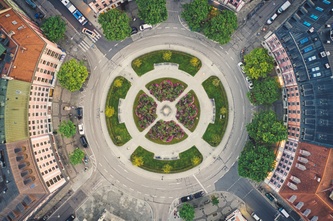
Sustainable cities: Researchers discuss urban complexity
07/26/2016 - From mega-cities like Shanghai or New York to the small town around the corner: International researchers gathered in Hanover to discuss “Cities as complex systems – structure, scaling and economics”. The symposium brought together physicists, economists, geographers, and urban planners to explore the underlying mechanisms of the efficiency of our cities. Currently more than half of the world’s population lives in urban areas, a proportion that is expected to increase considerably, reaching over 90 percent of the global population by the end of this century. While about two thirds of global greenhouse-gas emissions are caused by urbanites, at the same time cities are hit particularly hard by the impacts of climate change.
Read More
The Great Investment Turnaround: how to finance a sustainable world economy
07/20/2016 - Banks and insurers can play a crucial part in stabilizing the climate, while at the same time safeguarding their clients’ assets. Leading representatives of finance and climate research will discuss the best strategies for a turnaround in investing this Thursday in Berlin. The event is hosted by the Swiss global bank UBS, the French multinational insurance firm AXA, CDP, the European innovation initiative Climate-KIC, Humboldt-Universität zu Berlin and the Potsdam Institute for Climate Impact Research (PIK). Divestment – the diversion of capital from fossil fuel industries to green innovation and sustainable businesses – is a new approach to reducing greenhouse-gas emissions, which could turn out to be a global “game changer”.
Read More
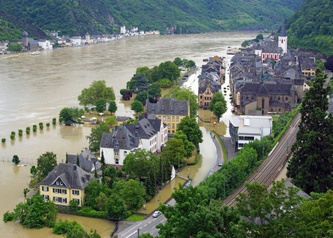
Flood damages in Germany could multiply under climate change
07/19/2016 - Flood-related losses can be expected to increase considerably in Germany as a result of climate change, a new study shows. Extreme events like the severe floods along the river Elbe have already illustrated the potentially devastating consequences of certain weather conditions such as severe rainfall events, when continuing intense rain can no longer be absorbed by the soil and water levels in the rivers rise. Without appropriate adaptation, flood-related damage of currently about 500 million euros a year could multiply in the future, the comprehensive expert analysis published in the journal Natural Hazards and Earth System Sciences highlights.
Read More
Successful early forecasting of Indian Monsoon
2016/07/14 - A novel approach of unprecedentedly early forecasting of the Indian Monsoon proved to be successful. The new methodology - developed at the Potsdam Institute for Climate Impact Research (PIK) - correctly predicted this year’s monsoon onset over central India and met great interest by both Indian academics and stakeholders, including the Indian Meteorological Department (IMD). The accurate long-range monsoon forecasting is of critical importance for millions of farmers in India. [Please find an UPDATE on the withdrawal below.]
Read More

Literature meets science: Karen Duve and Hans Joachim Schellnhuber
07/14/2016 - The well-known author Karen Duve discussed questions of climate change and the future of societies with Hans Joachim Schellnhuber, director of the Potsdam Institute for Climate Impact Research (PIK) at the Pre-Opening of Potsdam´s festival of literature, LIT:Potsdam. In the new auditorium of PIK´s new research building, a delighted audience followed this exchange between literature and science.
Read More
Paris pledges need boost to keep warming well below 2°C
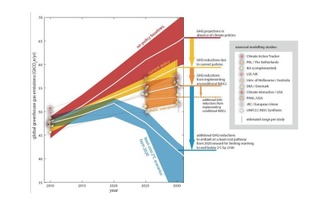
06/30/2016 - The individual country pledges to reduce greenhouse gases made for the Paris agreement need to be strengthened in order to limit future climate change to well below 2°C. A new analysis by an international team of scientists illustrates that the current Paris pledges would lead to global temperature rise of 2.6 to 3.1°C by the end of the century. In fact, the entire carbon budget for limiting warming to below 2°C might have been emitted by 2030, according to the study published in the journal Nature.
Read More

PIK ranked among top climate think tanks worldwide
06/27/2016 - The Potsdam Institute for Climate Impact Research (PIK) belongs to the best climate think tanks worldwide, the new ICCG Climate Think Tank Ranking shows. The assessment by the International Center for Climate Governance analyzed 240 cutting-edge institutions working in the field of climate change economics and policy. Based on a solid quantitative methodology and analytical data, the ICCG lists non-university affiliated think tanks in an absolute and a standardized ranking - the latter based on an institute's output in relation to the number of its researchers. In both competitions, PIK ranks fourth best global climate think tank.
Read More
Controlled implosion of fossil industries and explosive renewables development can deliver on Paris
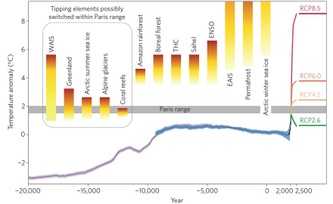
06/23/2016 - While some criticize the Paris climate target as impracticable, a team of scholars argues that it is – on the contrary – a triumph of realism. First, and most importantly, adhering to the Paris target of keeping global warming well below 2 degrees Celsius is necessary in view of the massive risks that unchecked climate change would pose to society. A crucial type of threats, associated with the crossing of tipping points in the Earth system, is summarized in a landmark map for the first time. Second, implementing the Paris target is feasible through the controlled implosion of the fossil industry, instigated by a technological explosion related to renewable energy systems and other innovations. Third, the target is simple enough to create worldwide political momentum, the scientists say in their comment published in Nature Climate Change.
Read More
Long Night of Science: climate researchers, computer experts, waffle bakers
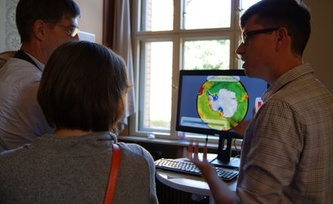
06/13/2016 - The Potsdam Institute for Climate Impact Research opened its doors to the public last Saturday at the Long Night of the Sciences. Dozens of volunteers committed themselves to this purpose - ice researchers for a kids presentation, computer experts to present the new high capacity computer, but also scientists and other employees who prepared excellent waffles. About 29.000 interested guests visited the 70 participating scientific institutions in Berlin and at Potsdam´s Telegrafenberg, about a thousand more than last year.
Read More
Extreme weather events linked to stalling of planetary waves
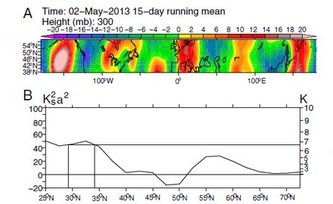
06/11/2016 - Many extreme weather events in the Northern hemisphere have recently been accompanied by a stalling of huge airstreams high up in the atmosphere that normally circle our planet, taking the form of gigantic waves swinging up and down between the Tropics and the Arctic. Looking into the events of the summers three and four years ago, a new study by a team of scientists from the Potsdam Institute for Climate Impact Research finds that in fact a majority of extremes go with observed disturbances of the so-called planetary waves, adding evidence to the assumption that this connection might be of key importance.
Read More
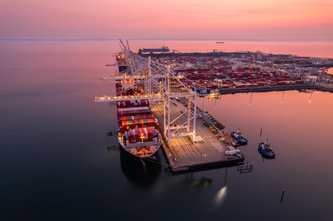
Globalization made economic production more vulnerable to climate change
06/10/2016 - The susceptibility of the global economic network to workers' heat-stress has doubled in the last decade, a new study published in the journal Science Advances finds. The analysis by the Potsdam Institute for Climate Impact Research and Columbia University shows for the first time how enhanced connectivity of the global network of supply can amplify production losses, as these losses can be spread more easily across countries.
Read More
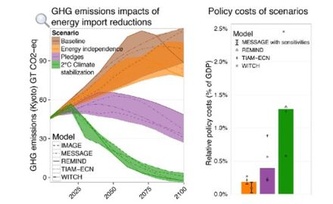
Energy independence policies will not save the climate
06/10/2016 - Reducing energy imports and mitigating climate change are often portrayed as complementary. However, new research published in the journal Nature Energy shows that while ambitious climate policies would lower energy imports, energy independence would not bring significant climate benefits. Co-benefits of climate policies are of key importance for decision-makers choices, the authors highlight.
Read More

2°C or 1,5°C: Why half a degree matters
27.04.2016 - Climate change impacts differ substantially for the two temperature limits included in the Paris agreement, a team of European researchers found. Published in the journal Earth System Dynamics, the analysis considers 11 different indicators including extreme weather events, water availability, crop yields, coral reef degradation and sea-level rise for a global warming of 1,5°C and 2°C by the end of the century. The additional half degree would mean a 10-cm-higher global sea-level rise by 2100, longer heat waves, and would result in virtually all tropical coral reefs being at risk, the researchers found.
Read More
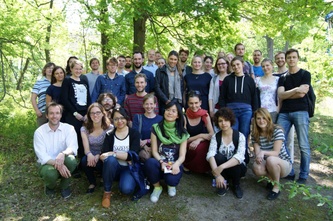
Young scientists meet at PIK: What comes after a PhD?
Young scientist from the Potsdam Institute for Climate Impact Research (PIK) discussed their working routines and career perspectives with regard to their doctorate. Once a year the “PhD-Day” offers the opportunity to meet up in the whole group of PhD candidates to share experiences, talk about research projects and train in science related skills. The focus of the current meeting was on possible career steps following the doctoral thesis.
Read More
Health, energy and extreme events in a changing climate
06/07/2016 - Floods, droughts, blackouts of power networks – the potential for risks that can be linked directly or indirectly to public health grows with a changing climate. In a now published special issue of the European Physical Journal, scientists of the Potsdam Institute for Climate Impact Research (PIK) and other institutions analyze the complex interactions of public health, energy production and climate change. They shed light on the linkages, and also present new methods how these interrelations of different sectors can be further examined.
Read More
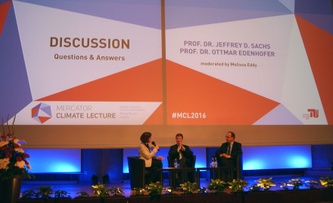
“The world in 2050”: Mercator Climate Lecture with economists Sachs and Edenhofer
06/01/2016 – More than 1000 people attended the 2016 Mercator Climate Lecture "The World in 2050 - Towards Sustainable Development and Deep Decarbonization" in Berlin on Wednesday. Top US-economist Jeffrey D. Sachs, Director of the Earth Institute at Columbia University and Special Advisor on Sustainable Development for the United Nations, gave a much-applauded keynote. This was followed by an intense discussion with Ottmar Edenhofer, Chief Economist at the Potsdam Institute for Climate Impact Research (PIK) and Professor at Technische Universität (TU) Berlin. The lecture is a joint project by Stiftung Mercator, Technische Universität Berlin, and PIK. The spectators in the Auditorium Maximum - in fact a mix of students and experts from business, politics, NGO and science – was joined by a worldwide audience following the event via livestream.
Read More
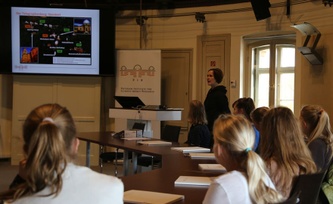
Girls' Day: students learn about research careers
On the occasion of this year’s Girls Day, 18 students from Berlin and Brandenburg visited the Potsdam-Insitute for Climate Impact Research. They were invited to get in touch with female scientists of the institute to learn more about career perspectives in research. The Girls’ Day was initiated in 2001 by the Federal Ministry of Education and Research, and offers the opportunity to girls between 12 and 16 to explore career prospects in technical and scientific branches.
Read More
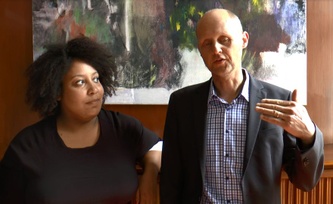
Migration in the age of climate change
05/20/2016 - Migration is currently a no 1 issue in Germany as well as Europe – but what will future migration look like globally, in the age of climate risks? Where is environmental migration happening already today, and what can we learn from it? The Potsdam Institute for Climate Impact Research (PIK) teamed up with the International Organization for Migration (IOM) - the biggest intergovernmental institution in the field - for a media briefing in Berlin. Migration is mostly driven by a multitude of factors – be it political, social, demographic, economic, or by security concerns - and almost never by a single cause. At the same time, global environmental change, and specifically climate change caused by greenhouse gas emissions from burning fossil fuels, is an additional and potentially severe risk factor.
Read More