
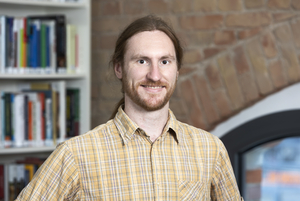
My main interest is making large heterogeneous corpora accessible for humans. During my time at the Humboldt-University and Hasso Plattner Institute I worked on information extraction, text mining, and visualising text corpora in semantic landscapes. In the “Evidence for climate solutions” (ECS) group, I get to apply my prior more theoretical work in practice to reveal salient patterns in millions of Tweets or (tens to hundreds of) thousands of research articles.
I'm involved in a number of projects where I am automating some of the steps of the evidence synthesis process or prepare data analysis. Below, you can find an overview of key infrastructure- and research projects I contribute(d) to or am(was) involved in. These activities are or have been funded by the following projects: GENIE (ERC), CDRSynTra (BMBF), Pathfinder (Wellcome Trust), and DESTinY (Wellcome Trust).
Single-sentence-bio: Tim Repke is a postdoc at the Potsdam Institute for Climate Impact Research (PIK) working on digital evidence synthesis methods to safely scale science assessments with the help of AI.
If you are interested to learn more or write your master’s thesis with us, feel free to contact me or see our group list.
NACSOS
Our platform to integrate records from various data sources (e.g. Web of Science, Scopus, ...) into a project and manage abstract-level annotations, conflict resolution for double-coded records, and AI-assistance for priority screening. The platform has >250 users across more than 80 different institutions who annotated over 145k records (>568k labels).
ClimateLiterature.org
The literature hub is a place for us to share data our large-scale (systematic) (evidence and gap) maps. The goal is to offer an interactive up-to-date companion to the respective journal publications. Each project features fast and scalable filters and statistics, cross-tabs (aka heatmap or gap map), geographic maps, semantic maps, search, and more. We are currently working on building fully automated update pipelines for all data shared on the literature hub.
Ecosystem of reviews of carbon dioxide removal (aka ESROC)
Inspired by our map of CDR literature and the State of CDR, we assembled teams of experts who are conducting systematic reviews of the scientific literature on specific CDR methods. Together with colleagues, I offered technical support and methodological guidance for teams working on bioenergy with carbon capture and storage, soil carbon sequestration, ocean alkalinity enhancement, enhanced weathering, and afforestation or reforestation.
State of Carbon Dioxide Removal
The State of CDR report aims to provide a comprehensive overview of latest developments in the field, taking unique perspectives on funding, research, investments, potentials, policies, and public perceptions. I have been involved in the perceptions indicators for the first two editions of the report with Twitter- and media analyses. In the first three editions I have also been involved in the scientific publications indicator.
Lancet Countdown
The Lancet Countdown is an annual publication that tracks a wide range of indicators on climate change and health. In 2025, I continued the work previously done by my colleague Max Callaghan on indicators 5.3.1 and 5.3.2, which provide a large-scale overview of the scientific literature on climate and health. The second indicator further focuses on literature that mentions specific locations with attributable climate impacts. This not only feeds into the global report, but to the regional groups in Europe, Latin America, China, SIDS, and others.
Carbon pricing
Our systematic map on ex-post carbon pricing analyses was amongst the first to be fully driven by our NACSOS platform. In that phase I closely supported the project lead by Niklas Döbbeling-Hildebrandt. Currently, I'm providing some methodological guidance and support with data analyses in a review on the EU CBAM lead by Michael Jakob.
Cities
I am involved in varying capacity in evidence synthesis projects on climate change and cities together with Simon Montfort, Felix Creutzig, Josephine Hintz, and others.
Twitter and media
Together with my colleagues Will, Finn, and others, I worked on social media analysis on the perception of CDR methods, climate change, and how the COVID pandemic impacted the discourse around climate change on Twitter. We also worked on media coverage of climate change as well as CDR.
Synthesis methods / digital evidence synthesis
The common denominator across all the aforementioned projects is the continued development and improvement of methods to safely automate parts of the synthesis projects. When using machine learning (AI tools) to save work and deal with overwhelming amounts of literature, how can we automatically identify relevant records, mine (semi-)structured data from the text for further analyses, or provide meaningful, trustworthy, and robust overviews. Furthermore, how much human effort do we need to ensure statistically sound estimates of the quality of the resulting analyses? For example, when using a machine learning classifier, how many and which records should we annotate by hand (by how many independent experts) in order to get the best possible performance and how does the remaining inaccuracy impact downstream results? How do inaccuracies cascade in a pipeline of imperfect steps? What is the impact of restrictive data availability?
Self-hosted enriched OpenAlex
Unfortunately, research is hidden behind paywalls. Even basic bibliographic meta-data and even which publications exist is not available in a single database or at all (major publishers are raising copyright claims). OpenAlex is the largest and most complete open repository of scientific and grey literature. In order to enable unique workflows and analyses, we are maintaining and enhancing a snapshot of OpenAlex internally, which forms the basis for many projects and tools.
Pet projects
I developed and am maintaining an internal tool to allocate/book desks and meeting rooms at RD5 and other small tools. I also have my own small weather station in Berlin Kaulsdorf.
Department
Working Group
Contact
14412 Potsdam
ORCID
MCC@PIK
Visiting Staff at EPPI@UCL