

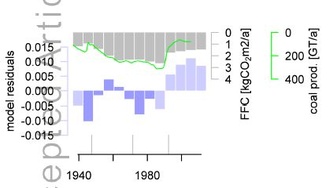
Longterm Potsdam measurements confirm aerosol effect
10/15/2015 - Longterm measurements from the Potsdam weather station are confirming assumptions about the effects of greenhouse-gases and aerosols in the atmosphere used in current computer simulations of the climate system. Tiny particles in the atmosphere, emitted for instance from coal power plants, reduce the amount of solar radiation that hits the ground - hence they have some cooling effect. This effect is correctly represented in climate models, shows a new analysis of weather data recorded in Potsdam since 1937. This series of continued measurements is one of the longest on Earth.
Read More
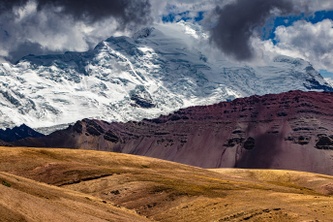
Rise and fall of societies linked to climatic conditions
10/14/2015 - Societies seem to have been rising and falling with the stability of climatic conditions, a new study indicates. Published in the journal Philosophical Transactions of the Royal Society A of London, scientists of the Potsdam Institute for Climate Impact Research in Germany and the Pennsylvania State University in the United States analyzed 2000 year old climate records of Mexican and Andean highlands and compared them to historic records. The results indicate that persistently volatile climatic conditions can contribute to the collapse of preindustrial agrarian states.
Read More
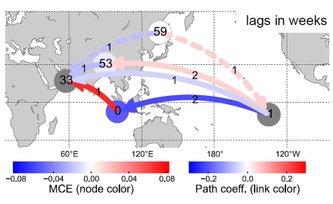
Distinguishing coincidence from causality: connections in the climate system
10/07/2015 - Detecting how changes in one spot on Earth – in temperature, rain, wind – are linked to changes in another, far away area is key to assessing climate risks. Scientists now developed a new technique of finding out if one change can cause another change or not, and which regions are important gateways for such teleconnections. They use advanced mathematical tools for an unprecedented analysis of data from thousands of air pressure measurements. The method now published in Nature Communications can be applied to assess geoengineering impacts as well as global effects of local extreme weather events, and can potentially also be applied to the diffusion of disturbances in financial markets, or the human brain.
Read More
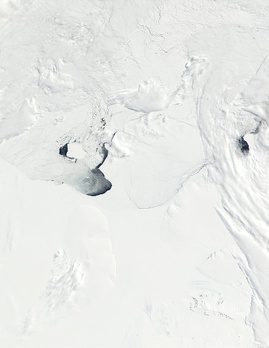
The warmer the higher: sea-level rise from Filchner-Ronne ice in Antarctica
10/05/2015 - The more ice is melted of the Antarctic Filchner-Ronne shelf, the more ice flows into the ocean and the more the region contributes to global sea-level rise. While this might seem obvious, it is no matter of course for the huge ice masses of Antarctica: parts of the ice continent are characterized by instabilities that, once triggered, can lead to persistent ice discharge into the ocean even without a further increase of warming - resulting in unstoppable long-term sea-level rise. In the Filchner-Ronne region however, ice-loss will likely not show such behavior, scientists from the Potsdam Institute for Climate Impact Research now found. Published in Nature Climate Change, their study shows that in this area the ice flow into the ocean increases just constantly with the heat provided by the ocean over time.
Read More
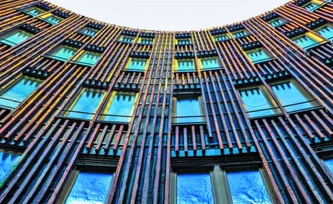
"A trefoil in the woods" - PIK scientists move into new research building
09/28/2015 - Potsdam´s climate science moves into a new, energetically highly innovative research building. The modern facility with a ground plan shaped like a trefoil will accomodate not only about 200 scientists on four floors, but also the new supercomputer of the Potsdam Institute for Climate Impact Research (PIK) that is among the 400 fastest high-performance computers worldwide. Brandenburg´s Minister of Research, Sabine Kunst, as well as Stefan Müller, State Secretary of the Federal Ministry for Education and Research, and Matthias Kleiner, President of the Leibniz Association, congratulated the institute at the festive opening for its exceptional building - which itself is a research project, too.
Read More
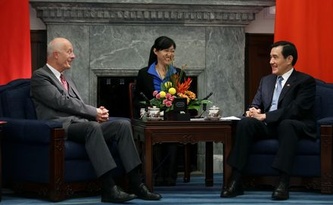
Schellnhuber meets with President of Taiwan
09/17/2015 - Greenhouse gas reduction pathways to limit climate change risks have been the core topic of a meeting of the President of Taiwan Ying-jeou Ma with Hans Joachim Schellnhuber, Director of the Potsdam Institute for Climate Impact Research. Ma received Schellnhuber for an official discussion this week before Taiwan published its intended contributions to global emissions reductions. Schellnhuber also gave a keynote address at a forum sponsored by Taiwan’s Environmental Protection Administration with Minister Kuo-yen Wei. Another highlight was a scientific symposium on deep decarbonization pathways organized by the Academia Sinica under the leadership of Nobel Laureate Yuan-Tseh Lee.
Read More
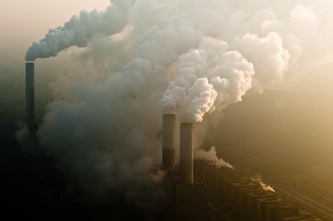
How new coal power plants let climate goals go up in smoke
09/17/2015 - The window of opportunity for a global fossil fuel phase out is closing faster than expected. In particular poor but fast-growing developing countries are currently investing heavily in the construction of new coal power plants. However, one reason why this source of fuel is so cheap is that its price does not incorporate the social costs, such as health. This is the topic of the article “King Coal and the Queen of Subsidies” by Ottmar Edenhofer, chief-economist at the Potsdam-Institute for Climate Impact Research and Director of the Mercator Research Institute on Global Commons and Climate Change (MCC), now published in the journal Science.
Read More
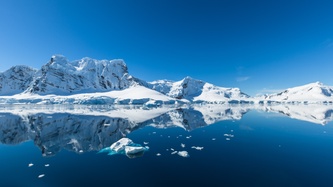
Burning all fossil energy would raise sea-level by more than 50 meters – and eliminate all ice of Antarctica
09/11/2015 - Burning all of the world’s available fossil-fuel resources would result in the complete melting of the Antarctic ice sheet, a new study to be published in Science Advances shows. The Antarctic ice masses store water equivalent to more than 50 meters of sea-level rise. The new calculations show that Antarctica’s long-term contribution to sea-level rise could likely be restricted to a few meters that could still be manageable, if global warming did not exceed 2 degrees. Crossing this threshold, however, would in the long run destabilize both West and East Antarctica – causing sea-level rise that would reshape coastal regions around the globe for millennia to come.
Read More
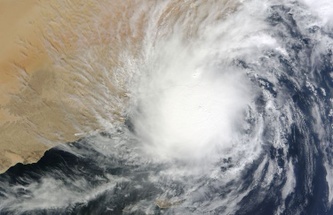
"Facing Natural Hazards" – the Second international Potsdam Summer School will Start on 14 September 2015
09/11/2015 - The growing world population, climate change, rapid urbanisation, and the international interdependence of economies are all increasing our vulnerability to natural hazards. Such major global challenges are the focus of the second Potsdam Summer School on "Facing Natural Hazards". From 14 to 23 September 2015, 40 young professionals from 28 countries will meet with renowned scientists from Potsdam's Earth and Environmental Science institutions as well as with international experts. Participants will discuss the most pressing scientific and socially relevant issues concerning natural hazards. Earth and climate scientists, oceanographers, and mathematicians will exchange ideas and personal perspectives with social scientists, industry representatives, and politicians. Why do we tend to play down certain natural hazards while we dramatise others? What can we do in future to protect us from natural hazards? These questions will not only be discussed among the participants, but will also be addressed in a public lecture by the risk researcher Prof. Dr. Ortwin Renn on 21 September in Potsdam's Hans Otto Theatre.
Read More
Debate in the run-up to Paris
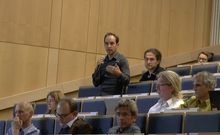
09/10/2015 - What´s in store at the next climate conference, COP21, later this year? This week, staff of the Potsdam Institute for Climate Impact Research gathered for an exchange of insights and perspectives. There were a number of contributions from post-docs and senior scientists on the latest research that stimulated a vibrant discussion.
Read More