

Stability Check on Antarctica Reveals High Risk for Long-Term Sea-Level Rise
09/23/2020 - The warmer it gets, the faster Antarctica loses ice – and much of it will then be gone forever. Consequences for the world’s coastal cities and cultural heritage sites would be detrimental, from London to Mumbai, and from New York to Shanghai. That’s what a team of researchers from the Potsdam Institute for Climate Impact Research, Potsdam University and New York’s Columbia University has found out in their new study, published in Nature (cover story), on how much warming the Antarctic Ice Sheet can survive. In around one million hours of computation time, their unprecedentedly detailed simulations delineate where exactly and at which warming levels the ice would become unstable and eventually melt and drain into the ocean. They find a delicate concert of accelerating and moderating effects, but the main conclusion is that unmitigated climate change would have dire long-term consequences: If the global mean temperature level is sustained long enough at 4 degrees above pre-industrial levels, Antarctic melting alone could eventually raise global sea levels by more than six meters.
Read More

Greta Thunberg at PIK
08/22/2020 - ICE group leader Ricarda Winkelmann meets Greta Thunberg at PIK.
Read More
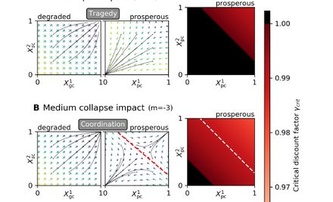
Caring for the future is key for cooperation to prevent climate collapse: study
20/05/2020 - How much decision-makers care about the future and not just the present is one key factor for whether or not they take action to stabilize our climate. Another one is how severe they assume the impacts of climate collapse to be. However, the number of actors is decisive – for instance the number of relevant countries, since efforts to reduce greenhouse gas emissions have to be international to add up to the amount needed to prevent a crisis. This is shown by a novel mathematical study. It finds a strong effect of diffusion of responsibility in scenarios with large numbers of actors. The study combines game theory and learning dynamics to explore which options for enhanced political cooperation should now urgently be studied empirically.
Read More

First digital meeting of the #FactoryWisskomm working groups
05/11/2020 - ICE group Leader Ricarda Winkelmann participated at the first digital meeting of the #FactoryWisskomm working groups
Read More

ICE group @ EGU General Assembly 2020
05/08/2020 - The ICE group participated in the EGU General Assembly 2020 in online format with various contributions.
Read More
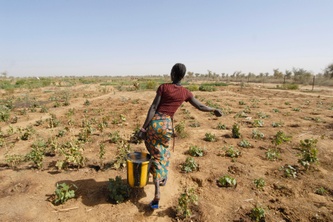
Climate disasters increase risks of armed conflicts: new evidence
02/04/2020 - The risk for violent clashes increases after weather extremes such as droughts or floods hit people in vulnerable countries, an international team of scientists finds. Vulnerable countries are characterized by a large population, political exclusion of particular ethnic groups, and low development. The study combines global statistical analysis, observation data and regional case study assessments to yield new evidence for policy-makers.
Read More
Homeschooling: Researchers support online learning with explanatory videos
01/04/2020 - As schools are closed due to the corona crisis, the Potsdam Institute offers special online lectures for children and young people as a small contribution to learning at home. Explanatory videos conveying some basics about the climate are intended to provide inspiration for the many hours spent at the desk at home instead of in the classroom. The films are created by the scientists themselves - a little handout from the research team in home office to young viewers in home schooling.
Read More
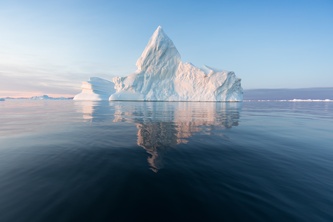
The Antarctica Factor: model uncertainties reveal upcoming sea level risk
Sea level rise due to ice loss in Antarctica could become a major risk for coastal protection even in the near term, scientists say. Within this century already, due to Antarctica alone global sea level might rise up to three times as much as it did in the last century. This is a finding of an exceptionally comprehensive comparison of state-of-the-art computer models from around the world.
Read More
Global food production at risk of simultaneous heat waves across breadbasket regions
09/12/2019 - Certain patterns in the jet stream encircling the Earth can bring simultaneous heatwaves to breadbasket regions responsible for up to a quarter of global food production. Particularly susceptible are Western North America, Western Europe, Western Russia and Ukraine. Extreme weather events of such extent can significantly harm food production and thus make prices soar. In recent years, major food price spikes were associated with social unrest.
Read More

Heraeus seminar at Hanauer Hütte
06/28/2019 - The ICE group was granted a Heraeus seminar at Hanauer Hütte in the Alps.
Read More

Jonathan Donges awarded with most important prize for young German researchers
28/02/2019 - The German Research Foundation (DFG) and the Federal Ministry of Education and Research have awarded Jonathan Donges of the Potsdam Institute for Climate Impact Research with the most important German prize for young researchers. The Heinz Mayer-Leibnitz Prize will be awarded on 28 May to a total of ten scientists, from chemists to historians. It is endowed with 20,000 euros each. Donges is co-lead of the PIK Future Lab "Earth Resilience in the Anthropocene".
Read More

Amazon forest can be trained by higher rainfall variability – but may be no match for climate change
25.02.2019 - The Amazon rainforest has evolved over millions of years and even through ice ages. Yet today, human influences and global climate change put this huge ecosystem at risk of large-scale dieback – with major consequences for its capability as a global CO2 sink. New research published in Nature Geoscience now reveals a key player in shaping the resilience of the Amazon, and finds that regions with generally higher rainfall variability are more resilient to current and future climate disturbances. However, despite this 'training effect', the Amazon rainforest might not be able to keep up with the pace of ongoing climate change, the study shows.
Read More
Planet at risk of heading towards irreversible “Hothouse Earth” state
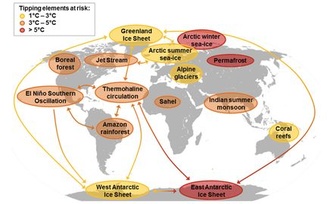
06/08/2018 - Keeping global warming to within 1.5-2°C may be more difficult than previously assessed. An international team of scientists has published a study in Proceedings of the National Academy of Sciences (PNAS) showing that even if the carbon emission reductions called for in the Paris Agreement are met, there is a risk of the planet entering what the scientists call “Hothouse Earth” conditions. A “Hothouse Earth” climate will in the long term stabilize at a global average of 4-5°C higher than pre-industrial temperatures with sea level 10-60 m higher than today, the paper says. The authors conclude it is now urgent to greatly accelerate the transition towards an emission-free world economy.
Read More
What saved the West Antarctic Ice Sheet 10,000 years ago will not save it today
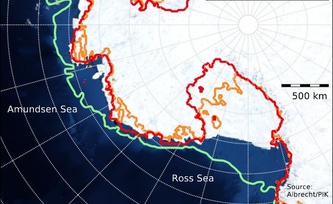
06/14/2018 - The retreat of the West Antarctic ice masses after the last Ice Age was reversed surprisingly about 10,000 years ago, scientists found. This is in stark contrast to previous assumptions. In fact, it was the shrinking itself that stopped the shrinking: relieved from the weight of the ice, the Earth crust lifted and triggered the re-advance of the ice sheet. However, this mechanism is much too slow to prevent dangerous sea-level rise caused by West Antarctica’s ice-loss in the present and near future. Only rapid greenhouse-gas emission reductions can.
Read More
Better be safe than sorry: economic optimization risks tipping of important Earth system elements
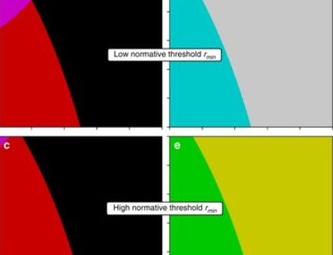
06/15/2018 - Optimizing economic welfare without constraints might put human well-being at risk, a new climate study argues. While being successful in bringing down costs of greenhouse gas reductions for instance, the concept of profit maximization alone does not suffice to avoid the tipping of critical elements in the Earth system which could lead to dramatic changes of our livelihood. The scientists use mathematical experiments to compare economic optimization to the governance concepts of sustainability and the more recent approach of a safe operating space for humanity. All of these turn out to have their benefits and deficits, yet the profit-maximizing approach shows the greatest likelihood of producing outcomes that harm people or the environment.
Read More
China floods to hit US economy: climate effects through trade chains
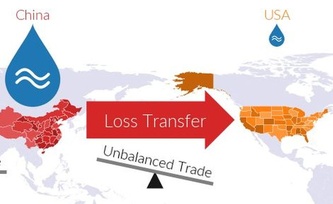
05/28/2018 - Intensifying river floods could lead to regional production losses worldwide caused by global warming. This might not only hamper local economies around the globe – the effects might also propagate through the global network of trade and supply chains, a study now published in Nature Climate Change shows. It is the first to assess this effect for flooding on a global scale, using a newly developed dynamic economic model. It finds that economic flood damages in China, which could, without further adaption, increase by 80 percent within the next 20 years, might also affect EU and US industries. The US economy might be specifically vulnerable due to its unbalanced trade relation with China. Contrary to US president Trump’s current tariff sanctions, the study suggests that building stronger and thus more balanced trade relations might be a useful strategy to mitigate economic losses caused by intensifying weather extremes.
Read More
Sea-level legacy: 20cm more rise by 2300 for each 5-year delay in peaking emissions
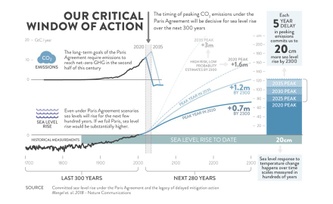
02/20/2018 - Peaking global CO2 emissions as soon as possible is crucial for limiting the risks of sea-level rise, even if global warming is limited to well below 2°C. A study now published in the journal Nature Communications analyzes for the first time the sea-level legacy until 2300 within the constraints of the Paris Agreement. Their central projections indicate global sea-level rise between 0.7m and 1.2m until 2300 with Paris put fully into practice. As emissions in the second half of this century are already outlined by the Paris goals, the variations in greenhouse-gas emissions before 2050 will be the major leverage for future sea levels. The researchers find that each five year delay in peaking global CO2 emissions will likely increase median sea-level rise estimates for 2300 by 20 centimeters.
Read More