 |
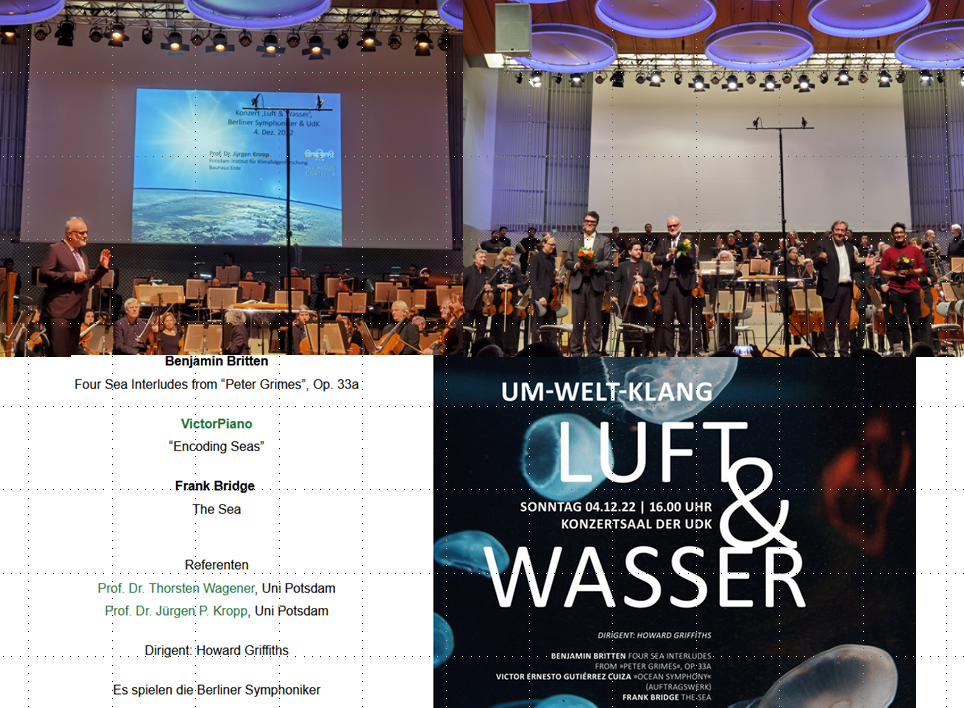
2022:
"Umweltklang" Concert celebrated by Berlin Symphonic Orchestra and enriched by short contributions on air and water. Awesome experiment!
|
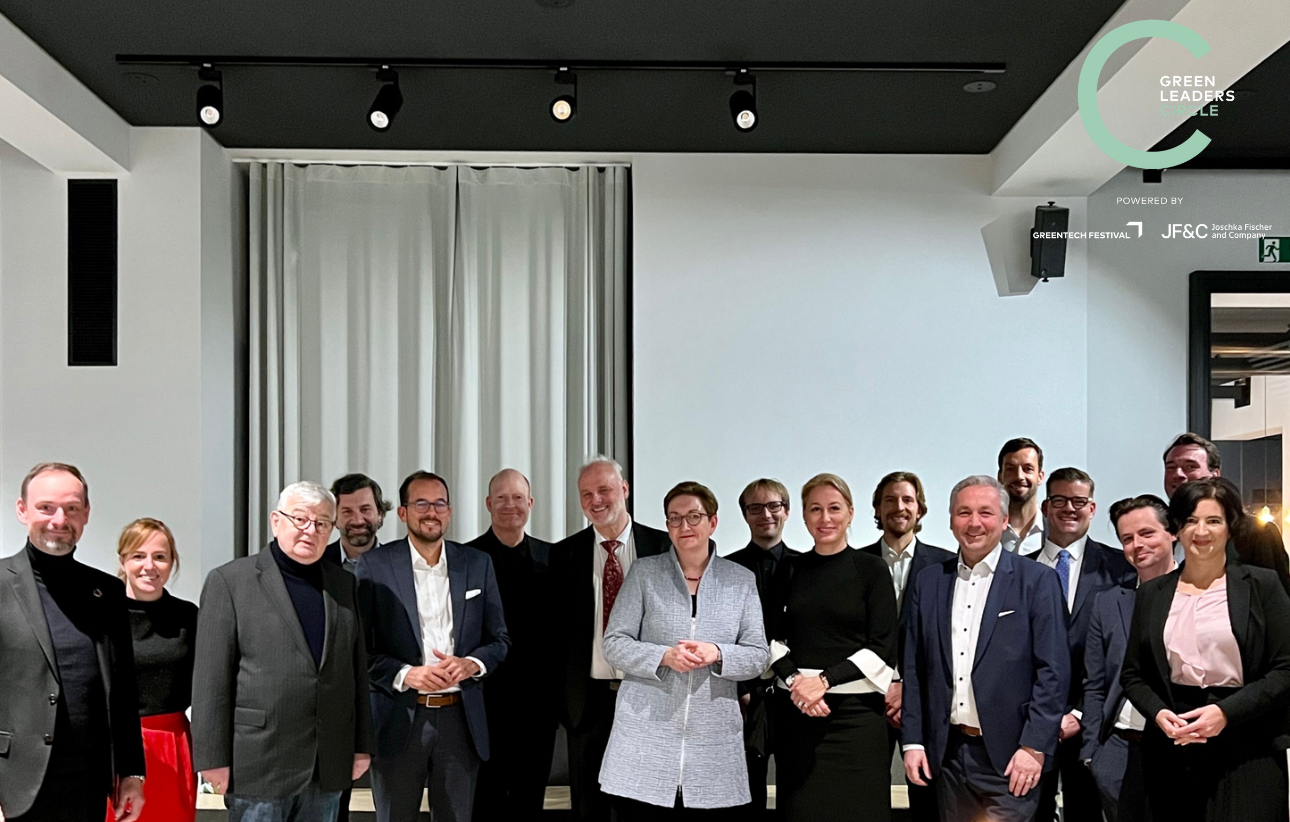 |
2022:
Intensive and lively dinner discussions about the necessary transformation of cities, together with people from Vonovia, DGNB, Eon, Minister Geywitz etc.. The
event was initiated by Joschka Fischer and Friends and Green Tec Award.
|
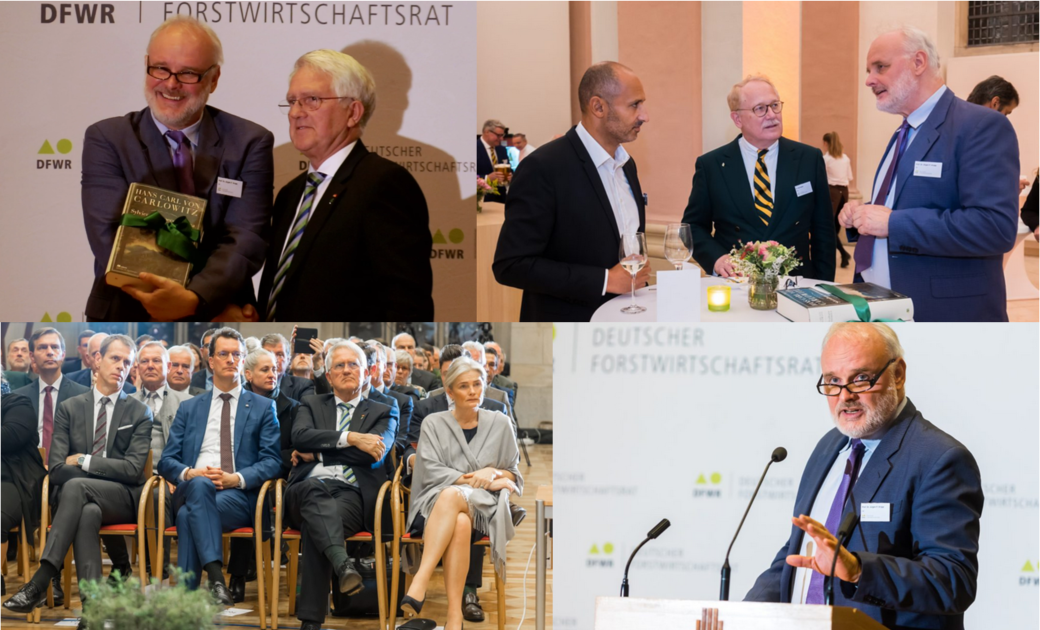 |
2022:
Keynote speech on urban change and the role of a shift to bio-based materials on the occasion of the
72. anniversary of the German Forestry Council (DFWR)
and in the presence of the MP H. Wüst of North Rhine-Westphalia in Münster. Handover of the the gift (H.C. von Carlowitz book) by G. Schirmbeck DWFR president.
|
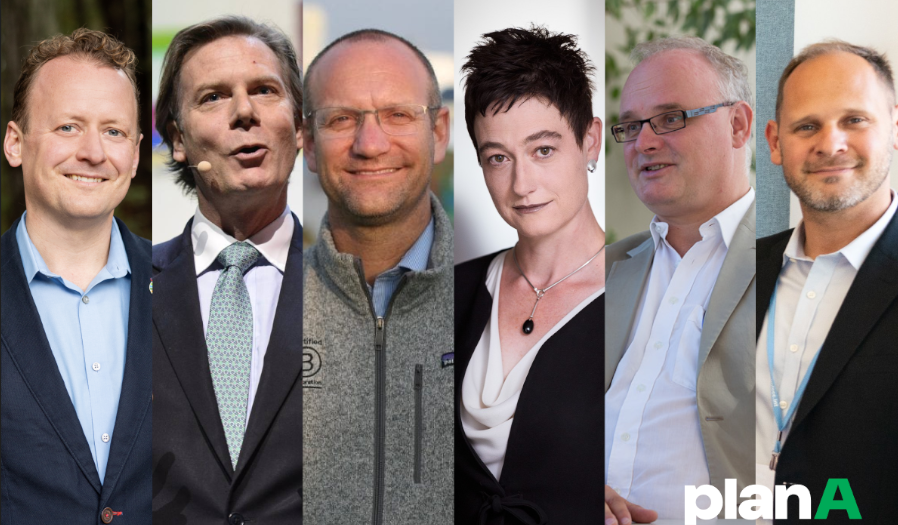 |
2022:
Impressive first face-to-face meeting of PlanAEarth Advisory Board with the companies' young and energetic team - great discussions! I am sure that my board colleagues, i.e. Kirsten Dunlop, Chad Frischman,
Michael Sheren, Martin Wainstein, Gonzalo Munoz see it similar. I appreciate to support PlanAEarth during the next years.
|
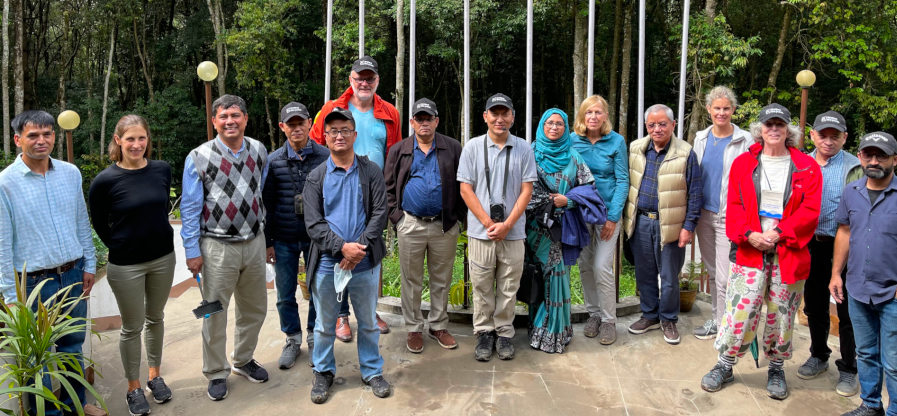 |
2022: Members of ICIMOD's Board of Governors meet at Govadari Knowledge Center/Nepal to learn how low-tech developments support mountain community development.
|
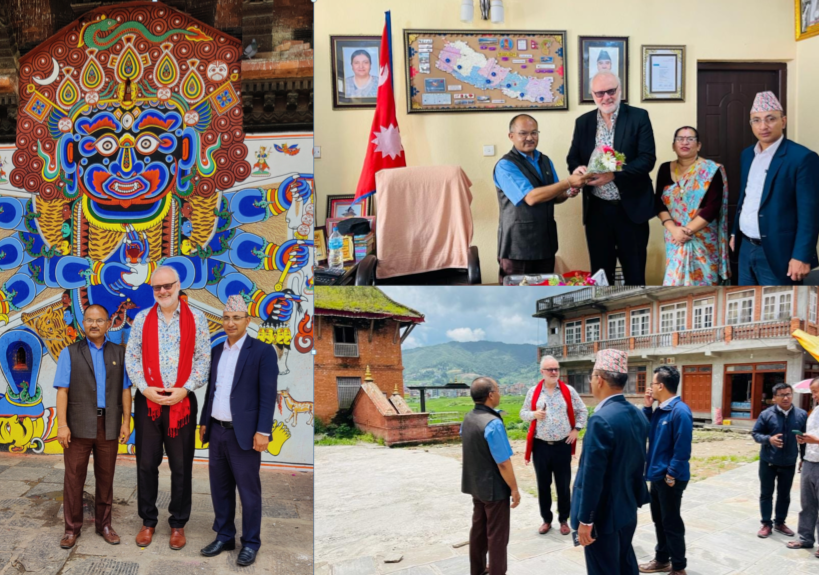 |
2022: Meeting and discussion with Mayor Shanti Rakna Shakya and Chief of Administration Prakash Acharya, City of Banepa/Nepal
about the possibilities to make cities carbon sinks through sustainable construction.
|
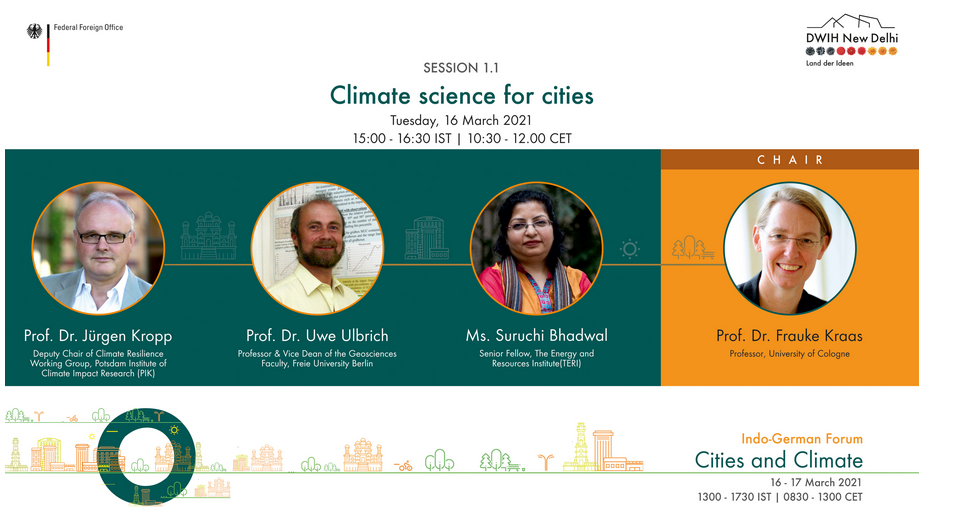 |
2021: Key note lecture and panel discussion on the Indo-German Forum on Cities and Climate. Organised by German Federal Office and DIWH New Delhi.
|
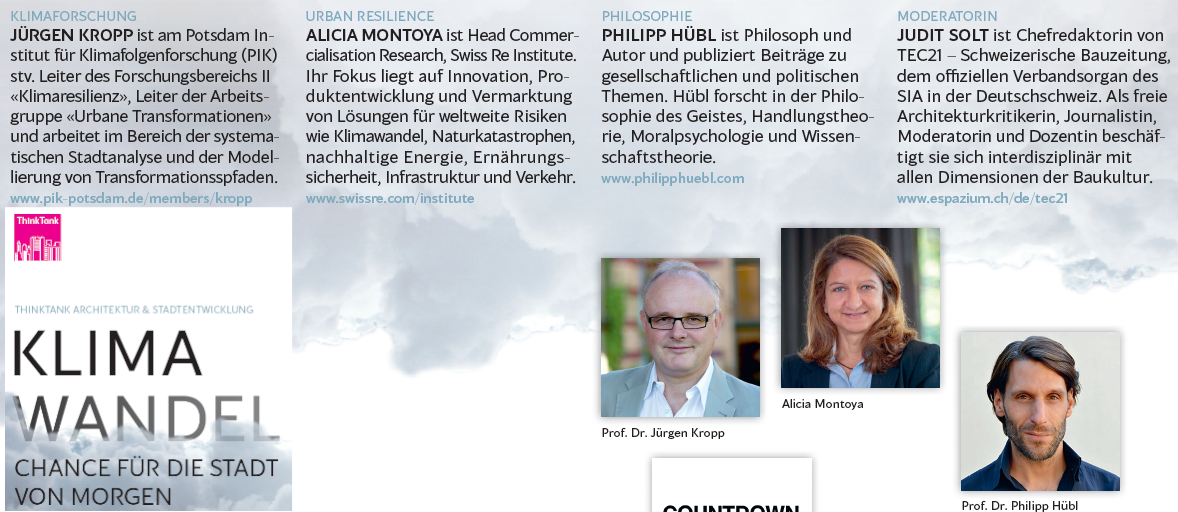 |
2020: Key note lecture on Think Tank Architecture and Urban Development (University of Lucerne/Switzerland) and panel discussion with pilosophers,
architects, and planners. In our lecture it was emphasized that for sustainable cities, the 3rd dimension must be valued equally, as is already the case today for area planning,
new materials should be considered and cities should be understood as urban-hinterland systems.
|
 |
2019:
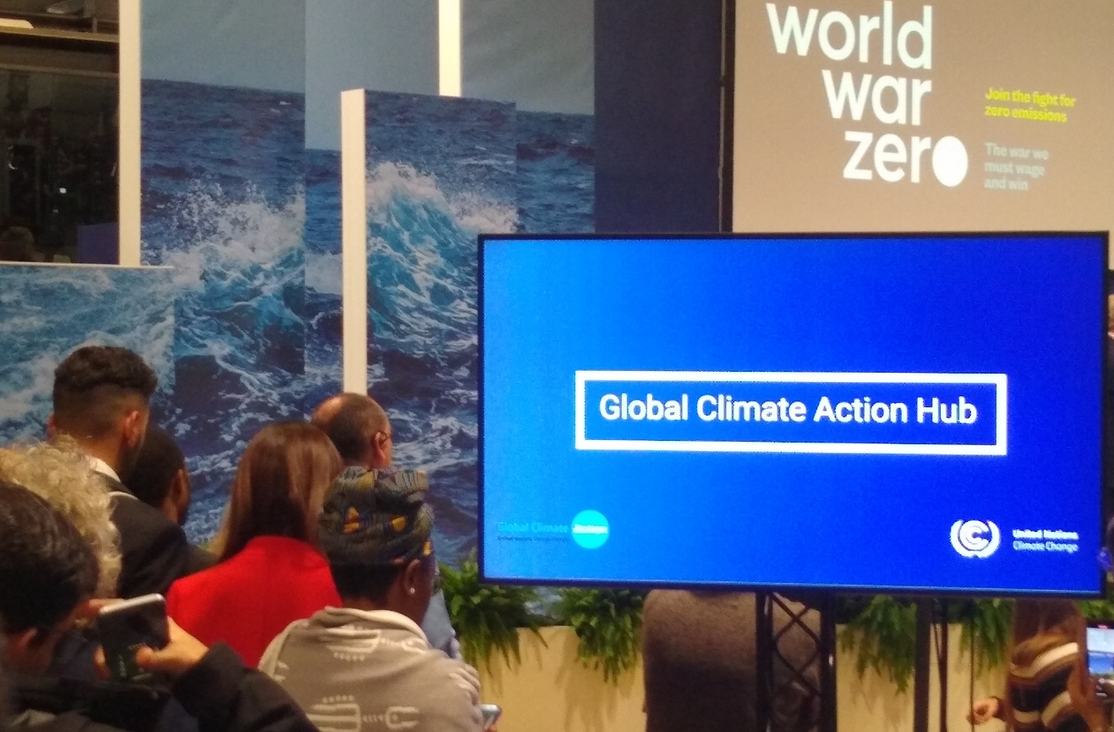
The European Caculator Model (EUCalc) was presentend on COP25 in Madrid at EU Pavillion on session Technology Transition for industry: the role of
research and innovation programmes. EUCalc is a new model of intermediate complexity which allows to assess trade-offs and synergies of energy related decisions for
EU member countries and the EU as a whole. Link to EUCalc Model.
|
 |
2019:
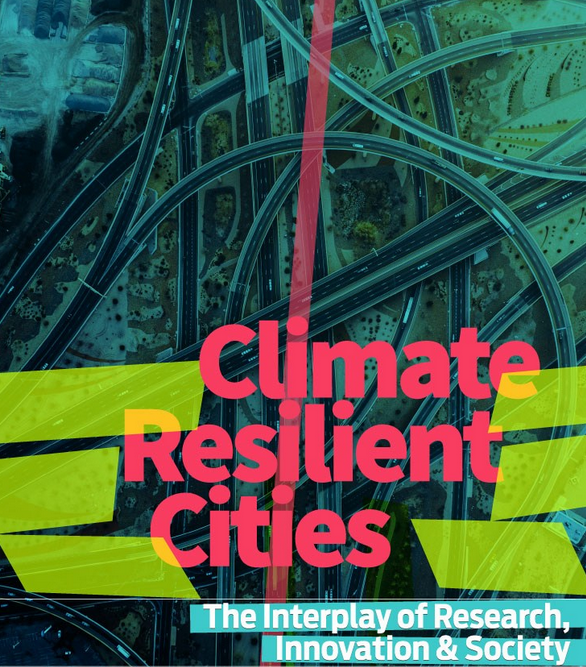
Keynote by JP. Kropp on DAAD symposium
Climate Resilient Cities: The Interplay of Research, Innovation and Society
Massey College, University of Toronto, Canada
|
 |
2018:
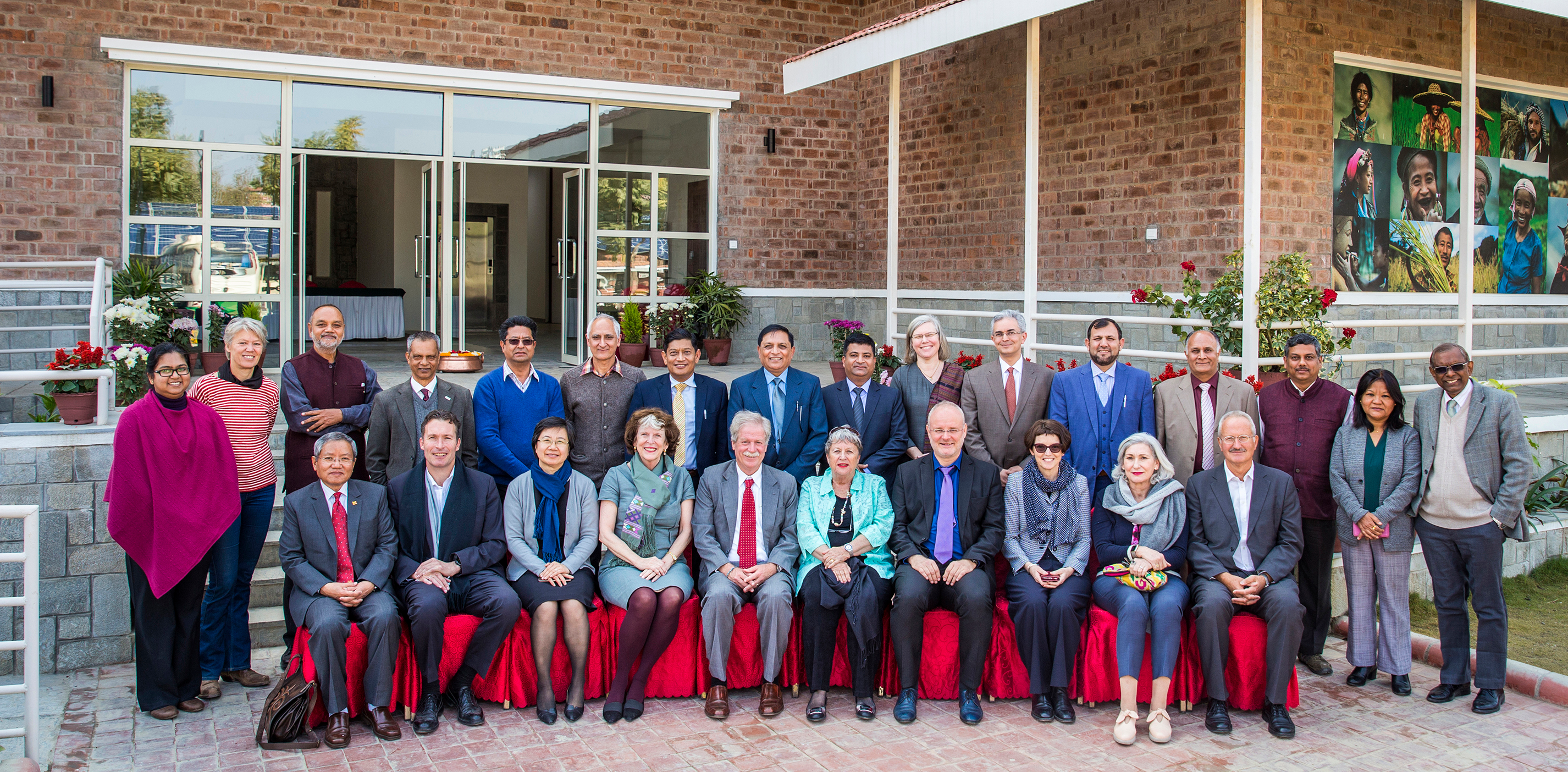
Program committee members (PAC,
image first row) met at ICIMOD
at Kathmandu in November to
evaluate ICIMOD's achievements
and future plans. On landmark
was the finalization of the
Hindu Kush Himalaya Assessment
which will be published in
December 2018 by Springer
Science. |
|
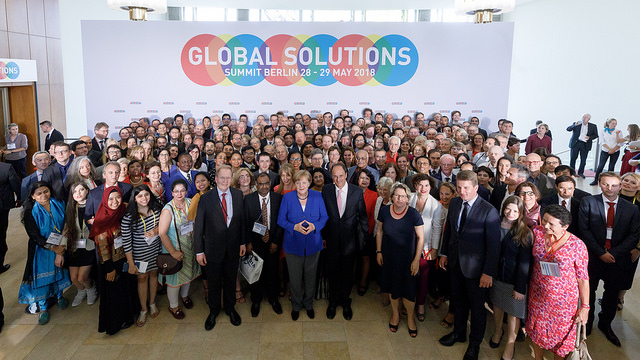
2018: The
Global Solutions Summit took
place in Berlin covering a broad
range of topics ranging form
security issues and financial
stability up to climate change.
JP Kropp discussed with other
panelists Ecosystems and
Livelihoods under Threat:
Solutions for a Changing Hindu
Kush Himalaya Image: Chancellor
Merkel with all speakers. [press
release] |
|
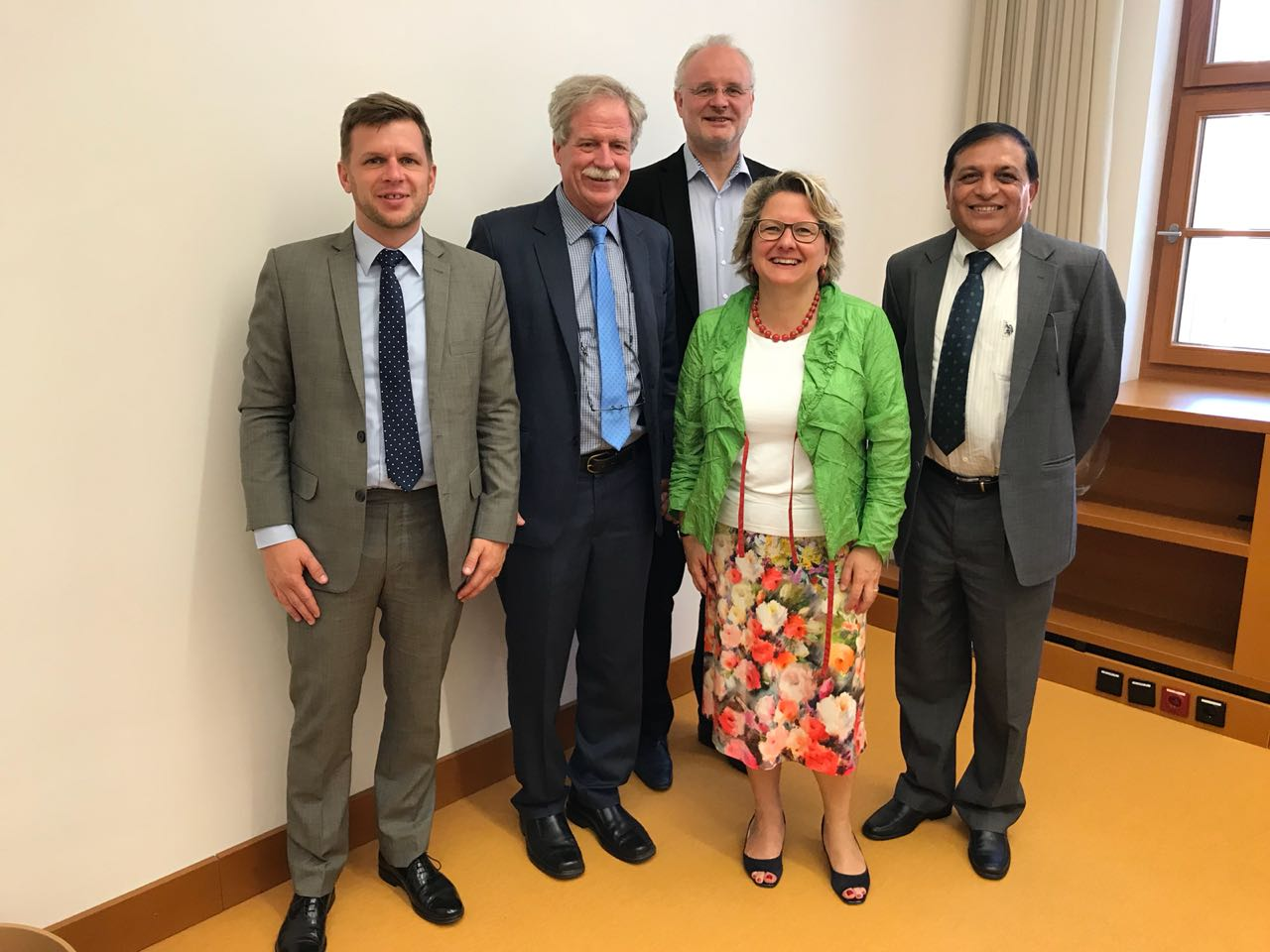
2018: David
Molden (2nd, Director of ICIMOD)
and Eklabya Sharma (4th, Vice
Director of ICIMOD) and Jürgen
Kropp (3rd, new ICIMOD board of
directors member) meet Federal
Minister of Environment Ms.
Svenja Schulze to discuss
the German support for
environmental research and
development at ICIMOD |
|
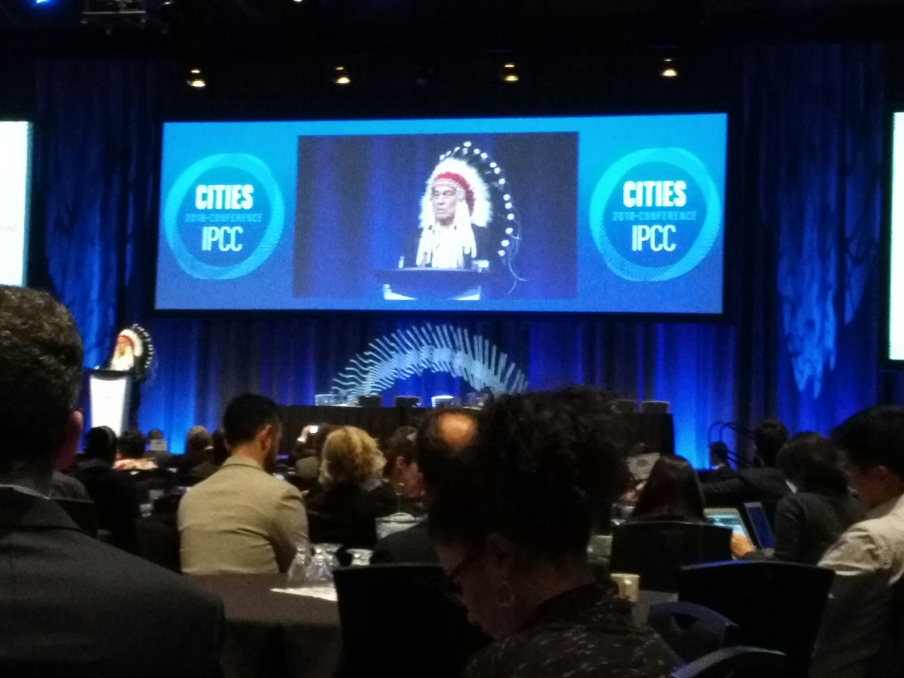
2018: The IPCC Cities Conference has
been opened by several addresses
from governmental officials and
first nations. It takes place in
Edmonton Alberta from 4. - 8.
March. J.P. Kropp will provide a
keynote on the Thursday's
Opening Panel and contribution
to the subsequent panel
discussion. |
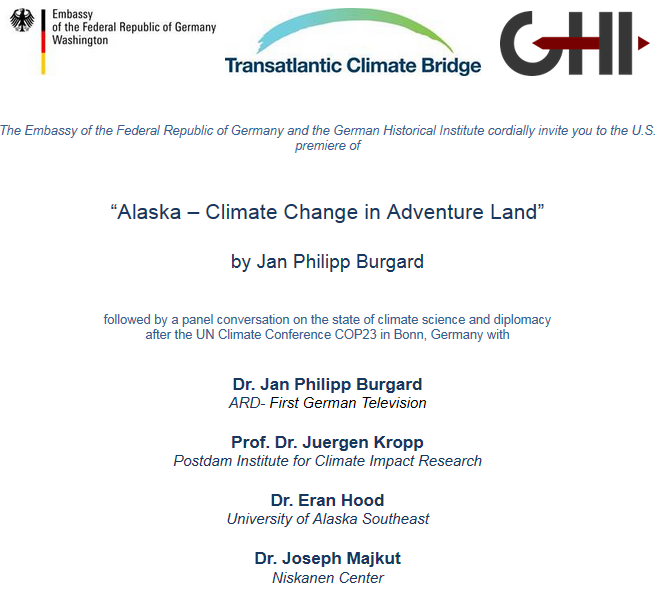 |
2017: On
behalf of the German Embassy
Washington several institutions
have been visited by J. Kropp in
the US in order to foster and
intensify scientific
cooperation. Amongst them
Georgia Tech Atlanta and
University of South Florida at
Tampa. In Washington he joined a
panel discussion on actual
climate diplomacy at the German
Historical Institute. |
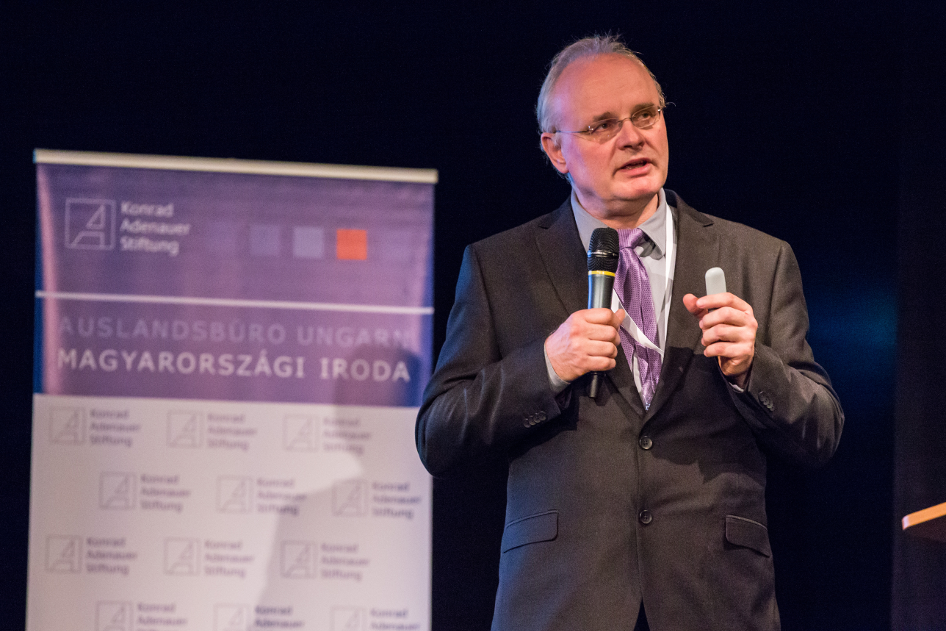 |
2017: The
Antall Jozsef Knowledge Centre
and European Union hosted a
conference entitled the "Global
Energy Landscape" on Oct. 26th
2017 (SUSCO
2017) at Budapest. J.
Kropp was a panel speaker and
introduced insights about needs
and challenges in terms of a
real transformation of or
societies. |
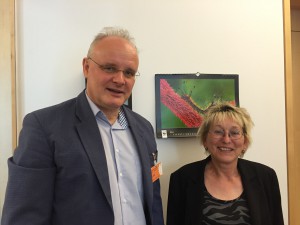 |
2016: Again
PIK advises German
Parlamentarians in climate
change issues. A series of
discussions with members of
parliament from different
parliamentary groups took place
end of May (link
to blog of MdB
Bulling-Schröter - in german).
|
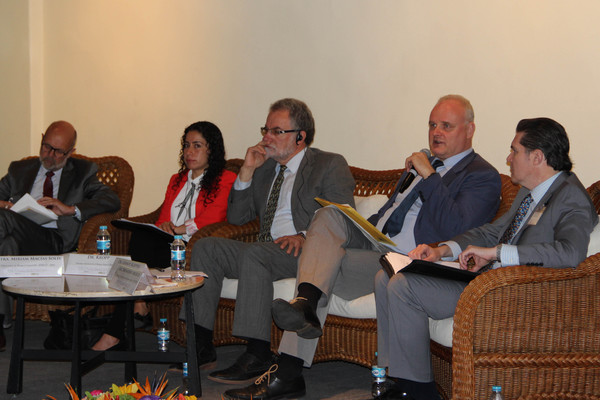 |
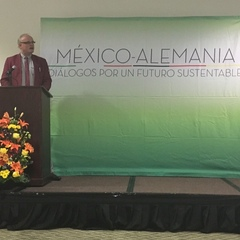
2016: J.
Kropp invited keynote speaker on
the 6th Mexican-German Climate
Dialogue at the Hacienda De Los
Morales. The event was organised
by the German Embassy and the
Centro Mario Molina. (German
Embassy Mexico City - in
german) |
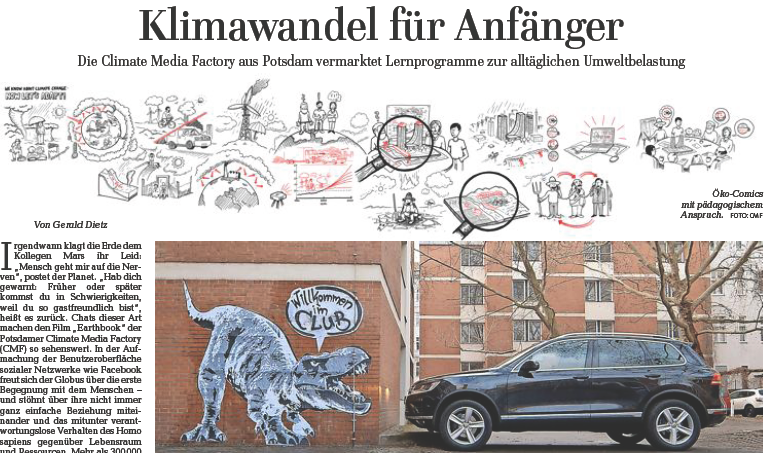 |
2016:
Potsdam Newspaper reports about
Climate Media Factory as as a
successful spin-off of PIK and
Film University Potsdam (in
german) |
|
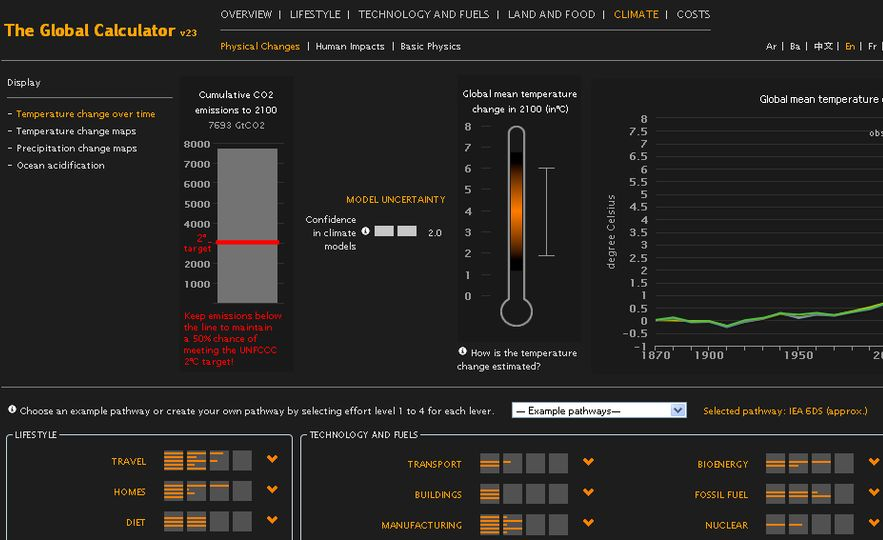
2015: An
international team led by the
United Kingdom's Department of
Energy and Climate Change and
co-funded by the European
Union's Climate-KIC launched the
Global Calculator. The tool
enable lay people an politicians
to examine trade-off and
synergies between different
climate related action. Several
scientists contributed to the
tool, e.g. from London School of
Economics, International Energy
Agency, the Chinese Energy
Research Institute, Potsdam
Institute for Climate Impact
Research (PIK), and its spinoff
Climate Media Factory (CMF) [press
release] [Global
Calculator Website] |
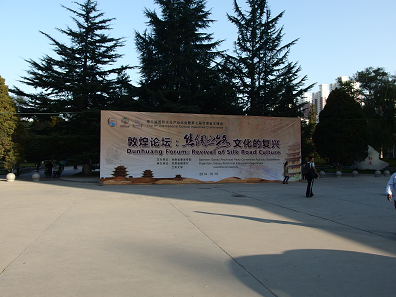 |
2015: Key
note at Lanzhou
University/Dunhang Forum
Revitalizing the Silk Road:
how climate change affects
modern cultures<\i> |
 |
2015: Key
note on German-Mexican Climate
Change Dialogue (on behalf of
German Foreign Office and German
Technical Cooperation) in Mexico
City [Report
by German Embassy] |
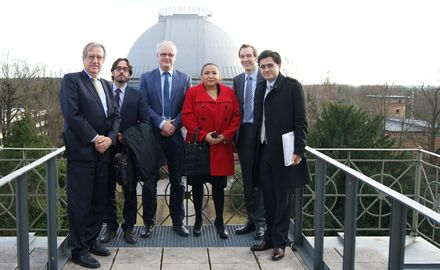 |
2014:
Minister of the Environment Luz
Helena Sarmiento Villamiza and
Colombian Ambassador to Germany
meets PIK and discussed planned
projects between Germany and
Colombia [press
release]. |
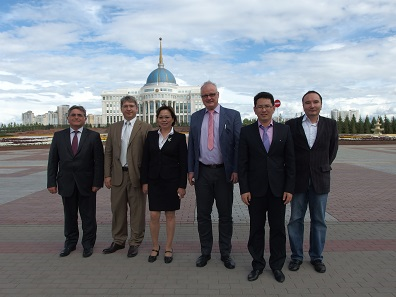 |
2014:
Invited expert to a Kazahk
cabinet meeting and key note
speaker at the Gov't of
Kazahkstan on the occasion of
the launching of Kazahkstan's
green economy strategy. |
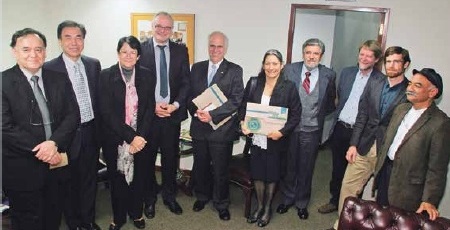 |
2013: Key
note and panel discussion at
Aula Magna June at Pontificia
Universidad Catolica del Peru,
Lima on Climate Change and
Disaster Prevention. The Aula
Magna aimed to be a preparatory
meeting for the upcoming UNFCCC
COP conference in Lima 2014. |
 |
2013: Signing of
cooperation agreement between
PIK and COMSATS University,
Islamabad/Pakistan to support
the new Centre for Climate
Change & Development
Research at COMSATS (back
f.l.t.r.: 2. Rector of COMSATS
University Dr. Zaidi; 3. Dr.
Ishfaq Ahmad, founder of the
Global Change Impact Studies
Centre, Pakistan; 4. former
Pakistani Ambassador to Germany
Mr. S. Kamal [press
release]. |
|
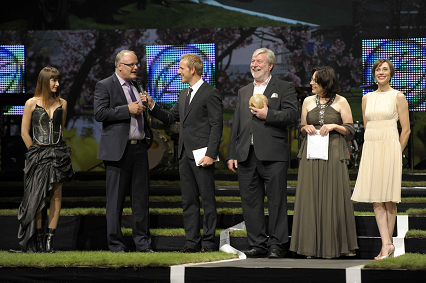
2012:
Climate Media Factory (CMF),
Potsdam an innovative media lab
founded by K.D. Müller, Potsdam
Film University and J. Kropp,
PIK was awarded by the renown
CleanTec Media Award for its
innovative ideas for
communicating climate change.
The Laudatio was given by the
actress Christiane Paul [press
release]. |

|
2012:
Climate Media Factory (CMF)
produced an animated video
showing earth history within
4mins by the help of a
methaphoric website. The video
was produced on behalf of the
Federal Ministry of Education
and Research for the Science
Year 2012. |
|
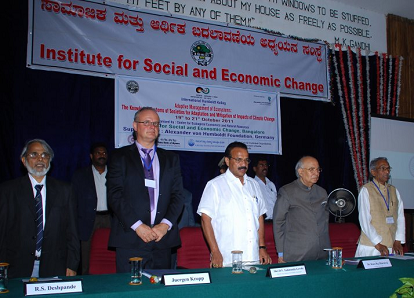
2011: Key
note address at Inaugural
Session and Key note lecture on
Alexander von Humboldt
Conference on Adaptation &
Mitigation of Climate Change (on
occasion of 60th anniversary of
Indian/German diplomatic
relationships), Bangalore/India,
opening panel with Chief
Minister Gowda and Governor Dr.
Hans Raj Bhardwaj (Karnataka
State) [press
release] |
|
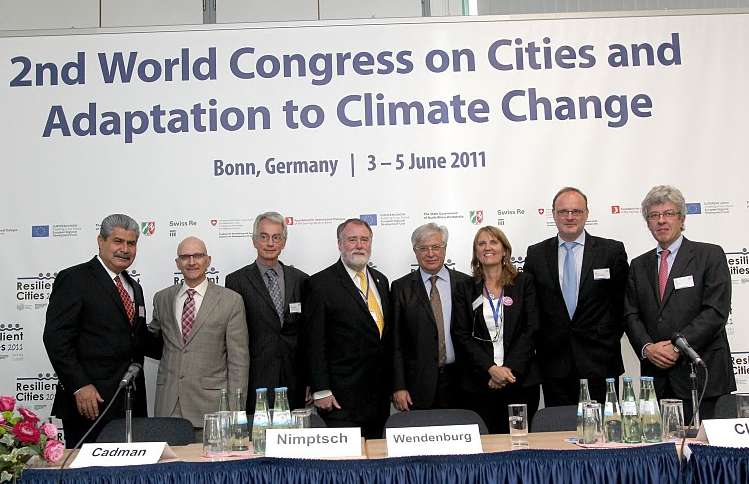
2011:
Member of opening panel and key
note speaker on the 2. World
Conference on Cities and
Adaptation to Climate Change in
Bonn/Germany [Website
] |
|
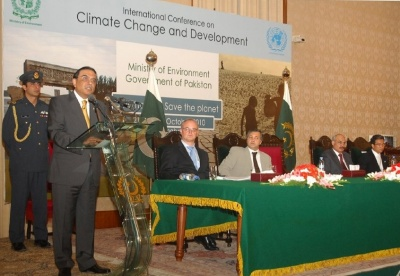
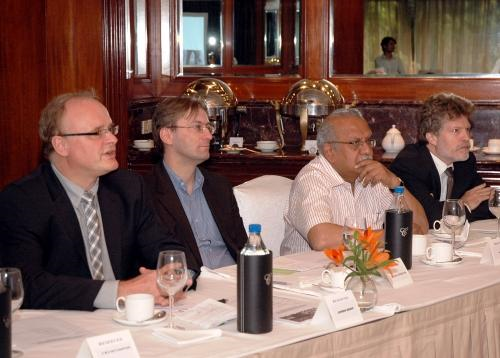
2010:
Honorable Member of the
concluding Panel of Int. Conf.
on Climate Change &
Development at President's
Residency Islamabad/Pakistan
Aiwan-e-Sadr. Panel: President
Asif Ali Zardari, J. Kropp PIK,
Environmental Minister Afridi,
President Zardari, State
Secretary Environment Malik,
United Nations Country Director
Tanaka [press
release] [The
Guardian] |
|
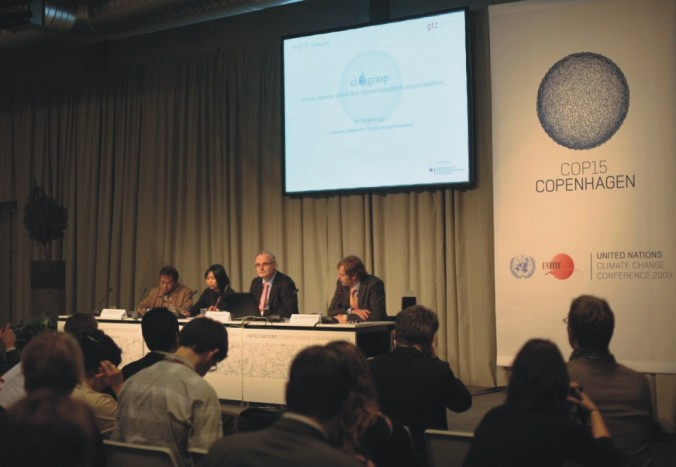
2010: Key
note on ``Climate Change
Challenges for India'' followed
by a critical intervention by
Nitin Desai (former
Undersecretary-General of United
Nations) on a High Tea Event of
the Indian Forum of the
Parliamentarians in New Delhi |
 |
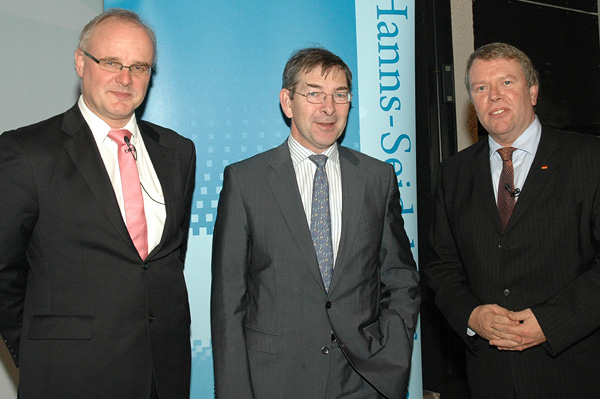
2009: PIK
and German Technical Cooperation
(GIZ) presented a climate
service ci:grasp (Climate
Impacts: Global and Regional
Adaptation Support Platform) on
the Copenhagen Climate
Conference (COP15) on an
official side event [press
release]. |
|
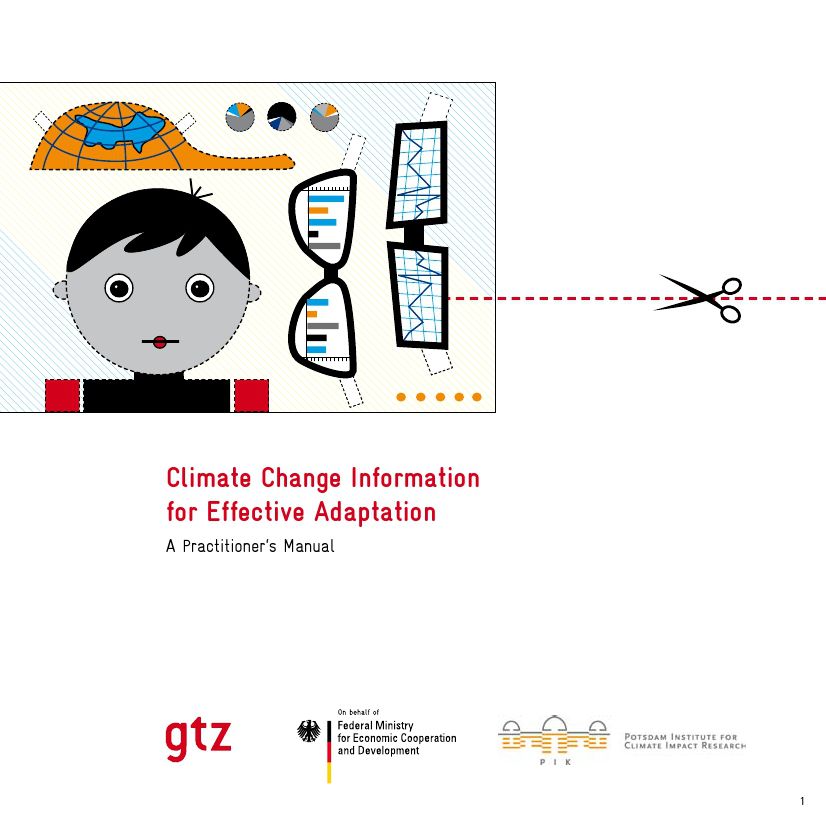
2009: In
the Bavarian Embassy to the
Federal Gov't J. Kropp provided
a talk on "Climate and
Development: A forced Departure"
on invitation of the Hanns
Seidel Foundation (image: J.
Kropp, MdB Ruck, Dr. Hebecker)
[link].
|
|
2009:
Climate Change Adaptation Manual
for Practitioneers published in
four different languages [EN,
ESP,
PT,
FR]. |
|
|
 |
2021:
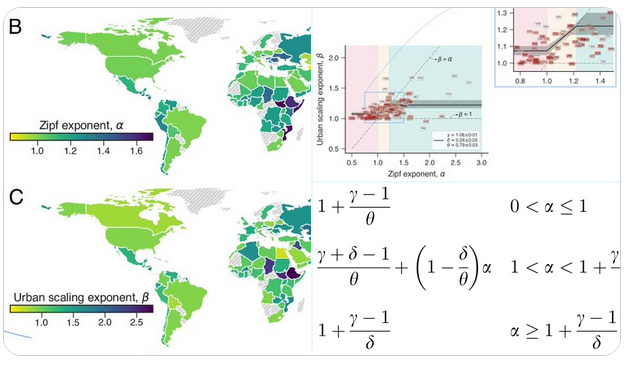
Urban scaling and Zipf law are closely related our detailed study show. Results supports they idea that urban scaling does not solely emerge from intra-city processes, as population distribution and scaling of urban GDP are correlated to each other.
Further details in PlosOne 16(1): e0245771
|
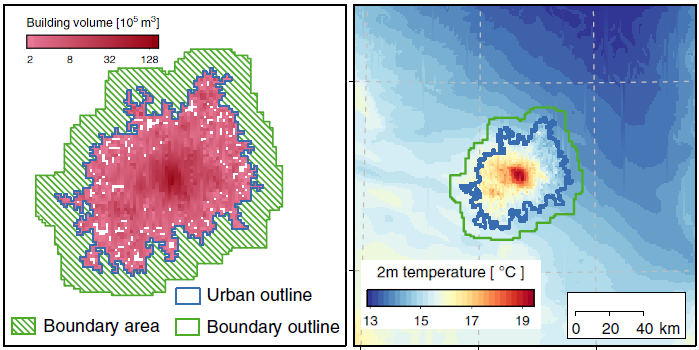
Building volume and surface
temperature |
2020:
Due to lack of data it is difficult to assess urban heat islands (UHI)
In a recent article most influential factors of UHI have been identified.
It was shown building volume is highly relevant. Results also indicate that polycentric are in favour in comparison to monocentric cities.
This helps future city planning and to cope with adverse consequences.
Details in Nature
Comm. 11: 2647 |
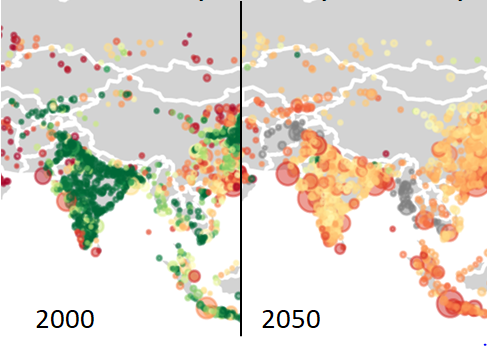
Potential for near urban food production |
2019/20: Local
production matters for climate
protection, but not at any
price. For more than 4000
cities worldwide the potential
of local food production have
been evaluated. It can be
shown that > 30% of urban
residents could be nourished
by near urban food production,
but climate change, urban
growth and changing
nourishment would have a
tremendous impact on the local
potential and will decrease
it considerably.
Details: ERL 14(9): 094007
Env. Sci. & Tech. 54(17): 10551
[press
release] . |
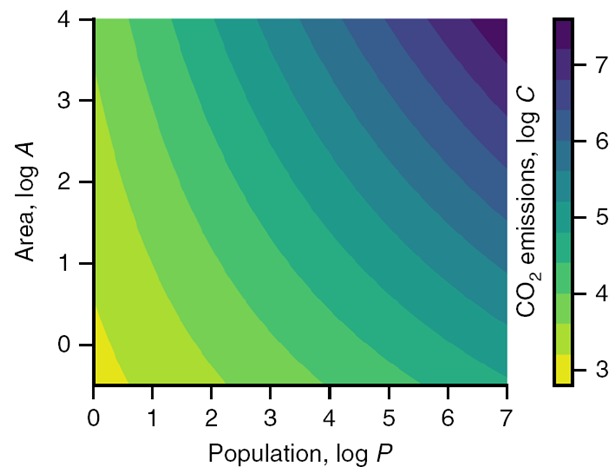
Isolines: population vs. area |
2019:
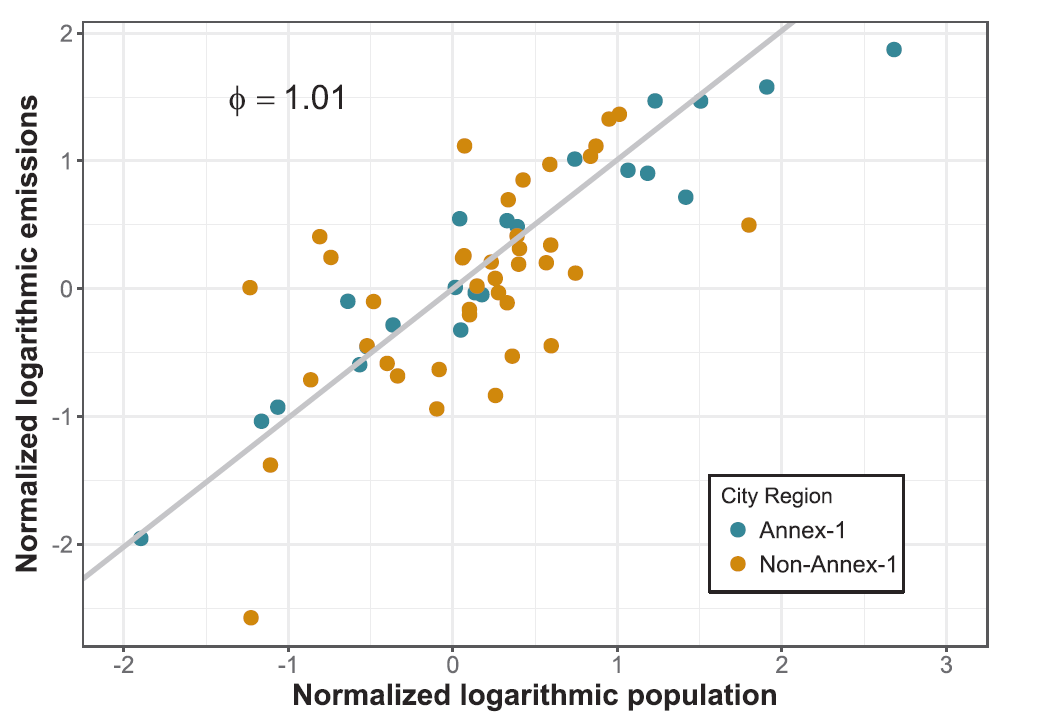
Reducing urban carbon
footprints is pivotal for
achieving climate protection
targets, but which factors
are forcing urban emissions
remains unclear. A recent
study based on a Cobb-Douglas approach
estimated contributions of
population size or urban
density. The larger the city,
the higher is the impact of
changing its population or
density, but population
changes always have a greater
effect on emissions than
population density. Details:Nature
Comm. 10: 3204. |
 |
2019: An
extension of the well-known
Kaya identity to urban systems
show that cities in the
developing world have some
leap-frogging potential. While
GDP doubling in OECD cities
comes together with a doubling
of energy consumptions (and
equivalent emissions). This
can be explained by
established life styles and
infrastructure lock-ins. This
does not hold for cities in
the developing world. [Urban
Kaya]. |
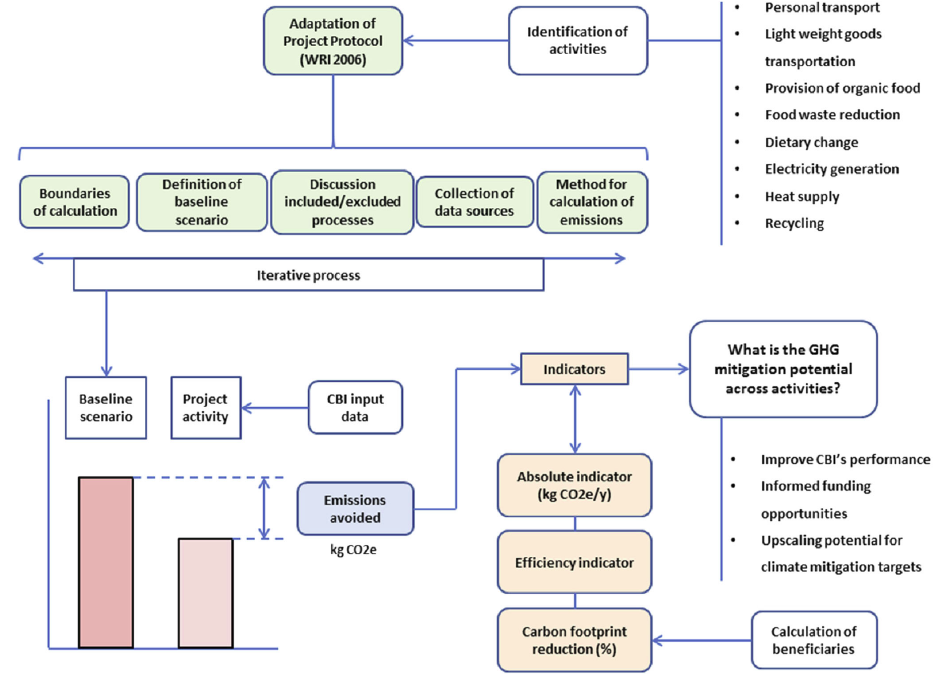 |
2018: It is
broadly discussed if and how
community based initiatives
can contribute to the
sustainability challenge.
While many of these
initiatives are based on
voluntary work it can be shown
that its mitigation potential
can be tremendous. If only 5%
of European citizens would
engage in CBIs the achievement
of climate protection targets
could be easily achieved (cf.
also TESS
project) [CBI].
|
 |
2018: Berlin
School for Sustainable
Futures(BSSF), a University of
Applied Sciences, will start
2020 after receiving its final
approval from German Council
of Science and Humanities and
Berlin Governing Mayor/Senate
Chancellery – Higher Education
and Research. BSSF is a
private University bringing
together sustainability
challenges, cultural
transformation needs, and
digital humanism via by
advanced and modern curricula.
J.P. Kropp acts as founding
dean for the sustainability
department and is a designated
board member. [BSSF].
|
 |
2018:
J. Kropp became appointed member
of the board of directors of the
International
Centre for Integrated Mountain
Development (ICIMOD).
ICIMOD deals with environmental
challenges in mountainous
regions, is operated by all
countries who owns a part of the
Himalaya/Hindukush region, and
has its headquarter in
Kathmandu/Nepal. |
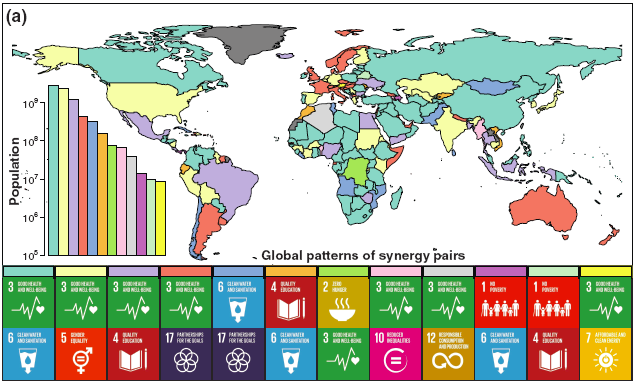 |
2018: The
publishing of Sustainable
Development Goals was a
seminal political achievement.
Now a framework exists that
helps to tackle deficits in
human and environmental
development. However, the
complex multi-dimensional
challenges are difficult to
analyse and so far little is
known about the interactions,
correlations and potential
conflicts between the set of
SDGs. With our article we
tried to break up the
complicated interlinkages and
investigate how different SDGs
influence each other [Article],
[Press
Release]. |
 |
2017/2018:
In the last 12 months several
papers have been finalised
which have been prepared in
the RAMSES
project. They show that
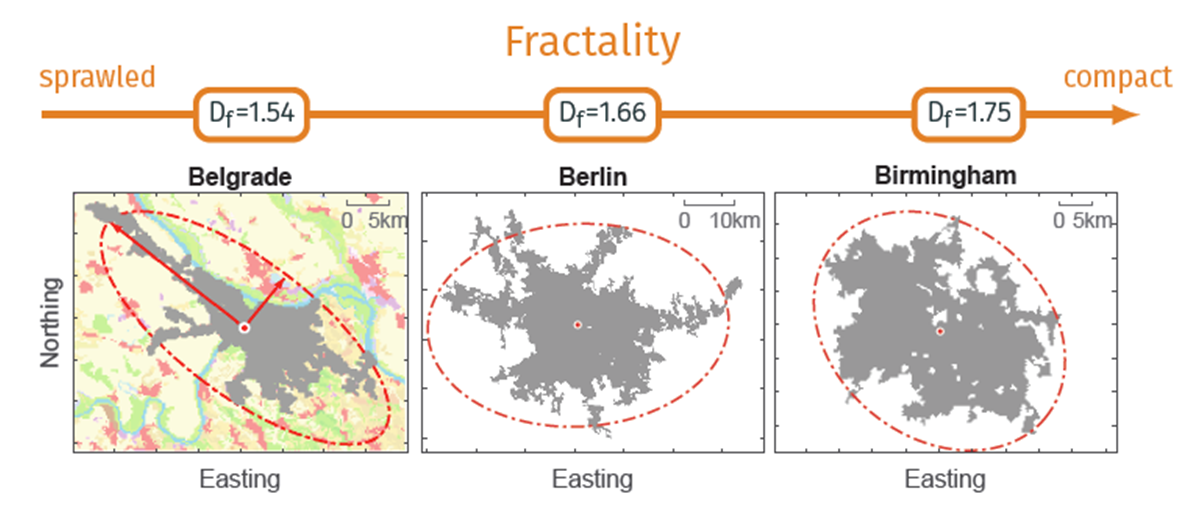
that cities can be analysed
from a systematic point of
view coarse resolutions can
provide huge valuable insights
about cities, their dynamics,
and about potential
transformations. Moreover,
several documents have been
published which supports city
planners in their resilience
planning, e.g. RAMSES
Transition Handbook and
Training Package.
[Damage
and Adaptation Curves for
600 cities ,
[Benchmarking
Eco-efficiency of Cities,
[Urban
Form and Heat Burden.
|

|
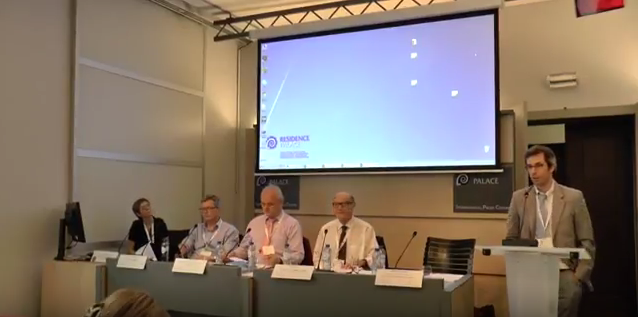
2017: The
European funded 5yr project RAMSES (final
report) has bin finished
with an international
conference entitled
Cities and Climate Change
Conference 2017 at
Potsdam Institute for Climate
Impact Research More than 170
researchers from accross the
globe explored the latest
advances in research and
practice addressing climate
change in cities, including
issues of infrastructure,
planning, governance,
economics of adaptation, risk
management, health prevention
and their possible trade-offs
and synergies with
sustainability objectives. |
|
2017: The
three H2020 funded sister
projects INNOPATH,
REINVENT
and EUCalc organised a
session on the European Energy
Week 2017. The coordinators P.
Ekins, L. Nilsson (Lund), and
J. Kropp (Potsdam) shared
their views about a European
Sustainability Transformation
and what is needed to get
there [Conference
Website]. |
 |
2016:
European Union supports the
development of a European
Model to foster societal and
technological transformation
with more than 5m €. The idea
for the project relies on the
Global Calculator which was
motivated by UK Dept. of
Energy and Climate Change. The
new model will be downscaled
on member state level, allows
detailed trade-off analyses
and will be user friendly,
i.e. is usable by
stakeholders. [EUCalc
website, Global
Calculator website]. |
 |
2016:
Towards European Sustainable
Societies (TESS) FP7 project
has been finished. The aim of
the project was to assess the
impact of community based
initiatives on climate
protection targets. I has been
estimated that in case of
voluntary engagements of only
5% of all European citizens
climate protection targets
would be easily achievable.
Details of the assessment and
tools can be found on the TESS
website. [TESS
website, Track
It! Tool ]. |
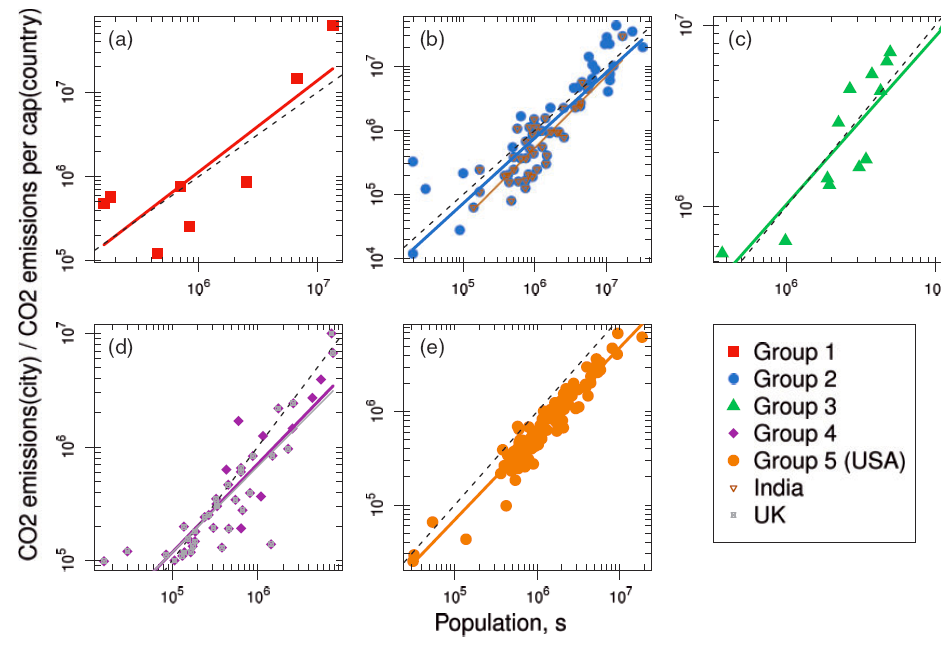 |
2016: The scaling
analysis of CO2
emissions in cities with
population size suggests an
exponent which is development
dependent with a transition
from super- to sub-linear
scaling. From mitigation point
of view, the results imply
that urbanization is desirable
in developed countries, but
not in developing countries,
evt. a hint of an export of
pollutant intensive industries
into developing countries [link
to article]. |
 |
2016: In a
recently published article we
estimated the effect of food
surplus and waste on climate
change. 10% of all emissions
from agriculture are related
to food waste. Besides these
results a previously published
article showed the increasing
relevance of agriculture for
future greenhouse gas
emissions in particular if
lifestyle and demographic
change is considered [link
to article] [press
release]. |
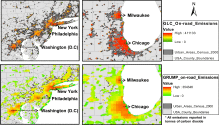 |
2016: Urban
sprawl leads to more emissions
from cities. An analysis of
all inhabited areas in the US
show a sub-linear relationship
between population density and
total emissions (i.e. on-road
and buildings). A doubling of
the population density would
entail a reduction of total CO2
emissions in buildings and
on-road sectors typically by
at least 42%. Population
density exerts a higher
influence on on-road emissions
than buildings emissions. [link to article]
|
 |
2016: A new
study provides a method to
quantify monetary losses from
coastal floods and on city
level under sea-level rise.
For the first time, the
scientists show that the
damage costs consistently
increase at a higher rate than
the sea-level rise itself [link to
article] [press
release]. |
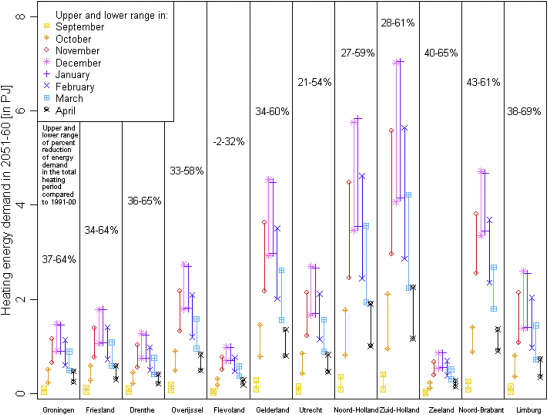 |
2015:
Energy (and emission) savings
from housing sector needs much
more investements and an
almost doubled renovation rate
if self-defined targets of
energy reduction should come
true in 2050 in the
Netherlands. This confirms a
previous study, which was
published already in 2011 and
which investigated the the
German residential sector [link
to article] [
article 2011]. |
 |
2014: JP
Kropp Appointed Academic
Editor:
PlosOne.
|
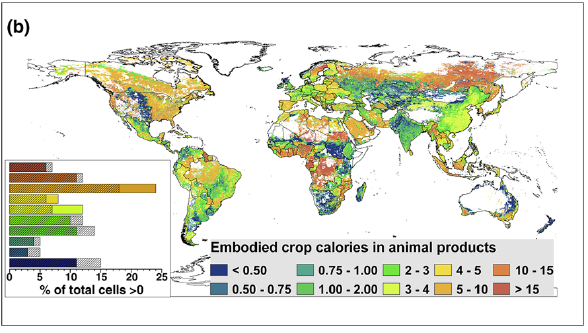 |
2013: On a global
scale, about 40% of the global
crop calories currently are
used as livestock feed and
about 4 kcal of crop
products are used to generate
1 kcal of animal
products. Concering future
demographic growth and dietary
changes will almost double
global fed demand by 2050.
Securing food availability
could be therefore threatened
by an overproportional meat
consumption [link
to article]. |
 |
2013:
Cities heat up stronger than
the rural regions surrounding
them – and if climate change
continues, this will become a
risk for the inhabitants. On
the basis of satellite data,
researchers have now more
comprehensively than ever
before investigated this
so-called heat island effect
for thousands of cities in
Europe [link
to article] [press
release] |
|
2013:
Development dynamics from an
agrarian towards an industry
and to a service oriented
economy can be described by
simple system of differential
equations based on kinetic
equations [link
to article] |
|
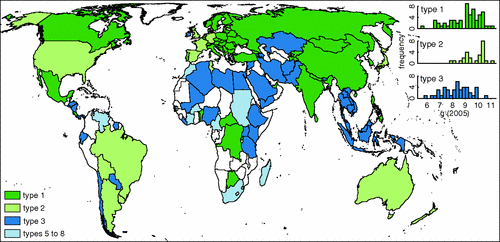
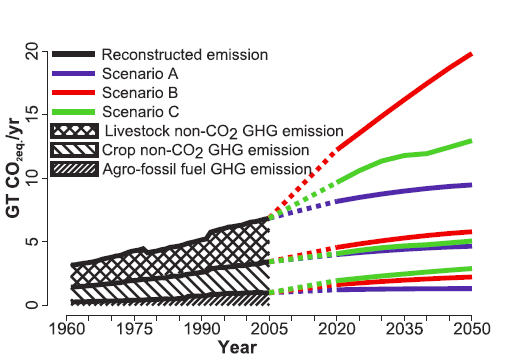
2013:
Greenhouse gas emissions from
agriculture may triple by 2050
in comparison to 2005, if
dietary changes and
demographic growth is
considered. A systematic
identification of global
nourishment styles and its
relation to the human
development level indicates
that agriculture may become a
major contributor to
greenhouse gas emissions [link
to article] |
 |
2012-2014:
JP Kropp Appointed Founding
and Editor-in-Chief of the New
Journal: Challenges
in Sustainability.
|
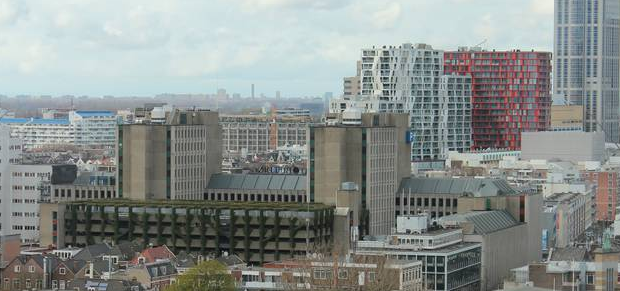 |
2012: Five
year Project on Cities
(RAMSES) received funding of
about 5.2 mln Euros from the
European Union. The project
will be coordinated by PIK and
runs under the rooftop of the
Climate Change and Development
Group/Sustainable Cities
Flagship [link
to website] [CCD
Group] [project
trailer]. |
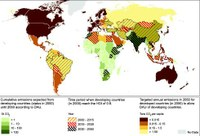 |
2011: The
integration of developing
countries into global CO2
reduction schemes needs a fair
burden
sharing. In our approach for
balancing climate change
mitigation it is shown that
human development might be a
measure to come to an more
objective burden sharing
amongst countries, but it also
shows that contributions from
industrialised countries must
be even much larger [link
to article] [press
release]. |
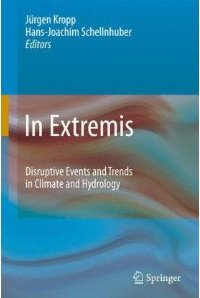 |
2011: New
Book by Kropp JP &
Schellnhuber HJ (eds): In
Extremis: Disruptive Events
and Correlations in
Hydrology and Climate,
Springer, Berlin, 400p.
|
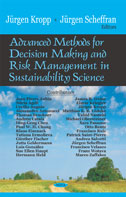 |
2007: New
Book by Kropp JP &
Scheffran J (eds): Advanced
Methods for Decision Making
and Risk Management in
Sustainability Science
Nova Science Publishers, New
York |
|
|
 ORCID ID; RG ID

|